"Where History Comes Alive..."
Follow us on our social media!


127-15 Kew Gardens Road
Kew Gardens, New York,11415
Friends Organization
Est. Nov. 30, 2005
(347) 878-6613


"Images of America: Maple Grove Cemetery" by Carl Ballenas and Nancy Cataldi, published in 2006, offers a detailed description of Maple Grove Cemetery.
It can be found at major bookstores and online!

Sam Loyd
(January 30, 1841 – April 10, 1911)
Born in Philadelphia and raised in New York, was an American chess player,
chess composer, puzzle author, and recreational mathematician. He became known as “America’s Puzzle King.” As a chess composer, he authored several chess problems, often with interesting themes.
At his peak, Loyd was one of the best chess players in the US, and was ranked 15th in the world, according tochessmetrics.com. Loyd was inducted into the US Chess Hall of Fame in 1987. Following his death, his book Cyclopedia of 5000 Puzzles was published (1914) by his son. His son, named after his father, started publishing reprints of his father's puzzles.
Sam Loyd is buried at Maple Grove Cemetery in Kew Gardens, NY. The Friends of Maple Grove Cemetery honor the memory of Sam Loyd. Please visit the samloyd.com website to learn more!

The Tunnell Family
(Honoring the 111-year-old, Millie Tunnell.)
Maple Grove witnessed an era of immense racism and enslavement. Freed African Americans, such as Millie Tunnell, who was born into slavery, navigated the turbulent Civil War era. Her resting site is no longer unmarked and can be recognized in South Border. The Friends of Maple Grove is so proud to honor and preserve the memory of Millie Tunnell and her family.
To learn more about this amazing story, please click on the link below. This couldn't have been done without the help of the Kew-Forest School and the Increase Carpenter Chapter of the Daughters of the American Revolution.


Monica Mitran
(April 1, 1959 – April 17, 2019)
Romanian American fashion designer and artist whose life reflected perseverance and opportunity. Born in Bucharest, Romania, she spent her early years under the communist regime of Nicolae Ceaușescu before immigrating to the United States with her mother in 1980.
Settling in Ridgewood, Queens, she began working as a sewing machine operator while learning English and studying at Queens College. Determined to build a career in fashion, she rose through New York’s Garment Center to become a senior technical designer for major brands including Donna Karan, Michael Kors, and Ralph Lauren. She later earned a degree from the Fashion Institute of Technology and worked in the industry for more than 30 years.
After being diagnosed with cancer in 2014, Monica turned to painting through the Art Therapy Program at Memorial Sloan Kettering Cancer Center, where her artwork and writing were published and shared internationally.
Monica Mitran is buried at Maple Grove Cemetery. Her life remains a testament to resilience, creativity, and the enduring promise of the American Dream.


CPT. Alonzo Adams
(March 1st, 1838 - January 14th, 1913)
Born in Eastport, Maine, Adams was a major master mariner throughout the 19th and early 20th century. Adams discovered Swan Island off the coast of Honduras in 1904 and staked a claim to it. Thus, he became known as the King of Swan Island.
Moving his wife, Josephine, and son, Wallace, to this island, he lived comfortably and made a fortune by trading guano, a rich natural fertilizer, with European and American traders. His contributions to the island included adding a lighthouse to warn vessels of the dangerous shore, in addition to building a radio station.
Finally, he sold the islands to a Boston group and retired peacefully in East Hampton, Connecticut. He is now buried in Maple Grove Cemetery, memorializing his wonderful legacy.
Minnie Allen
(1890 - 1979)
Born in Canada in 1880, Minnie was beloved for her stage performances in comedy, singing, and acting. In her early career, she was supported and guided by Sarah Bernhard, allowing her to spontaneously come into the spotlight. She became one of the first prominent actresses to make sound recordings and act in motion pictures, in addition to her touring around the world for theatrical performances.
One of her major performances included her routine comedy and singing at the Grand-Keith's Vaudeville. The news headline described Minnie's personality as dainty and comedic, making her beloved during her peak. Minnie's stardom had brought her to play at the prestigious Palace Theater, which hosted such stars as Harry Houdini, Ethel Barrymore, and Diana Ross.
Her last public appearance was on the Milton Berle TV show in 1951. After enduring three marriages, she was laid to rest in Maple Grove at the age of 80. Her performances continue to shine eternally.

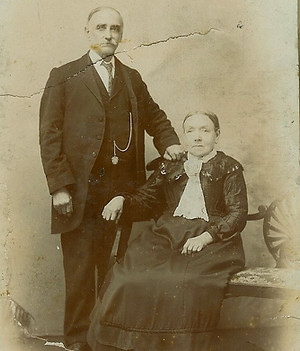
Fannie M. Smith Anthony
(June 27th, 1827 - May 26th, 1914)
Born in Manhattan, NY, in 1827, Fannie became the stewardess of the steamship, the Mary Powell, on the Hudson River around 1869. She was the only female staff member aboard the ship and took care of all the passengers who journeyed on the Hudson River.
In an article dated September 17th, 1894, titled "Compliments for a Jamaica Woman," Fannie is recognized for having a cheery and amiable personality, having worked on the steamer Mary Powell as its stewardess for 25 years.
Joseph Arkwright
(August 24th, 1839 - April 19th, 1922)
Joseph is the great-grandson of Sir Richard Arkwright (1732-1792), a co-inventor of the spinning frame and a leading entrepreneur during the early Industrial Revolution. Sir Richard also patented a rotary carding engine to convert raw cotton to thread yarn. He was the first to develop factories housing both mechanized carding and spinning operations. The spinning frame is an Industrial Revolution invention for spinning thread or yarn from fibers such as wool or cotton in a mechanized way.


Dr. Sum Nung Au Young
(September 18th, 1893 - May 24th, 1943)
In 1927, Dr. Au Young moved from China to the United States. He published his first poem, "Tao," in the New York Times in July 1927. His collection of 50poems, his first book of verse, includes "To Edgar Allen Poe," a piece first read at the banquet held by the Edgar Allen Poe Society to mark Poe's 120th Anniversary. His second collection was "The Marriage of the Son and Moon (1938), and in the same year, he published Lao Tze's Tao Teh King: The Bible of Taoism, the first English translation of Taoism's foundational text by a Chinese Scholar. From the catalog listing for "The Rolling Pearl."
Neva Aymar O'Connor
(April, 1889 - February 1st, 1932)
Neva was a talented Broadway star during the famed Vaudeville era of theater. She appeared in many stage productions, films, and even preformed alongsided famous Vaudevillian star Sam Bernard. At the height of her career, she preformed inWashington DC with the Vaudevillian before meeting her future husband, famous jockey Winnie O'Connor. She traveled throughout Europe from 1916 to 1930, before returning to the United States. It was then that she passed away due to tuberculosis, and resides at Maple Grove with an unmarked grave, likely due to the Stock Market Crash of 1929, causing O'Connor to lose his assets.


Eleanor Cunningham Bannister
(October 3rd, 1858 - January 20th, 1939)
A professionally trained portrait painter who worked in Brooklyn for nearly fifty years. Born in Manhattan, she was the daughter of artist and engraver James Banister and the sister of architect William Banister.
She studied at the Packer Collegiate Institute, Adelphi Academy, and the Julian Art Schools in Paris, where she earned a medal for figure painting. Returning to Brooklyn, she opened her own studio and became known for portraits of the borough’s civic, educational, and religious leaders.
Her work is represented in the Brooklyn Museum and at the Packer Institute, and includes portraits of the Pratt family.
Nikos Bel-Jon
(March 20th, 1911 - August 11th, 1966)
A Greek American artist best known for his large-scale metal murals. Born in Greece as Nicholaos Fotios Baloyannis, he earned a Master of Arts from the School of Fine Arts in Athens and continued advanced studies in Paris at the École des Beaux-Arts and the École du Louvre.
After serving in the Greek army during World War II, he emigrated to the United States in 1946. Working in Los Angeles, San Francisco, and New York City, Bel-Jon developed innovative aluminum mural techniques and received major commissions from corporations and institutions, including Pfizer, U.S. Steel, Air India, the FBI, and the Royal Greek Consulate.
He became a U.S. citizen in 1952 and was awarded a Medal of Art by the Hellenic Republic of Greece in 1964.


Charles Burke Bishop
(1833 - October 9th, 1889)
A widely known American stage actor of the 19th century, celebrated especially as a Shakespearean comedian. Born in Baltimore, he performed throughout the United States, gaining popularity in the South before achieving major success in New York and San Francisco. One of his most notable roles was Pistol in Henry V, staged by English actor George Rignold.
In an unusual dual career, Bishop also trained as a physician and surgeon, earning his medical diploma while continuing to perform. He was known in theatrical circles as “The Doctor” and frequently treated fellow actors without charge.
Bishop was a close friend of John Wilkes Booth and assisted in identifying Booth’s remains after the assassination of Abraham Lincoln. He is buried at Maple Grove Cemetery beside his son, Charles Bishop Jr., also an actor.
Reverend Charles William Camp
(October 28th, 1845 - July 11th, 1906)
A Richmond Hill resident with a devotion to religion and country. His father and maternal grandfather were both Episcopalian rectors. Rev. Camp fought in the Civil War and was assigned to the First New Jersey Cavalry.
He served as Grand Masonic Chaplain of the New York Masonic Lodge and played an important role in the laying of the cornerstone for the massive stone pedestal of the Statue of Liberty. Construction of the pedestal began in 1884, and a ceremony to lay the cornerstone was held on August 5, 1884. It had been a tradition in America to have the cornerstone of major public and private buildings and monuments consecrated with full Masonic rites ever since President Washington.

Patrick Henry "Harry" Hatton Cannon
(December 16th, 1837 - December 24th, 1922)
He was a New York City-born magician, author, and founding figure in American stage magic. Performing under the name Harry Hatton, he built a career as a conjurer and writer on magical technique.
He authored influential works, including Lessons in Magic and Magicians' Tricks (1910), one of the most enduring handbooks on magic. Cannon was a founding member of the Society of American Magicians, serving as vice president in 1902 and as president from 1912 to 1914.
He was a close associate of Harry Houdini, and both men are honored in the Society of American Magicians Hall of Fame.

William Carter
(December, 1835 - December 27th, 1912)
New Orleans-born banjo virtuoso billed in his day as the “King of the Banjo Players.” He rose to prominence in the mid-19th century minstrel circuit, performing throughout the Northeast and gaining fame for his distinctive strumming style.
Carter performed with many of the era’s leading troupes, including Tony Pastor and Harrigan & Hart, and also contributed as a songwriter on several popular pieces. He successfully transitioned from minstrelsy into vaudeville as entertainment styles changed.
Despite earlier fame, Carter died in poverty in 1912. His burial at Maple Grove Cemetery was arranged through the generosity of Jerry Cohan, who also assisted Carter’s widow.

Depicting Samuel's son in the Jamaica School

Samuel B. Cisco
(1855 - April 29th, 1897)
A Jamaica, Queens businessman and civil rights advocate who played a key role in the fight to end school segregation in New York State. A successful scavenger and property owner, he lived in Jamaica with his wife, Elizabeth, and their children.
In the 1890s, Cisco challenged the local school system after his children were barred from attending a nearby public school because they were Black. He pursued the case through the courts, arguing that as a taxpaying citize,n his children had the right to attend their neighborhood school. After his death, his wife continued the fight, which ultimately led to the passage of a state law abolishing school segregation, signed in 1900 by Theodore Roosevelt.
Kate Holladay Claghorn
(February 12th, 1864 - March 22nd, 1938)
A sociologist, author, and public servant who played a significant role in social reform in New York. Raised in Richmond Hill, Queens, she graduated from Bryn Mawr College and earned a PhD from Yale University in 1896, a rare achievement for a woman of her time.
Claghorn worked for the U.S. Census Bureau and the New York City Tenement House Department, where she became the highest-paid woman in New York State civil service. She later taught at the New York School of Social Work and authored The Immigrants’ Day in Court, a major Carnegie-funded study on immigration and justice.
In 1909, she was among the founders of the NAACP, signing the original Call for the Lincoln Emancipation Conference.

Francis Hyman Criss
(April 26th, 1901 - November, 1973)
A modern American painter associated with the development of Precisionism. Born in London to a Jewish family of Russian descent, he immigrated to the United States as a child and studied at the Pennsylvania Academy of the Fine Arts, earning a Cresson scholarship that allowed him to study in Europe.
Criss became known for stark, geometric portrayals of New York City’s industrial and urban life, using bold forms and restrained color. His work was exhibited at major institutions, including the Museum of Modern Art, and internationally in Paris.
During the 1930s and 1940s, he worked as a muralist and instructor with the Works Progress Administration, later teaching at the Brooklyn Museum and the School of Visual Arts

Dana Dawson Curry
(August 7th, 1974 - August 10th, 2010)
A singer and actress born in Jamaica, Queens, who began performing professionally as a child. She made her stage debut at age seven in the national tour of Annie and later appeared on Broadway in Rent, where she understudied and performed the role of Mimi.
Dawson also built a successful international music career, releasing charting singles and albums in France and the United Kingdom. Her debut album, Paris New York and Me, was certified gold in France, and she later recorded with EMI Records and toured across Europe.
She married jazz musician Jason Curry in 2007 and died in 2010 at the age of 36 after a battle with colon cancer.

Coleman Czito
(October 27, 1862 - December 6, 1919)
A Hungarian-born machinist and metalworker who immigrated to the United States in 1887. Trained as a tinsmith and mechanic, he co-owned a machine shop in Manhattan, where his skills brought him into collaboration with Nikola Tesla.
Czito worked as a fabricator and assistant on Tesla’s mechanical experiments, including the famous high-voltage research conducted in Colorado Springs in 1899. As the site mechanic, he helped operate the experimental equipment during Tesla’s large-scale electrical tests near Pikes Peak.
His son Julius later continued in the machine tool trade, and the Czito family remains closely linked to Tesla’s experimental legacy.

Ramiz Dani
(February 2, 1920 – July 21, 2003)
An Albanian American immigrant and longtime Kew Gardens business owner. Arriving in New York in 1956, he opened Dani’s House of Pizza in 1959, which became a neighborhood landmark known for its sweet sauce and crisp crust.
For more than four decades, Dani ran the pizzeria, serving generations of local families and becoming a familiar presence in the community. The shop occupied a former fish market once connected to a young neighborhood delivery driver who later became comedian Rodney Dangerfield.
Dani is buried at Maple Grove Cemetery, where his funeral drew large crowds and was marked by a floral tribute shaped like a slice of pizza.

Mama Doe
(Unknown - December 25, 1985)
An unidentified homeless woman who lived in New York City’s Grand Central Terminal during the 1980s. Known simply as “Mama,” she was remembered for caring for other homeless individuals, especially young women, sharing food, clothing, and companionship.
She died on Christmas Day in 1985 after exposure to extreme cold. Her death drew citywide attention and public sympathy. She was buried at Maple Grove Cemetery through the generosity of a private donor, with a grave marker reading “Mama, Home at Last.”
Mama Doe’s story inspired the creation of the Doe Fund, which continues to help homeless individuals achieve stability and self-sufficiency.
Every year at Grand Central Station, a candlelight vigil is hosted to honor Mama Doe's memory.

Margaret Drysdale
(1868 – 1892)
Known on stage as Madge Yorke, was a Scottish American actress who grew up in Richmond Hill, Queens. She performed with touring theatrical companies and appeared in productions across the United States during the 1890s.
In February 1895, while performing in Philadelphia, Drysdale was murdered by fellow actor James B. Gentry, who became obsessively jealous of her. Gentry was convicted of her murder and sentenced to life imprisonment after his death sentence was commuted. His later decline drew the support of friends in the theatrical world, including George M. Cohan.
Drysdale’s death shocked the theatrical community and ended a promising young career.

Melville Ellis
(November 1876 – April 4, 1917)
A musical performer and theatrical creative known for his work in early musical comedy, vaudeville, and silent film. Born in Arizona, he built his career in New York City, gaining popularity for his “pianologues,” comic monologues performed with piano accompaniment.
Ellis worked on Broadway and in early motion pictures, providing off stage piano music to shape actors’ performances, including during the filming of Carmen directed by Cecil B. DeMille. He was a versatile artist and worked as a composer, choreographer, costume designer, and scenic designer, contributing to productions such as the Ziegfeld Follies.
A headliner at the Palace Theatre and a collaborator of Al Jolson, Ellis died at age 39 from typhoid fever. His burial at Maple Grove Cemetery was arranged by his close friend Elsie de Wolfe.

Captain Charles Patrick Everett
(November 2, 1849– January 22, 1927)
A pioneering deep sea diver whose career spanned more than thirty years without a single accident. Originally trained as a cabinetmaker, he entered the profession by chance at age eighteen and quickly became one of the most skilled and respected divers of his time.
Everett led major underwater recovery efforts following two of the most tragic maritime disasters in American history: the explosion of the USS Maine in 1898 and the General Slocum disaster in New York City in 1904. His work helped recover victims and bring closure after events that claimed hundreds of lives.
Renowned for his professionalism and calm under extreme conditions, Everett regarded diving as safe work when done with care and discipline, and he remained committed to his demanding craft throughout his life.

Harrison La Tourette “Harry” Foster
(October 31, 1895 – March 15, 1932)
A Brooklyn born journalist, soldier, and travel writer known for a life of near constant adventure. He worked as a reporter for the Brooklyn Eagle and later traveled extensively as a freelance correspondent, laborer, and explorer across Latin America, Asia, the South Pacific, and the Caribbean.
A World War I veteran who served in France as a U.S. Army officer, Foster supported his travels through odd jobs while writing popular travel narratives. His books include The Adventures of a Tropical Tramp, A Beachcomber in the Orient, and Combing the Caribbees.
Foster’s writing captured the spirit of early 20th century wanderlust, blending journalism, memoir, and adventure drawn from firsthand experience.

Dr. Frank Gabrin
(June 16, 1959 – March 31, 2020)
An emergency medicine physician, U.S. Navy veteran, and author who devoted his life to caring for the sick and injured. Educated at the University of Pittsburgh and the Philadelphia College of Osteopathic Medicine, he served for more than twenty-five years in emergency rooms across the country and was a flight physician in the Navy Medical Corps.
In March 2020, while treating patients in New York City during the height of the COVID-19 crisis, Dr. Gabrin contracted the virus. He became the first emergency physician in the United States to die from COVID-19. He is buried at Maple Grove Cemetery, where his headstone bears his chosen name, Pinchas, and the words: “Go care, make a difference, and change (y)our world.”
His legacy endures as a symbol of courage, service, and the heart of medicine.

Alfred Henry Grebe Sr.
(April 4, 1895 – October 24, 1935)
A Richmond Hill–born radio pioneer and manufacturer who played a key role in the early development of American broadcasting. He was a licensed commercial radio operator by age fifteen. He founded a radio manufacturing business behind his family home that grew into a major operation producing tens of thousands of radios annually.
Grebe developed equipment used by polar explorer Richard E. Byrd and operated some of the earliest radio stations in the country, including WAHG and WBOQ. In 1926, WAHG became WABC, one of the nation’s first commercial broadcasters.
He later sold the station to Columbia Broadcasting System, helping lay the groundwork for modern radio broadcasting.

James Edward “Jay” Hambidge
(January 13, 1867 – January 20, 1924)
A Canadian-born artist, writer, and theorist best known for developing the concept of Dynamic Symmetry, a system of proportion based on patterns found in nature and classical Greek art. Trained at the Art Students’ League in New York, he studied under William Merritt Chase and worked as an illustrator and writer for Life magazine and other publications.
In the early 20th century, Hambidge conducted extensive research in Greece and at Harvard Medical School, linking human anatomy, plant growth, and classical architecture to mathematical principles of harmony. His book The Elements of Dynamic Symmetry influenced artists, designers, and industries ranging from painting and illustration to jewelry and automobile design.
His ideas continued after his death through the establishment of the Hambidge Center for Creative Arts and Sciences, founded in his name and inspired by his belief in creativity rooted in nature.

Frank Alfred Giralomo Howson
(March 18, 1841 – June 29, 1928)
A British-born composer, conductor, and theatrical music director whose career spanned opera, musical theater, and drama in Australia, Europe, and the United States. Raised in a musical family, he conducted major operatic works in Australia by his late teens and later helped bring the Howson Opera Company to America.
After settling in New York, Howson served as musical conductor at leading theaters, including the Academy of Music. He frequently collaborated with his sister Emma Howson, the original Josephine in H.M.S. Pinafore, conducting her performances in both Europe and the United States.
Howson also composed incidental music for popular stage productions such as The Prisoner of Zenda, If I Were King, The Three Musketeers, and Hamlet, remaining active as a composer well into retirement.

Kyle Jean-Baptiste
(December 3, 1993 – August 28, 2015)
A New York City–born actor and singer who grew up in Brooklyn and trained at Fiorello H. LaGuardia High School and Baldwin Wallace University. Shortly after graduating from college, he was cast in the Broadway revival of Les Misérables.
In 2015, Jean-Baptiste made history when he debuted as Jean Valjean, becoming both the first Black actor and the youngest performer to portray the role on Broadway at age 21. He also appeared in regional theater productions, including Singin’ in the Rain and The Music Man.
Jean-Baptiste died in August 2015 in an accidental fall. His passing was widely mourned across the theater community, with memorials and tribute theater light dimming held in his honor in New York and beyond.

Dr. Ella Albertina Jenning
(September 23, 1848 – November 30, 1908)
A physician, author, and social reformer dedicated to improving medical care for working women and children. Born in Canada to a Quaker family, she followed her sisters, leaders in women’s medicine and suffrage, into the medical profession and earned her degree in New York City in 1878.
In 1879, MacDonald founded the Twenty-Five Cent Provident Dispensary in Manhattan, a women-run clinic that provided affordable care to tens of thousands of patients. She later became the founder and editor of Humanity and Health magazine and was an early advocate for women’s equality in medicine, government, and public life.
She is remembered for a lifetime devoted to public service, reform, and compassion.

David Wemyss Jobson
(1810 – May 26, 1876)
A Scottish-born surgeon, dentist, author, and political figure. Educated at the University of Edinburgh, he served as Surgeon Dentist to King William IV and later to Queen Victoria.
Jobson became publicly involved in the Lady Flora Hastings scandal, defending her innocence against royal accusations, a stance that cost him favor and clientele. He later turned to journalism and writing, publishing works on history and politics, and became involved with the French Provisional Government during the Revolution of 1848, receiving the honorary title of General.
Naturalized as a U.S. citizen, Jobson died in poverty in 1876. Saved from burial in Potter’s Field by fellow journalists, he became the first adult interred at Maple Grove Cemetery.

George “Count Johannes” Jones
(May 10, 1810 – December 30, 1879)
A British born actor, self-styled nobleman, and legal advocate who became a colorful figure in 19th century New York. Best known for his performances as Hamlet, which he played more than one hundred times, he claimed to have performed the role before Emperor Napoleon and achieved brief fame on the international stage.
In New York, Count Johannes also practiced law without formal credentials, becoming known for unconventional courtroom tactics that relied heavily on literature and theatrical flair. He often represented widows and orphans without charge and was a frequent subject of newspaper coverage.
He died in poverty in 1879 and was buried at Maple Grove Cemetery. After his death, rumors of attempts to steal his brain for scientific study led cemetery staff to guard his grave. Years later, his wit and style were compared to those of Oscar Wilde, cementing his posthumous legend.

Julia “Pollard”
(Unknown – Jan 13, 1889)
The beloved dog of Marie Antoinette Nathalie Pollard, a lecturer, poet, and the widow of Civil War historian Edward Alfred Pollard. Though not human, Julia’s devotion earned her a singular place in memory.
On the night of January 30, 1885, Julia alerted Pollard to a fire in her residence, allowing her and others in the building to escape before the blaze spread. Julia’s frantic warning is credited with saving lives, and she was widely praised for her instinct and loyalty.
Julia later died after being deliberately poisoned, suffering for several days before her death. At a time when animal burials in cemeteries were discouraged, Pollard arranged for Julia to be quietly laid to rest at Maple Grove Cemetery in a secret burial.
Her grave bears a simple inscription: “To Julia, my only true friend.”

Rosina and Van Cliburn.
Rosina Bessie Lhévinne
(March 29, 1880 – November 9, 1976)
A Russian-born pianist and one of the most influential piano teachers of the twentieth century. Born in Kiev and trained at the Imperial Moscow Conservatory, she earned the Gold Medal for piano and later married fellow pianist Josef Lhévinne.
After emigrating to the United States, Rosina joined the faculty of the Juilliard School in 1924, where she became renowned for her discipline, patience, and insight. Affectionately known as “Madame” and the “Little Empress,” she shaped generations of musicians, including Van Cliburn and John Williams. She continued teaching into her nineties and remains remembered as a master pedagogue whose influence far exceeded the concert stage.

Josef Lhévinne
(December 13, 1874 – December 2, 1944)
A Russian-born virtuoso pianist celebrated for his flawless technique and musical elegance. Born in Oryol to a family of Jewish musicians, he studied at the Imperial Moscow Conservatory, graduating with the Gold Medal in a class that included Sergei Rachmaninoff and Alexander Scriabin.
Lhévinne achieved international recognition after winning the Anton Rubinstein Competition and later settled in the United States, where he combined concert performance with teaching at the Juilliard School. Though he made few recordings, they are regarded as definitive by pianists and scholars. He died suddenly in New York in 1944, leaving a legacy preserved in sound, scholarship, and the countless students shaped by his artistry.
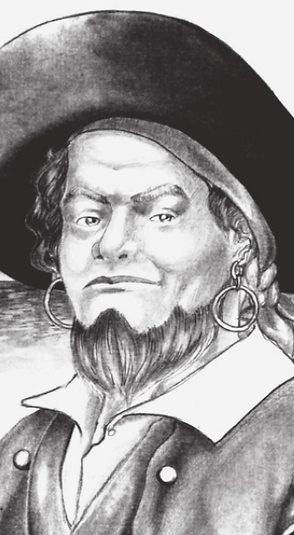
Thomas Winn
(1812 – February 27, 1889)
Known during his later years as Captain William Lloyd and affectionately called “Pop” Lloyd, lived a life of striking transformation. According to accounts shared after his death, he was born aboard a British brig at sea and spent much of his early life sailing the South Seas, living as a pirate and buccaneer during the final era of such men.
His years at sea were marked by lawlessness and violence, followed by decline brought on by hardship and alcoholism. By the early 1880s, Winn arrived in New York City impoverished, elderly, and alone. There he encountered missionary Sarah Sherwood, whose compassion and faith led to his conversion and rescue from destitution. He became an enthusiastic worker at the mission, earning deep affection and the nickname “Pop” Lloyd among its members.
Only after his death did the truth of his identity become known, when a minister revealed that “Captain William Lloyd” was in fact Thomas Winn. His passing caused an extraordinary outpouring of grief, as men and women from all walks of life filed past his rosewood casket—testimony to a man remembered less for the darkness of his beginnings than for the sincerity of his redemption.

Delia Loughlin
(March 30, 1868 – November 13, 1892)
Known as the Bluebird of Mulberry Bend, was a young woman whose brief life traced a painful journey from abandonment to redemption. Born in Brooklyn to Irish immigrant parents, Delia lost her mother in early childhood and was raised in a convent, where she struggled with loneliness and instability.
As a teenager in the early 1890s, Delia drifted into the slums of Lower Manhattan, living among the poverty and violence of Mulberry Bend and the Five Points. Wearing blue dresses that earned her the nickname “the Bluebird,” she survived through crime and street life, enduring repeated arrests, illness, and hardship that quickly aged her youthful face.
Her life changed after an encounter with missionary Emma Mott Whittemore, who offered Delia compassion rather than judgment, symbolized by the gift of a single rose. That moment marked Delia’s conversion and renewal. She devoted her remaining strength to helping others caught in the same despair she had known, speaking in missions and prisons with uncommon sincerity and courage.
Delia died of tuberculosis at the age of twenty-four. She is buried at Maple Grove Cemetery.

Theodore F. Archer
(February 1, 1837 – September 21, 1893)
A businessman and civic leader who played a central role in the growth of Jamaica, Queens, during the late nineteenth century. Born in Monroe, Orange County, New York, he left home at thirteen to support himself, persevering despite limited education and resources.
After years of varied employment, Archer settled in Queens County, becoming a builder, real estate dealer, and one of Long Island’s most active land auctioneers. Though financially ruined by the Panic of 1873, he honored all obligations and rebuilt his fortune through determination and industry, contributing significantly to Jamaica’s commercial and residential development.
Respected for his integrity and judgment, Archer served as chief of the Jamaica Fire Department and was regarded as one of the village’s most public-spirited citizens. He is buried at Maple Grove Cemetery, remembered for resilience, responsibility, and lasting civic contribution. After his passing, a street in Jamaica, Archer Avenue, was named in his honor.

Maria Reis Armbruster
(1828 – March 31, 1901)
Maria was a German-born entrepreneur whose determination helped shape early Richmond Hill. Born in Bavaria in 1828, she emigrated to the United States during the Civil War era after the death of her first husband, Adam Lippert, with whom she had two daughters, Katie and Rosa.
After marrying Charles Armbruster, Maria settled in Richmond Hill in 1870 and opened the Richmond Hill Hotel on Jamaica Avenue. Following Charles’s death in 1887 and the earlier loss of her daughter Katie to consumption, Maria assumed full control of the business. She expanded the hotel’s grounds to include a picnic area and dance platform, sustaining it as a vital social center for the community. She is buried at Maple Grove Cemetery.

Rosa Lippert Weiden
(1861 – July 12, 1910)
Rosa grew up in Richmond Hill when it was still a rural village. The daughter of Maria Reis Armbruster, she helped manage the Richmond Hill Hotel from a young age, playing a central role in its daily operation and social life.
After marrying Ernest Weiden, Rosa co-developed the property into one of Queens County’s premier gathering places. In 1892, she helped establish Columbia Park Hall, a vast pavilion that hosted balls, political conventions, and public events. Rosa was also active in civic causes, organizing social functions to raise funds for the creation of Jamaica Hospital. She is buried at Maple Grove Cemetery.
Ernest Weiden
(January 1864 – August 16, 1911)
Ernest was a German-born businessman and community figure in Richmond Hill. After marrying Rosa Lippert, he became a partner in the operation and expansion of the Richmond Hill Hotel and its adjoining grounds.
In 1892, Ernest and Rosa opened Columbia Park Hall, named in honor of the 400th anniversary of Columbus’s arrival, creating one of the largest event spaces in Queens County. That same year, Weiden joined the newly formed Columbia Hose Company, serving during the early and demanding years of volunteer firefighting. He is buried at Maple Grove Cemetery alongside his family.

LaVern Baker
(November 11, 1929 – March 10, 1997)
A pioneering rhythm and blues singer whose powerful voice and commanding presence helped carry R&B into the American mainstream. Born Delores LaVerne Baker in Chicago, she began performing in local clubs in the 1940s and first recorded in 1951, soon adopting the name LaVern Baker.
After signing with Atlantic Records in 1953, Baker achieved national success with a string of hit records, including Tweedlee Dee and the million-selling Jim Dandy, which earned a gold record. She placed nineteen songs on the pop charts during the 1950s and early 1960s and appeared widely on television and in film, helping define the sound and style of early rock and roll.
In the late 1960s, illness led Baker to step away from recording, and she spent more than two decades in the Philippines as entertainment director at a U.S. Marine Corps club. She returned to public performance in the late 1980s, appearing at Madison Square Garden, starring on Broadway in Black and Blue, and contributing to major film soundtracks.
Baker received the Rhythm and Blues Foundation Pioneer Award in 1990 and was inducted into the Rock and Roll Hall of Fame, becoming only the second female solo artist so honored. She is buried at Maple Grove Cemetery.

Arturo Gil Alvarez
(September 1, 1928 – June 5, 2023)
A Cuban American writer, journalist, broadcaster, and publisher who devoted his life to elevating Hispanic culture and letters in New York. Widely respected for his intellect and integrity, he was regarded as a guiding voice within the city’s Hispanic intellectual community.
Gil Alvarez worked in radio and print journalism before founding Editorial Nueva Etapa in 1967, through which he authored and edited more than eighty books. His publications spanned literature, poetry, music, history, and cultural studies and were distributed across the United States emphasizing education, dignity, and artistic excellence for immigrant communities.
Honored by cultural institutions in the United States and abroad, Arturo Gil Alvarez believed culture to be a public service and was something to be preserved, shared, and passed forward. He is buried at Maple Grove Cemetery.

Charles Gamble Baird
(February 10, 1880 – April 28, 1918)
A career soldier and communications expert whose service spanned two wars and helped shape modern military signaling. Born in Philadelphia, Baird became a specialist in railroad signal systems and was responsible for the installation and oversight of telegraph, telephone, and signal lines at Pennsylvania Station in New York City.
Baird first served his country during the Spanish-American War as a private in the 1st Pennsylvania Infantry. He later enlisted in the United States Army Signal Corps, serving overseas in the Philippines before returning to civilian life. At the outbreak of World War I, he reenlisted and organized the 413th Telegraph Battalion, the first Signal Corps unit ordered overseas, composed largely of skilled Pennsylvania Railroad employees.
Promoted to Major, Baird died at the age of thirty-eight while in service in Tours, France. He lived in Richmond Hill, Queens, with his wife Teresa and their son, Charles Jr. His name is inscribed on local World War I memorials, and he is buried at Maple Grove Cemetery, remembered for technical mastery, leadership, and steadfast devotion to duty.

Teresa Menyhart Baird
(1874 – 1949)
The devoted wife of Charles Gamble Baird and the mother of their only son, Charles Jr. Born in Hungary, she met Charles while traveling at sea, and the two married in 1900 before settling in Richmond Hill, Queens, where they built a close and loving family life.
During World War I, Teresa supported her husband’s return to military service, knowing the depth of his sense of duty. When Major Baird died overseas in France in 1918 at the age of thirty-eight, Teresa bore the loss with quiet strength, bringing his remains home to New York and dedicating herself to raising their son in his father’s image and values.
Charles’s final written words praised Teresa’s courage, honor, and unwavering love. Sentiments that defined her life as much as her grief did. Teresa Menyhart Baird was later laid to rest beside her husband at Maple Grove Cemetery.

John Edward Trist Bailey
(July 1870 – July 19, 1948)
An English-born real estate developer best remembered as the founder of Bayswater, Queens. Born in Bayswater, London, he emigrated to the United States in 1871 and established himself as an auctioneer, surveyor, and real estate agent.
In 1878, Bailey acquired extensive land along Jamaica Bay and laid out the seaside community of Bayswater, naming it for his birthplace. The neighborhood became a fashionable enclave, and streets including Bailey Court and Trist Place were named in his honor. His career was marked by ambition and risk, culminating in the construction of the Bayswater Hotel, a venture that ultimately contributed to his financial decline.
Bailey was buried at Maple Grove Cemetery, beneath one of the cemetery’s most unusual monuments.

Bela Gustav Benci
(July 18, 1923 – June 8, 1942)
A New York musician. Bela grew up in a household shaped by music, culture, and immigration.
He was the son of Charles Lucas Benci, a Hungarian-born violinist and orchestra leader whose ensembles performed widely and recorded for RCA Victor, and Mary Theresa Benci, born in Hungary. Bela was often photographed at the drums, reflecting the musical tradition that surrounded him from childhood.
Bela died at the age of eighteen in Manhattan in 1942. He is buried at Maple Grove Cemetery.

Elizabeth Milne Hodge Japp
(April 8, 1874 – April 28, 1911)
A Scottish-born wife and mother. In 1899, she married civil engineer Henry Japp, and together they had four children.
When Henry was appointed managing engineer for the construction of the East River Tunnels that linked Pennsylvania Station in Manhattan to Queens. The family moved from England to Richmond Hill. Elizabeth witnessed firsthand the creation of the first rail tunnels beneath the East River, a project celebrated internationally and completed in 1910, transforming travel between Manhattan and Long Island.
Only a year later, Elizabeth died of pneumonia at the age of thirty-seven, leaving behind four young children. She was laid to rest at Maple Grove Cemetery, where her husband erected a Celtic-inspired monument in her memory, echoing her Scottish roots.

Max Mayrbaurl
(September 7, 1904 – December 6, 1958)
An Austrian-born club steward and longtime administrative figure of the Arion Singing Society in Brooklyn, New York. He served as club steward for twenty two years, overseeing the day-to-day operations of the organization and its facilities.
Founded in the 1860s, the Arion Singing Society was a nonpolitical, nonsectarian choral organization whose only requirement for membership was a love of song and music. During Mayrbaurl’s tenure, the society maintained a distinguished public profile, performing at the Waldorf-Astoria in 1902 in honor of Prince Henry of Prussia and later at the White House before Theodore Roosevelt and Calvin Coolidge.
During World War II, the Arion Singing Society was denounced by Adolf Hitler and the Nazi regime as traitors to Germany, a charge its members regarded as affirmation of their commitment to democracy. Mayrbaurl is buried at Maple Grove Cemetery.

Bonnie Magin
(1880 – September 1, 1964)
A Chicago-born American actress, singer, and dancer who rose to prominence on the Broadway stage in the late nineteenth and early twentieth centuries. Discovered at age sixteen, she quickly gained popularity for her grace and stage presence and became widely featured in newspapers, magazines, postcards, and promotional materials.
Magin performed with the prominent theatrical producers Weber & Fields and appeared in major stage productions, including Mr. Bluebeard. In December 1903, she survived the catastrophic Iroquois Theatre fire in Chicago, the deadliest theater fire in United States history, which claimed more than six hundred lives.
Her career continued for several years following the tragedy. In later life, she withdrew from public performance and lived largely out of the spotlight. Magin died on September 1, 1964, and is buried at Maple Grove Cemetery, where she is interred with her father.

Isaac Oscar Lund
(September 29, 1854 – December 26, 1920)
A Finnish-born carpenter whose working life reflected the global reach of early twentieth century engineering. Born in Finland, he married Elda in 1884 and immigrated to the United States the following year, settling in Woodhaven, Queens, where they raised their family.
In 1906, Lund worked as a carpenter on the construction of the Panama Canal, one of the most ambitious engineering projects of the modern era. Employed by the Engineering Department of Architecture and Building, he earned sixty five cents an hour, a high wage for the period. The canal, strongly supported by Theodore Roosevelt, opened in 1914 and permanently transformed global maritime trade. Lund is buried at Maple Grove Cemetery.

Piotr Lucjan Luszczewski
(January 29, 1960 – July 23, 2013)
Known as Peter, was a Polish-born flight attendant who worked for Northwest Airlines. Born in Szczecin, Poland, he later settled in the United States and built a career in international commercial aviation.
On September 11, 2001, Luszczewski was a crew member on Flight 61, traveling from New York to Europe, when United States airspace was closed following the terrorist attacks. His aircraft was diverted to Gander in Canada, where passengers and crew were cared for by local residents for several days in an extraordinary display of community generosity. The experience became part of the historical record of the global aviation shutdown and was later dramatized in the Broadway musical Come from Away. Luszczewski is buried at Maple Grove.

Albon Platt Man II
(November 14, 1845 – April 24, 1920)
A New York born real estate developer and civic figure closely associated with the early development of Richmond Hill and Kew Gardens in Queens. He was the son of Albon Platt Man, founder of Richmond Hill, and the brother of Alrick Hubbell Man, founder of Kew Gardens.
Following his father’s acquisition of farmland along what is now Metropolitan Avenue in the late 1860s, Man played an active role in shaping the community’s recreational and residential landscape. In 1895, he and his brother Arthur helped establish the Richmond Hill Golf Links on the wooded land north of Metropolitan Avenue, which had long served as open green space for residents.
After the closure of the golf course in 1908, the land was developed into the community of Kew Gardens, marking the final phase of the Man family’s lasting influence on central Queens development.

Charles Matthews Manly
(1876 – October 15, 1927)
A Virginia-born engineer and aviation pioneer best known for his work with Samuel P. Langley, director of the Smithsonian Institution. Trained as an engineer, Manly played a central role in Langley’s late nineteenth century experiments in powered flight.
In 1901, Langley successfully flew the first unmanned gasoline-powered heavier-than-air aircraft. Manly subsequently designed the lightweight Manly–Balzer radial engine, one of the most advanced aircraft engines of its time, and served as test pilot for Langley’s full-scale aircraft, the Great Aerodrome.
On October 7 and December 8, 1903, Manly survived two highly publicized launch failures over the Potomac River when the Aerodrome collapsed immediately after release, events that became known as “Langley’s Folly.” Langley abandoned further attempts soon afterward. Nine days later, the Wright Brothers achieved the first successful powered flight at Kitty Hawk.
Manly later lived in Queens, New York, where he died and buried in Maple Grove Cemetery. His contributions remain significant in the early engineering history of aviation.

Don Marquis
(July 29, 1878–December 29, 1937)
Born Donald Robert Perry Marquis in Walnut, Illinois, was a prominent American newspaper columnist, playwright, poet, and humorist of the early twentieth century. He is best known for the enduring literary creations Archy and Mehitabel, a series of satirical pieces narrated by a cockroach and an alley cat, which have remained continuously in print since their first publication.
Marquis moved to New York in 1909 and joined The Evening Sun in 1912, where he wrote the widely read daily column The Sun Dial. By the 1920s, he was among the most quoted writers in Manhattan and a central figure of the Algonquin Round Table, whose members shaped American literary wit and style.
He authored five plays, numerous books, and hundreds of poems and short stories. Marquis died in 1937 at the age of fifty nine and is remembered as one of New York’s defining literary voices of his era.


Marinos Vourderis
(1917 – July 2, 2013)
A Greek-born entrepreneur who emigrated to the United States in the 1930s and built one of New York’s best-known frozen dessert businesses. Arriving in New York City with little money and no formal higher education, he began his career in construction before entering the food industry.
Vourderis founded the Olympic Ice Cream Company and created Marino’s Italian Ices using a traditional recipe. In 1964, his product was introduced at the New York World's Fair in Flushing Meadows, where it gained widespread popularity. Production later expanded to a factory in Richmond Hill, Queens, and his Italian ices became a staple of supermarkets, restaurants, and street vendors across the country.
Vourderis died in 2013 and is buried at Maple Grove Cemetery.

Alfio “Freddie” Manninici
(1917 – February 23, 1921)
A Sicilian-born child who immigrated to the United States with his mother and sister in January 1921. The family arrived aboard the U.S.S. Sophia from Palermo, Sicily, and was detained at Ellis Island under the designation “Likely Public Charge.”
While held at Ellis Island, Alfio became ill and was admitted to the immigrant hospital’s contagious disease ward. He died of scarlet fever on February 23, 1921, at the age of three or four. His mother and sister, still detained, were unable to attend his burial and were not informed of his grave’s location.
Decades later, following extensive research by family members, Alfio’s burial was identified at Maple Grove Cemetery.

Francis Lincoln Marsh
(1866 – June 27, 1935)
A Pennsylvania-born railroad employee whose fifty two–year career reflected the central role of rail transportation in late nineteenth and early twentieth century America. Born in Mount Joy, Pennsylvania, he began working at age seventeen as a telegrapher for the Pennsylvania Railroad, one of the nation’s largest rail systems.
Marsh was on duty during two major national disasters. In March 1888, he remained at his post during the Great Blizzard of 1888, becoming marooned for forty eight hours while assisting with stalled rail operations. The following year, while stationed near Johnstown, Pennsylvania, he transmitted flood warnings in the hours before the catastrophic failure of the South Fork Dam, narrowly surviving the Johnstown Flood of 1889.
He continued his railroad career for decades, later serving as a traffic agent overseeing a major produce terminal at New York City’s West Side piers. Marsh is buried at Maple Grove Cemetery.

Victoria Earle Smith Matthews
(May 27, 1861 – March 10, 1907)
A journalist, author, lecturer, and social reformer whose work focused on the advancement and welfare of African American women and youth. Born enslaved on a plantation in Georgia at the start of the Civil War her complexion was so light she passed as white. She came to New York City in 1873, where she pursued education and later married William Matthews.
Writing under the name Victoria Earle, she worked as a reporter for major newspapers including the New York Times, New York Herald, and Brooklyn Eagle. In 1893, she published the short story Aunt Lindy and became a prominent voice on Black women’s issues, lecturing nationally and speaking at the World's Columbian Exposition. She also helped found the National Federation of Afro-American Women.
After the death of her son in 1897, Matthews devoted herself to social work, founding the White Rose Industrial Association, which provided shelter, education, and employment training for young Black women and children. She died in Manhattan in 1907 and buried in Maple Grove Cemetery.

James McCarroll
(August 3, 1814 – April 10, 1892)
An Irish-born poet, journalist, editor, musician, and cultural figure active in Irish, Canadian, and American literary circles during the nineteenth century. Raised in Ireland, where he received an education in music and the classics, he emigrated with his family to Upper Canada in 1831 and settled in Peterborough.
McCarroll worked in a wide range of professions, including shoemaker, schoolteacher, music instructor, newspaper editor, and customs officer, holding posts in Peterborough, Cobourg, Port Credit, Niagara Falls, Toronto, and later New York City, where he moved in 1871. Alongside his civil service career, he was a prolific writer, flutist, and composer.
He authored four books, including Ridgeway (1868), an historical romance on the Fenian invasion of Canada, and Madeline and Other Poems (1889), noted for its Irish themes. McCarroll claimed to have written for more newspapers and magazines than any other man in North America, a statement supported by extensive documentation of his journalistic output. He died in New York City and buried in Maple Grove Cemetery.

Harry Roland McGowan
(July 25, 1878 – November 5, 1925)
An Australian-born stage and film actor, elocutionist, and theatrical producer active in the United States during the early twentieth century. Born in Adelaide, South Australia, he studied elocution and music at the Elder Conservatorium of the University of Adelaide and became a noted amateur elocutionist before pursuing a professional stage career.
After working in New Zealand and England, McGowan arrived in the United States in 1907 and settled in New York City. Performing under the names Roland McGowan and Roland Rushton, he appeared on Broadway, toured nationally, and worked closely with leading theatrical figures including David Belasco, also serving as a producer at the Belasco Theatre. In the early 1920s, he transitioned into motion pictures, appearing in several silent films.
McGowan lived for many years at the Friars Club in Manhattan. He died of pneumonia in 1925 shortly before rehearsals were to begin for a new stage production and buried at Maple Grove Cemetery.

Demetrio “Danny” Meduri
(January 26, 1890 – June 12, 1976)
An Italian-born tenor whose long performing career spanned opera, musical theater, and touring productions across the United States. Born in Italy, he immigrated to the United States in 1906 and became known for his powerful singing voice and wide-ranging repertoire.
Meduri performed with numerous touring companies during the 1920s and 1930s, appearing in productions such as The Mikado, The Student Prince, No, No, Nanette, and The Gay Divorce. His work connected him to composers and performers of the era, and he counted the famed tenor Enrico Caruso among his personal acquaintances.
After retiring from the stage, Meduri lived for many years in Richmond Hill, Queens, where he became a familiar and well-known figure in the neighborhood. He died in 1976 and is buried at Maple Grove Cemetery, where his grave was later marked through the efforts of friends and community members.

Adolph Merkt Sr.
(June 17, 1847 – July 26, 1916)
A German-born craftsman, lighting manufacturer, and early motion picture exhibitor who lived and worked in Brooklyn for more than four decades. Born in Spaichingen, Germany, he immigrated to the United States in 1872 and became a naturalized citizen in 1879.
Merkt began his career as a wood turner before establishing a business manufacturing calcium, or lime, lights, widely used as theatrical spotlights in the nineteenth century and the source of the expression “in the limelight.” Fascinated by emerging visual technology, he became an early stereopticon exhibitor and was among the first customers of Thomas A. Edison, presenting Edison’s Kinetograph and Kinetoscope to public audiences.
He was also an active member of the Schwaebischer Saengerbund, helping organize and manage large annual German cultural festivals that combined music, theater, and spectacle. Merkt died in 1916 at the age of sixty-nine.

Theresa Merritt
(September 24, 1922 – June 12, 1998)
An American singer and actress whose career spanned more than fifty years across Broadway, film, television, and concert performance. Born in Emporia, Virginia, she studied opera at the Juilliard School and attended Temple University and New York University.
She made her professional stage debut in 1943 when Billy Rose cast her in his production of Carmen Jones. Merritt went on to perform in numerous Broadway productions, including Golden Boy, Show Boat, and The Wiz, and earned a Tony Award nomination for her performance in Ma Rainey’s Black Bottom. Her film appearances included All That Jazz, The Wiz, and Billy Madison.
Television audiences best knew her as the star of the ABC sitcom That’s My Mama, for which she received widespread acclaim. Merritt died in 1998 at the age of seventy five and is remembered as a commanding and versatile performer of the American stage and screen.

Ludolf Ferdinand Portong
(June 8, 1892 – September 16, 1920)
Born in New York. He was a bank teller and United States Army veteran whose life was cut short by one of the earliest acts of domestic terrorism in American history. Born in Richmond Hill, Queens, to German immigrant parents, he graduated from Richmond Hill High School and worked as a teller for National City Bank.
During World War I, Portong enlisted in the U.S. Army and served overseas in France with Troop E, 1st New York Cavalry from 1918 to 1919. He was wounded by shrapnel, honorably discharged, and returned to his banking career on Wall Street. In April 1920, he married Edna Purtel, and the couple was expecting their first child.
On September 16, 1920, Portong was killed instantly while leaving work during the Wall Street Bombing, when a horse-drawn wagon loaded with explosives detonated near the J. P. Morgan Building. He was twenty eight years old and buried in the family plot at Maple Grove Cemetery.

Thomas A. Vafides
(July 24, 1915 – May 4, 2009)
A New York born attorney, World War II veteran, and respected leader within New York City’s Greek American community. Born in Manhattan, he earned his law degree from St. John’s University in 1937 and practiced law in New York City for 56 years, maintaining offices in Manhattan.
Vafides devoted much of his career to serving and assisting Greek immigrants, sponsoring newcomers and guiding families through legal and civic life.
During World War II, he served in the United States Army, training at Officers Candidate School and later serving in Army communications in the Pacific Theater, including the Philippines.
After retiring, he spent his later years with family, ultimately relocating to Ohio. Upon his death in 2009 at the age of 93, he was returned to New York and interred at Maple Grove Cemetery in Kew Gardens, where his life of service, resilience, and cultural pride is enduringly remembered.

Charles Joseph Otis
(October 4, 1895 – December 18, 1963)
A Brooklyn-born World War I veteran and a member of the Otis family closely associated with the development of the modern elevator industry. He was a great-grandnephew of Elisha Otis, whose invention of the safety elevator helped make high-rise construction possible.
Otis grew up in Brooklyn within a family deeply involved in elevator innovation and regulation. His great-grandfather traveled internationally establishing business contracts for the Otis Elevator Company, while his father, Charles W. Otis, organized New York City’s first group of municipal elevator inspectors.
During World War I, Otis served overseas as a U.S. Army bugler, a critical and dangerous communications role on the battlefield. He survived the war and returned to civilian life, carrying forward both a legacy of service and industrial heritage.
He died in DeLand, Florida, in 1963 at the age of 68 and brought to Maple Grove Cemetery.


Catherine Marble “Kate” Matson Post
(March 10, 1855 – May 6, 1936)
A prominent Richmond Hill civic figure, historian, and social leader whose work helped preserve the early history of the community. She was the daughter of the Rev. William Matson, third rector of the Church of the Resurrection, and moved to Richmond Hill with her family in 1877, when the neighborhood was still a small village.
On June 3, 1885, she married James Post in the first wedding ever held inside the Church of the Resurrection, an event that caused widespread local excitement and marked a shift from traditional home weddings to church ceremonies in Richmond Hill.
Deeply active in community life, Post was a member of the Ladies’ Twentieth Century Club, founded in 1898 to promote civic improvement. In 1905, she authored the first published history of Richmond Hill, a carefully researched work illustrated with photographs by her sister, artist Frances Matson. The book remains a foundational source for modern historians and an enduring record of Richmond Hill’s early character.

Rev. William Agur Matson
(April 14, 1819 – March 18, 1904)
A prominent Episcopal clergyman, editor, and church administrator whose career spanned more than half a century and left a lasting imprint on religious life in New York State.
Born in Port Byron, New York, Matson was educated at what is now Hobart College and was ordained to the Episcopal ministry in 1846. He served parishes in Waterville, Utica, Geneva, Jersey City, Roslyn, and elsewhere before becoming the third rector of the Church of the Resurrection in Richmond Hill in 1877, a position he held for nine years. During his tenure, Richmond Hill was still a small and developing community, and Matson became a central figure in its clerical and social life.
Beyond the pulpit, Matson held several influential posts within the Episcopal Church. He served as secretary of the Diocese of Western New York, recording secretary of the General Board of Missions, and later as secretary of the Church Society for the Promotion of Christianity Among the Jews. He was also editor of the Gospel Messenger in Utica and later the Church Journal of New York, making him one of the most widely read Episcopal editors of his era.
In his later years, Matson lived in Richmond Hill, where he was regarded as one of the oldest ministers connected with the Episcopal Diocese of Long Island. He died in 1904 at the age of 84 and buried at Maple Grove Cemetery.


Clarence Albert Profit
(March 26, 1910 – October 22, 1944)
A New York City–born jazz pianist and composer whose refined swing style placed him among the most respected musicians of his generation. Born in Manhattan to Herman and Marie Otto Profit, immigrants from the British West Indies, he grew up in a musical household and began studying piano at the age of three.
Profit emerged as a prodigious talent, leading a ten-piece band while still a teenager and later performing with groups such as the Washboard Serenaders. After spending several years in the Caribbean and Bermuda, where he led his own bands, he returned to New York in the mid-1930s and formed the Clarence Profit Trio. The trio performed regularly at major venues including the Village Vanguard, Café Society, and the 92nd Street YMHA.
Known for his elegant touch, harmonic subtlety, and powerful stride-influenced swing, Profit was widely admired by his peers and compared favorably to the era’s leading pianists. He co-composed the jazz standard Lullaby in Rhythm with Edgar Sampson and made a small but influential body of recordings between 1939 and 1940.
Clarence Albert Profit died in New York City in 1944 at the age of 34. Though his career was cut short, his work helped shape the early piano-trio format and influenced the development of modern jazz. Today, he is remembered as a brilliant but underrecognized figure whose music continues to reward rediscovery.

Roberta Josephine Baughman Pryor
(June 7, 1924 – November 13, 2001)
A distinguished New York literary agent whose career helped shape late twentieth-century American publishing. Born in California and educated at Pomona College, she settled in Manhattan in her mid-twenties and remained at the heart of the city’s literary life for decades.
Pryor became an agent at International Creative Management in 1963, where she worked for more than twenty years, serving as a trusted matchmaker between authors and editors. Her client list included major writers such as David Halberstam, Paul Fussell, Roger Caras, Cecelia Holland, and P. D. James. Among her youngest clients was Peter Benchley, whom she represented from his teenage years.
In 1974, Pryor secured a publishing contract for Benchley’s novel Jaws, guiding the book through multiple revisions and shepherding it to publication. The novel went on to sell millions of copies worldwide and inspired a record-setting film adaptation that transformed popular culture.
Known for her wit, discernment, and intolerance for anything “boring,” Roberta Pryor thrived on ideas, talent, and momentum. She died in Richmond Hill, Queens, in 2001 and is buried at Maple Grove Cemetery.


Irving Rapper
(January 16, 1898 – December 20, 1999)
A British-born Hollywood film director and dialogue coach whose career spanned the Golden Age of American cinema. Born in London, he immigrated to New York as a child and studied at New York University, where his interests shifted from law to theater.
Rapper found early success on Broadway as an actor, stage manager, and director before being recruited by Warner Bros. Studios in the 1930s. With the arrival of sound film, he became one of Hollywood’s leading dialogue directors, working closely with actors on performance and interpretation. He collaborated with many of the era’s greatest stars, including Bette Davis, Humphrey Bogart, Paul Muni, Errol Flynn, Olivia de Havilland, and John Garfield.
He made his directorial debut in 1941 and achieved lasting acclaim with Now, Voyager (1942), starring Bette Davis, one of the most celebrated romantic dramas in film history. Rapper went on to direct numerous notable films, including The Corn Is Green, The Adventures of Mark Twain, Rhapsody in Blue, The Glass Menagerie, and Marjorie Morningstar, earning multiple Academy Award nominations along the way.
Irving Rapper continued working in film until the late 1970s and lived to the age of 101. He died in California in 1999, remembered as a craftsman of dialogue, emotion, and enduring cinematic moments. He is perhaps best summed up by one of the most famous line ih his movie Now, Voyager: “Let’s not ask for the moon. We have the stars.”

Jimmy Rushing
(August 26, 1901 – June 9, 1972)
Known as “Mr. Five-by-Five,” was a renowned jazz and blues singer whose powerful voice became a defining sound of the Swing Era. Born in Oklahoma City into a musical family, he learned violin and piano in his youth and began performing professionally at an early age.
Rushing rose to national prominence as the featured vocalist for the Count Basie Orchestra, joining the band in the mid-1930s and remaining its lead singer for more than fifteen years. Influenced by blues greats such as Bessie Smith and Ethel Waters, he was celebrated for both soulful ballads and driving blues and was the only blues singer to tour full-time with a major swing band.
After leaving Basie in 1950, Rushing led his own groups, recorded extensively, appeared on television, and reunited with Basie at the Newport Jazz Festival in 1957. Among his best-known recordings are “Good Morning Blues,” “Sent for You Yesterday and Here You Come Today,” and “Harvard Blues.”
Jimmy Rushing died in New York in 1972 and is buried at Maple Grove Cemetery in Kew Gardens. In 1994, his legacy was honored when the U.S. Postal Service issued a commemorative jazz and blues stamp bearing his likeness.


Theodore Henry Shackelford
(May 29, 1887 – February 5, 1923)
A Canadian born poet, violinist, and laborer whose brief life left a lasting literary imprint in early twentieth-century New York. Born in Ontario, Canada, he immigrated to the United States at age eighteen and later settled in New York City.
Shackelford supported himself as a skilled lathe operator and was also employed at the Colored Orphan Asylum in Riverdale, one of the nation’s earliest institutions dedicated to the care of Black children. Beyond his manual work, he was a gifted musician, serving as a featured violinist at events for Union Baptist Church.
He gained local recognition as a poet and public reader, earning praise from critics who compared him to Paul Laurence Dunbar. In 1916, he published his first poetry collection, Mammy’s Cracklin’ Bread, a warmly received volume of dialect and folk-inspired verse. His second book, My Country and Other Poems (1918), reflected a more serious tone shaped by the First World War and was noted for its emotional depth and literary promise.
Shackelford died of broncho-pneumonia in 1923 at the age of 35 and is buried at Maple Grove Cemetery.

Anthony “Tony” Sbarbaro Sr.
(June 27, 1897 – October 30, 1969)
A pioneering jazz drummer best known as a founding member of the Original Dixieland Jazz Band, the group credited with bringing jazz to national prominence through early commercial recordings.
Born in New Orleans, Sbarbaro grew up in the city where jazz first took root. By 1917 he had moved to New York City, where the Original Dixieland Jazz Band achieved international fame through recordings and performances at leading venues such as Reisenweber’s. During this period, the band popularized early jazz standards including “Tiger Rag,” “Clarinet Marmalade,” and “Skeleton Jangle.”
After the group disbanded in 1925, Sbarbaro continued performing for decades with prominent jazz musicians including Wild Bill Davison, Phil Napoleon, and Pee Wee Russell. He remained active in music until retiring in the late 1950s.
Sbarbaro later resided in Queens, New York, where he lived with his family and worked steadily as a professional musician. He died in 1969 and is buried at Maple Grove Cemetery in Kew Gardens.

Frederick Bedřich Serger
(August 25, 1889 – November 3, 1965)
An internationally recognized Modernist painter known for his richly colored still life and interior scenes. Born in what is now the Czech Republic, he studied art in Munich, Paris, and Vienna, developing a non-abstract modern style that earned him critical acclaim and prize recognition.
Serger exhibited widely, with major one-man shows beginning in Paris in 1936 and continuing through New York in 1963. Forced to flee Europe during World War II, he and his wife endured exile in England, Panama, Mexico, and Central America before settling in New York City in 1941. Reinvigorated by new surroundings, he resumed painting prolifically.
His works entered museum collections around the world, including the Metropolitan Museum of Art. Frederick Serger died in New York in 1965 and is buried at Maple Grove Cemetery, where his modern sensibility is reflected even in the design of his memorial.
Serger's Painting

Helen Spitzer Serger
(June 27, 1897 – October 30, 1969)
A prominent art dealer, collector, and champion of early twentieth-century European modernism. Born in Salesia, then part of Eastern Europe, she married painter Frederick Serger in 1927 and became his lifelong partner in both art and survival through wartime displacement.
After resettling in New York City during World War II, Helen emerged as a respected modern art dealer with a private gallery on Manhattan’s Upper East Side. She specialized in European avant-garde artists, exhibiting works by Paul Klee and Wassily Kandinsky, and was among the earliest dealers to actively promote women modernist painters.
A discerning collector, Helen helped place important works in major museums, including the Metropolitan Museum of Art. She is also remembered for advocating modern design at Maple Grove Cemetery, ensuring that the couple’s memorial reflected artistic integrity and restraint. She died in 1989, leaving a legacy defined by vision, courage, and an unyielding belief in beauty.

Alfred St. Leon
(March 25, 1859 – February 14, 1909)
An Australian-born circus performer and master equestrian whose life was shaped by the global rise of modern circus entertainment. Born into a celebrated circus family, St. Leon became renowned for his daring somersault riding, performing acrobatic feats on horseback at full speed before astonished audiences.
As a member of the St. Leon Troupe and later the St. Leon Royal Victoria Circus, he toured extensively throughout Australia, Asia, Europe, and the United States, helping to bring circus arts to remote regions and major cities alike. His performances emphasized athletic precision, courage, and showmanship, and hallmarks of late nineteenth-century circus spectacle.
In the final years of his life, St. Leon settled in the United States, where illness cut his career short. He died of pulmonary tuberculosis at the age of forty-nine. Alfred St. Leon is buried at Maple Grove Cemetery.

John Newton Stearns
(May 24, 1829 – April 21, 1895)
A prominent nineteenth-century American temperance advocate, editor, and author whose life was devoted to the promotion of moderation and personal restraint. Born in New Hampshire, Stearns joined the temperance cause as a child and became one of its most influential national leaders.
Over a career spanning more than fifty years, he held senior positions in nearly every major temperance organization in the United States, including the Sons of Temperance, the Temple of Honor, and the New York State Temperance Society. He served as editor of several leading temperance publications and raised significant funds for the printing and distribution of reform literature. Stearns also authored the widely read works Temperance in All Nations and Temperance Shot and Shell.
Although a lifelong abstainer, Stearns opposed government-mandated prohibition, believing temperance should be a matter of individual conscience rather than law. He represented the American movement internationally and directed the World’s Temperance Congress during the 1893 World’s Fair in Chicago.
John Newton Stearns died in 1895 and is buried at Maple Grove Cemetery.

Albert Stearns
(December 20, 1833 – April 21, 1914)
A Civil War veteran, mechanical engineer, inventor, and longtime Brooklyn police captain. Born in Rindge, New Hampshire, he served with distinction during the Civil War, was wounded in action, and was promoted to the rank of major for bravery.
Following the war, Stearns entered public service and spent many years with the Brooklyn police force, eventually rising to the rank of captain. In later life, he worked as a mechanical engineer and inventor, was associated with industrial manufacturing, and was a member of the American Society of Mechanical Engineers. He also authored a memoir of his wartime experiences, Reminiscences of the Late War.
Stearns died in 1914 after a prolonged illness with diabetes. Contemporary newspaper accounts noted his long service and public esteem, though one obituary mistakenly recorded his burial location. Captain Albert Stearns is buried at Maple Grove Cemetery.

Alois Brauneiss
(February 15, 1866 – August 17, 1937)
An Austrian-born musician, music teacher, and inventor whose career combined classical training with musical experimentation. Born in Vienna, he developed an early devotion to music and traveled widely throughout Europe, Asia, and Africa before immigrating to the United States in 1877.
Brauneiss settled in Richmond Hill, Queens, where he lived for more than twenty-six years and built a respected career as a music instructor, teaching more than five hundred students. In addition to composing music, he became deeply interested in the ethereal sounds produced by musical glasses. He manufactured and performed instruments he called glassaphones, also known as glass harps or singing glasses, which create sound when moistened fingers are drawn along the rims of tuned glass vessels.
Through concerts and demonstrations, Brauneiss helped sustain and popularize an instrument whose history stretched back centuries and included innovations by Benjamin Franklin. His musical career continued well into later life, ending shortly before his death in Port Jefferson, New York, and buried at Maple Grove Cemetery.

Emma Brown
(1880 – November 18, 1887)
A young child who lived with her family at 196 Greene Street in New York City. She was the daughter of William Brown, a clerk, and according to contemporary accounts, she was known in her neighborhood as a bright and much-loved girl.
In the months before her death, Emma suffered from illness, including what was described as sciatic rheumatism. Her condition worsened in November of 1887. According to reports, she experienced a sudden and severe episode of distress, after which she was believed to have died. A physician had previously attended her, but no doctor was present at the moment of death, and a certificate was issued based on earlier care.
Emma died on November 11, 1887, at the age of seven years and two days. Her cause of death was recorded simply as “heart.” She was prepared for burial and interred on November 20, 1887, at Maple Grove Cemetery in Kew Gardens, Queens.
Shortly after her death, a widely circulated newspaper account introduced uncertainty and alarm surrounding her passing. As reported in the New York Evening Telegram on November 21, 1887, neighbors claimed to have heard sounds coming from her coffin and believed they saw signs of breath when a mirror was placed near her mouth. These claims led to distress in the neighborhood and discussion of reopening the grave, though no confirmed follow-up investigation has been recorded.
Such reports must be understood within the context of the late 19th century, when medical knowledge and methods for confirming death were limited, and public fears of premature burial were not uncommon.
Emma Brown now rests at Maple Grove Cemetery.

Arthur Alvin Buff
(July 12, 1898 – February 25, 1946)
A Swiss-born American soldier and Army medic whose early military service placed him at the center of one of the most dramatic border conflicts in U.S. history. After immigrating to the United States, Buff enlisted in the U.S. Army and served during the 1916 Mexican Punitive Expedition, the campaign launched to pursue revolutionary leader Pancho Villa following his raid on Columbus, New Mexico.
Assigned to a field hospital unit, Buff provided medical care to soldiers operating in the harsh deserts of northern Mexico. The expedition, commanded by General John J. Pershing, relied on a mix of traditional cavalry, supply wagons, early motor vehicles, and even aircraft as troops searched unsuccessfully for Villa across difficult terrain. Although the mission failed to capture its target, it marked an important turning point in the modernization of the U.S. Army.
Buff later served during World War I, continuing his military career beyond the border conflict. He died in 1946 at the age of forty-seven. Arthur Alvin Buff is buried at Maple Grove Cemetery.

Lucia Zautzik Cataldi
(July 2, 1924 – May 21, 2000)
An Italian born immigrant whose early life was shaped by survival during World War II. Born in Naples, Italy, she was the eldest of ten children in a close-knit family when the city became one of the most heavily bombed urban centers in Europe. Between 1940 and 1944, Naples endured hundreds of air raids, resulting in tens of thousands of civilian deaths.
As a teenager, Lucia assumed responsibility for her family when the men were forced into hiding and her mother was pregnant with her tenth child. She helped shelter her siblings deep underground in the city’s cisterns and tunnels, often descending and climbing many stories each day in search of food amid chaos, fear, and loss.
After the war, Lucia became a war bride and emigrated to the United States, where she raised two children. Her daughter, Nancy Cataldi, became a noted photographer, preservationist, and longtime president of the Richmond Hill Historical Society, continuing a legacy of determination and civic devotion.
Lucia Zautzik Cataldi died in 2000 and is buried at Maple Grove Cemetery.

Nancy Lucia Cataldi
(February 7, 1953–October 29, 2008)
A photographer, preservationist, and community leader whose work helped safeguard the cultural and architectural history of Richmond Hill, Queens. Born in Elmont, New York, to Lucia Zautzik Cataldi, a Neapolitan war survivor, and Albert Cataldi, Nancy spent part of her childhood in Naples, Italy, where she absorbed the language, traditions, and resilience of her mother’s homeland.
Returning to the United States in 1963, she settled with her family in Richmond Hill, where her mother operated Lucia’s Italian restaurant on Jamaica Avenue, a neighborhood fixture for many years. Nancy attended Richmond Hill High School and later graduated from the Fashion Institute of Technology, launching a successful career in photography. She worked as a fashion stylist and freelance photographer, served as house photographer for the New York Rangers at Madison Square Garden, covered New York Yankees Old Timers Games, and photographed the Belmont Stakes for The New York Times, with images frequently appearing in the Sports section. She documented numerous historic events and photographed notable public figures, becoming an early forerunner of modern celebrity photography.
In 1994, Cataldi purchased and lovingly restored a 1905 Victorian home in Richmond Hill, designed by local architect Henry E. Haugaard. Her growing interest in neighborhood history led to preservation advocacy, and in 1996 her home received one of the first Queensmark awards for architectural and cultural merit. The following year, she co-founded the Richmond Hill Historical Society and later served as its president, guiding efforts to protect the area’s historic character.
Working with local historian Carl Ballenas, Cataldi co-authored Images of America: Richmond Hill in 2002, published by Arcadia Publishing and dedicated to their mothers. The pair later collaborated on a book about Maple Grove Cemetery. Nancy Lucia Cataldi is buried at Maple Grove Cemetery.
Nancy at Spirits Alive

Charles Ferguson Cook
(August 16, 1883 – January 1st, 1919)
An American civil engineer, archaeologist, and U.S. Army officer whose career bridged scholarship and service. Born in Knoxboro, New York, Cook earned a degree in civil engineering from Cornell University in 1906 and pursued graduate studies at Princeton.
In 1910, he was appointed chief engineer of the American archaeological expedition to Sardis, one of the great ancient cities of Asia Minor. The expedition uncovered coins, sculpture fragments, and the remains of the massive Temple of Artemis. Among its most notable discoveries was a monumental Ionic column now displayed at the Metropolitan Museum of Art.
In 1917, Cook received a commission as a major in the Ordnance Reserve Corps and volunteered for wartime service. He survived World War I but died at the age of thirty-five during the influenza pandemic of 1918, one of millions lost to the global epidemic and buried at Maple Grove Cemetery.

George Montgomery Coleman
(June 26, 1888 – April 28, 1919)
A United States Naval Reserve sailor whose life bridged rural Long Island, industrial America, and the global reach of World War I. Born in New York City and raised on his family’s farm in Huntington, Long Island, Coleman developed both a strong work ethic and a natural aptitude for machinery.
In 1917, he enlisted in the U.S. Naval Reserve and served as a Fireman First Class and later as an oiler, responsible for maintaining ship engines and machinery. Assigned to the U.S.S. Gypsum Queen, he served in European waters as the vessel acted as both a minesweeper and rescue tug for Allied ships in the dangerous postwar seas off the French coast.
On April 28, 1919, the Gypsum Queen was lost in a storm while responding to a distress call. Coleman remained at his post and was killed when the ship struck rocks and sank near Bénodet, France. His death was formally recognized by the U.S. Navy as an act of duty and courage.
George Montgomery Coleman is buried at Maple Grove Cemetery.
Thomas Powell Cooper
(March 21, 1904 – November 1, 1970)
An American Merchant Mariner, World War II survivor, and inventor whose life was shaped by tragedy at sea and a lifelong commitment to saving others. Born in Alabama, Cooper joined the Merchant Marine as a teenager and spent many years at sea, including service supporting U.S. military operations.
In August 1942, he survived the torpedoing of the troop ship Chatman in the icy waters of the Strait of Belle Isle, enduring hours of exposure before rescue. The ordeal left lasting effects on his health. Months later, illness prevented him from sailing aboard the Dorchester, which was sunk in February 1943 with heavy loss of life, including the famed Four Chaplains whose sacrifice deeply moved him.
Motivated by these experiences, Cooper devoted the remainder of his life to developing improved lifesaving equipment. He designed lifeboats and emergency devices intended to function in extreme cold and to launch independently of gravity, innovations that were later adopted and credited with saving lives, though he never profited from them. Cooper died in Queens in 1970 and buried at Maple Grove Cemetery.
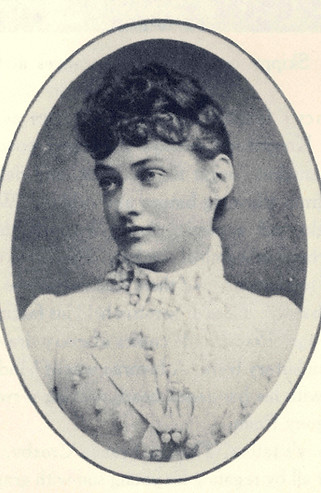
Frances A. Crosby
(1862 – July 14, 1946)
A longtime resident of Richmond Hill, Queens, whose life was closely intertwined with the artistic success of her son, Percy Crosby. Born in the Victorian era, she possessed a lively personality and a gift for storytelling, qualities that shaped her family life and outlook.
After marrying Thomas Crosby, she settled in Brooklyn and later moved with her family to Richmond Hill in 1900. There, she raised her son Percy and strongly encouraged his creative talents from an early age. Under her guidance, Percy developed into a successful illustrator and cartoonist, achieving national and international recognition as the creator of the widely popular comic character Skippy.
Frances lived to see her son’s rise to fame and the cultural impact of his work, which extended to literature, film, and fine art. She died in 1946 and is buried at Maple Grove Cemetery.

Mary Elizabeth Taggart Johnson Coward
(July 8, 1844 – May 7, 1939)
A New York born woman whose life bridged colonial memory and modern America. She was a documented descendant of John and Priscilla Alden of the Mayflower, whose courtship became one of the most enduring love stories in American history and later inspired Henry Wadsworth Longfellow’s The Courtship of Miles Standish.
Raised with a deep awareness of family history and tradition, Mary came of age during the turmoil of the Civil War, a conflict that separated her from her childhood sweetheart, Jonathan Coward. For nearly fifty years, the two remained apart, their lives shaped by war, distance, and the passage of time.
In 1911, Mary and Jonathan were reunited in New York and married after almost half a century of separation. She lived to the age of ninety-four, her life remembered as a testament to endurance, faith, and the belief that love, once begun, can survive even history itself. She and Jonathan are buried at Maple Grove Cemetery.

Jonathan J. Coward
(February 28, 1842 – November 20, 1917)
A Civil War veteran whose life was marked by both military service and an extraordinary personal reunion. Born in New Jersey, he enlisted in the Union cause at the outbreak of the Civil War, joining a conflict that would reshape the nation and permanently alter the course of his own life.
The war separated Coward from his childhood sweetheart, Mary Johnson, and despite years of searching, the two lost contact as decades passed. Jonathan never abandoned hope of finding her again. Nearly fifty years later, in the early twentieth century, they were reunited in New York.
In 1911, Jonathan married Mary, fulfilling a promise interrupted by war and time. He died in 1917 and was buried with Mary at Maple Grove Cemetery.

Zachariah Philip Dennler
(September 10, 1838 – May 27, 1890)
An American physician and Civil War surgeon whose medical career placed him at the center of one of the most pivotal moments in U.S. history. Born in 1838, Dennler became a doctor at the age of twenty-two and soon entered military service on the Union side.
During the Civil War, he served as an assistant surgeon with the New York 10th Heavy Artillery and later re-enlisted as surgeon to the 7th United States Colored Infantry, overseeing hospital operations in Washington, D.C. His wife, Mary Layton Dennler, accompanied him during the war and served as a nurse.
On the night of April 14, 1865, following the assassination of President Abraham Lincoln at Ford’s Theatre, Dennler’s medical probe was used by attending physicians to locate the fatal bullet. That instrument is preserved today among the Lincoln assassination artifacts at the National Museum of Health and Medicine.
After the war, Dennler practiced medicine in Long Island City, where he became known as “the poor man’s friend.” He also served for many years as surgeon and physician to the Long Island Railroad. He died in 1890 at the age of fifty-one and buried at Maple Grove Cemetery.

Mary L. Layton Dennler
(October 15, 1842 – April 21, 1935)
A Civil War–era nurse and the wife of Union Army surgeon Dr. Zachariah Philip Dennler. Born in 1842, she lived through the national upheaval of the Civil War and accompanied her husband during his military service.
In 1865, when Dr. Dennler was placed in charge of a military hospital in Washington, D.C., Mary worked alongside him, assisting in the care of wounded soldiers. She witnessed firsthand the human cost of the war and observed President Abraham Lincoln during his visits to hospital wards in the capital during the final months of the conflict.
Mary Layton Dennler lived to the age of ninety-two and died in 1935 and is buried at Maple Grove Cemetery.

Frederick W. Dunton
(June 9, 1851 – February 27, 1931)
A New Hampshire born businessman, real estate developer, and civic leader whose work helped shape large portions of central Queens. A nephew of railroad magnate Austin Corbin, the first president of the Long Island Railroad, Dunton entered business at an early age and later managed operations in the western United States and Europe on behalf of his uncle’s enterprises.
In the 1880s, Dunton turned his attention to real estate development in Queens. After purchasing more than one hundred acres of farmland, he laid out curving streets, introduced distinctive place names, and developed the area that became known as Hollis. He also helped establish the communities of Dunton and Morris Park, which were later incorporated into Richmond Hill.
Dunton was active in public life, serving multiple terms on the Queens County Board of Supervisors and as supervisor of the Town of Jamaica. He also assisted in founding the Bank of Jamaica. Frederick W. Dunton died in 1931 and is buried at Maple Grove Cemetery.

Phoebe Ione Chase Daggett
(August 21, 1859 – April 25, 1941)
A Massachusetts-born community leader and the matriarch of one of New York’s enduring pharmaceutical and cosmetic enterprises. Born in Plymouth County, she married pharmacist Volney Chapin Daggett in 1883 and later settled with her family in Richmond Hill before moving to Kew Gardens.
In 1890, her husband co-founded the firm of Daggett & Ramsdell, which became nationally known for its innovative cosmetic and personal care products, including a pioneering cold cream that used mineral oil to improve shelf life. The company expanded rapidly, employed celebrity endorsements, and remained influential well into the twentieth century. Volney Daggett retired from daily operations in 1929 but continued to serve as a director until his death.
Phoebe Daggett was deeply involved in civic life. She was an active member of the Twentieth Century Ladies Club, an organization dedicated to the improvement and beautification of Richmond Hill. Through its efforts, the first Richmond Hill Library was established, and the organization endured for more than a century.
Phoebe Ione Chase Daggett died in 1941 at the age of eighty-one and buried at Maple Grove.

Mabel Augusta Davis Birch
(November 11, 1881 – October 1, 1955)
A music educator and early resident of Jamaica Estates whose life reflected the energy and mobility of late nineteenth- and early twentieth-century America. Born in Galesville, Wisconsin, she was the daughter of Augustine Davis, a newspaper publisher, inventor, and industrial leader whose work ranged from journalism to major infrastructure and technological innovation.
Mabel spent her childhood moving with her family as her father pursued business, publishing, and manufacturing ventures across the Midwest and East. After the family settled in Queens, she became one of the early residents of Jamaica Estates following its founding in 1907. Inspired by a life shaped by invention and travel, she pursued music and worked as a piano teacher.
She married attorney Erskine Percival Birch in 1911, with whom she had a son, Herbert, and later married Charles Wren in 1935. Mabel Augusta Davis Birch died in Cincinnati, Ohio, in 1955 and was buried in Maple Grove Cemetery.

Isaac Newton Failor
(February 9, 1851 – April 2, 1925)
A respected educator, mathematician, and school administrator who played a central role in the development of public education in Richmond Hill, Queens. Born in Lima, Ohio, Failor graduated from Wesleyan University and began his career as a school president and principal before moving to New York.
From 1879 to 1892, he served as professor of mathematics at Boys High School in Brooklyn. In 1897, he relocated to Richmond Hill, where he became superintendent of schools and later organized and served as the first principal of Richmond Hill High School. He was instrumental in securing the land and overseeing the construction of the school, which opened in 1900.
Under Failor’s leadership, Richmond Hill High School became one of the first in the nation to feature a revolving dome observatory, reflecting his strong interest in astronomy. The school newspaper, The Dome, was named in honor of this distinctive feature. Failor remained principal until 1917 and authored several textbooks on mathematics during his career.
Isaac Newton Failor died in 1925 in Manhattan, remembered as an influential educator whose vision left a lasting mark on Richmond Hill’s academic and civic life.

Augustine Davis
(June 5, 1852 – January 19, 1933)
An American inventor, newspaper publisher, and industrial manufacturer whose work helped advance modern lighting and welding technology. Born in Elkader, Iowa, Davis began his career in journalism, founding and editing newspapers in the Midwest before turning his attention to invention and manufacturing.
In 1898, he devised the acetylene lighting generator, an innovation widely adopted for illumination and later adapted for acetylene welding applications. His work earned national and international recognition, including a gold medal at the 1904 Louisiana Purchase Exposition in St. Louis. He later organized and led companies dedicated to the manufacture of acetylene lighting and welding equipment, contributing to the rapid industrial expansion of the early twentieth century.
Davis spent his later years in Jamaica Estates, Queens, where he remained active in business and civic life until his death in 1933 at the age of eighty and buried in Maple Grove Cemetery.

George W. Granger
(December 1847 – March 1, 1935)
A Brooklyn-born Civil War veteran whose service placed him at one of the most pivotal moments in American history. Enlisting at the age of fifteen in 1863, he served as a drummer with the 51st New York Regiment and later rose to the rank of sergeant. He was wounded at the Battle of Gettysburg, suffering a leg injury that left him permanently lame.
On the evening of April 14, 1865, Granger was assigned to guard duty at Ford’s Theatre in Washington, D.C., when President Abraham Lincoln was assassinated by John Wilkes Booth. Granger was among those present during the chaotic aftermath, witnessing events that would alter the course of the nation.
After the war, Granger lived a long life marked by public remembrance of both his military service and his connection to the assassination of President Lincoln. He died in 1935 at the age of eighty-seven, remembered as a soldier whose youth was shaped by war and whose life intersected with one of America’s defining tragedies.

John Henry Fort
(October 18, 1835 – May 24, 1912)
A New York businessman and Civil War officer whose service was closely tied to one of the war’s earliest and most symbolic regiments. Born in Hoosick Falls, New York, Fort later became a successful wholesale grain merchant and a director of the North Side Bank.
At the outbreak of the Civil War, he enlisted in the 11th New York Volunteer Infantry Regiment, known as the “Fire Zouaves,” and served as a First Lieutenant. The regiment was organized in 1861 by Colonel Elmer E. Ellsworth, a close friend of President Abraham Lincoln, and gained national attention for its distinctive Zouave uniforms and drill style inspired by French colonial troops.
Ellsworth’s death in Alexandria, Virginia, in May 1861, while removing a Confederate flag, shocked the nation and deeply affected the regiment and the President himself. Fort’s service in the 11th New York placed him among those who stood at the very beginning of the Union’s wartime sacrifice.
John Henry Fort died in 1912 at the age of seventy-six and buried at Maple Grove Cemetery.

Henry Roswell Heath
(April 1, 1845 – April 19, 1908)
Born in Tyringham, Berkshire County, Massachusetts, and later made his home at 333 Washington Street in Brooklyn. During the Civil War, he served with the Union Army as a member of the 20th Massachusetts Volunteers. Early in the conflict he was wounded, captured, and imprisoned in a Confederate prison camp, an ordeal that left a lasting mark on his life.
He was released in a prisoner exchange in 1862 and was notably greeted by President Abraham Lincoln, becoming the first exchanged prisoner to shake the President’s hand. After the war, Heath went on to build a successful career in business, serving for many years as president of the Empire Transportation Company and engaging in real estate and development ventures.
He was active in veterans’ organizations, including the Grand Army of the Republic, and played a role in the early development of the Thousand Islands region. Heath died in Brooklyn in 1908 at the age of 63 and is buried at Maple Grove Cemetery.

Jane Maria Bush “Jennie” Williams Heath
(June 26, 1851 – June 16, 1916)
Born in Utica, New York, and descended directly from Roger Williams, the founder of Rhode Island and a champion of religious liberty. Orphaned as an infant, she was raised by her grandfather, Abijah J. Williams, one of Utica’s most prominent and prosperous citizens.
In 1875, she married Civil War veteran and businessman Henry Roswell Heath. Together they traveled widely and became part of New York’s social and cultural life, while also helping shape the early development of the Thousand Islands region as a summer retreat. Jennie was known for her intelligence, refinement, and quiet influence behind her husband’s public successes.
She died in 1916 while in California and was brought back east to rest beside her husband at Maple Grove Cemetery.

Giuseppe Izzo
(1894 – June 12, 1915)
A young Italian immigrant who lived in Astoria, Queens, and worked in the Maintenance Department of the Long Island Railroad. Known in America as Joseph Izzo, he was part of a close-knit immigrant community deeply connected to events unfolding in Europe during the early days of the First World War.
In the spring of 1915, after Italy entered the war on the Allied side, Izzo and several friends made plans to return to their homeland to volunteer for military service. Just days before his scheduled departure, Izzo was killed while working in Woodside when he accidentally stepped onto the railroad’s electrified third rail, dying instantly from electric shock.
The unusual inscription on his gravestone, “Died by Electric Shock” has led to speculation over the years, but was revealed to be a tragic workplace accident. Izzo was only twenty years old at the time of his death and is buried at Maple Grove Cemetery, where his grave remains one of the cemetery’s most remarked-upon memorials.

Maurice Van Praag
(March 8, 1886 – August 9, 1953)
Born in Amsterdam, Holland, and came to New York City with his family in 1890. Raised in a large musical household, he began his career as a violinist before becoming a distinguished French horn soloist. He performed with the Chicago Symphony and later played solo horn for the great march composer John Philip Sousa, the “March King.”
In 1916 he joined the New York Philharmonic, and by 1922 became its personnel manager. For thirty-six years he shaped the orchestra’s excellence, earning praise as one of the most respected figures in the music world. During his tenure, he worked alongside legendary conductor Arturo Toscanini and helped guide the Philharmonic through tours and historic performances. In 1947, during New York’s smallpox outbreak, he ensured the safety of the musicians by arranging mass vaccinations for the entire orchestra.
Maurice Van Praag retired in 1952 after a lifetime devoted to music. He died the following year at age sixty-seven and is buried at Maple Grove Cemetery.

Thomas Haynes Richardson
(September 8, 1889 – September 28, 1898)
A New York City born child whose brief life is remembered through one of the most distinctive monuments at Maple Grove Cemetery. Known affectionately as “Little Tom,” he died at the age of nine and was laid to rest by grieving parents who marked his grave with an unusual and prominent memorial.
Though his life was short, the monument dedicated to Thomas Richardson has endured for more than a century, overlooking one of the highest points in the cemetery. The site sits along the glacial ridge that forms the backbone of Long Island, a landscape shaped more than ten thousand years ago during the last Ice Age.
Thomas Haynes Richardson is buried at Maple Grove Cemetery.

George Coles Stebbins
(February 26, 1846 – October 6, 1945)
An internationally renowned gospel hymn composer, singer, and evangelistic musician whose work helped shape American religious music in the late nineteenth and early twentieth centuries. Born on a farm in Orleans County, New York, Stebbins began musical training in his teens and later studied with leading teachers of his era.
In 1869, he moved to Chicago, where he became musical director of the First Baptist Church and formed lasting professional relationships with evangelical leaders Dwight L. Moody and Ira D. Sankey. Stebbins composed more than 1,500 hymns, including enduring works such as “Take Time to Be Holy,” “Have Thine Own Way, Lord,” and “There’s a Green Hill Far Away,” which remain widely sung today.
Stebbins traveled extensively in the United States and abroad, including missionary work in India and performances throughout Europe and the Middle East. He was among the earliest singers to have his voice recorded, making a cylinder recording on Thomas Edison’s phonograph in the 1870s. He lived to the age of ninety-nine and is buried at Maple Grove Cemetery.

Paul Stier
(June 6, 1874 – October 23, 1916)
A German-born builder, real estate developer, and public official who played a major role in the early growth of Ridgewood and Glendale, Queens. Born in Schwerin, Germany, Stier immigrated to the United States as a teenager, arriving as a cabin boy and later settling in New York.
After working as a bricklayer, Stier began building homes in Queens at the turn of the twentieth century. By 1904, he was constructing high-quality brick row houses and two-family dwellings on a large scale. Over the course of his career, he built more than 750 homes, and a section of Ridgewood was once informally known as “Stierville” in recognition of his influence on the neighborhood’s development.
Active in local politics, Stier was elected Sheriff of Queens County in 1916. Shortly after taking office, he was killed in the line of duty while attempting to carry out a court-ordered arrest. He was forty-two years old at the time of his death.
Paul Stier is buried at Maple Grove Cemetery.

Susan Mitchell Munroe Stowe
(November 18, 1858 – February 24, 1918)
A writer and cultural figure whose life connected American literature, religion, and reform across generations. Born in Green Bay, Wisconsin, and raised in Cambridge, Massachusetts, she married Charles Edward Stowe in 1879, an ordained minister and author.
Susan was the daughter-in-law of Harriet Beecher Stowe, whose novel Uncle Tom’s Cabin profoundly influenced American society and the national conversation on slavery. Deeply familiar with her mother-in-law’s life and work, Susan contributed her own reflections to the literary record, publishing an essay titled Harriet Beecher Stowe as a Mother in 1899, offering a personal and human portrait of the celebrated author.
Susan and Charles lived in several places, including Connecticut, Germany, and later Forest Hills Gardens, Queens. Together they raised three children, including a son, Lyman Stowe, who became a journalist and editor. Susan died in 1918 and was buried at Maple Grove Cemetery.

John H. Sutphin
(August 18, 1835 – July 21, 1907)
One of Jamaica’s most generous and quietly powerful citizens. Born in Hicksville to an old Dutch family whose roots in New York stretched back to the 1600s, he lived most of his life along Fulton Street, now Jamaica Avenue.
John was elected Justice of the Peace, but his conscience proved too tender for the bench. Unable to imprison or fine those who stood before him, he often paid their penalties himself and soon resigned. For three decades he served Queens County as Deputy County Clerk and as Chairman of the Democratic County Committee.
He helped organize Jamaica Savings Bank, serving as its president until his death, and was instrumental in the founding of Maple Grove Cemetery. Yet it was his private charity that defined him most. Anyone with a hard-luck story left his office helped. He paid debts, covered rent, and asked nothing in return. After his death, it was discovered he had been quietly supporting dozens of families giving away nearly everything he had.
In his honor, a major thoroughfare bears his name: Sutphin Boulevard.
He is buried in Maple Grove Cemetery.

Harry Sutphin
(April 10, 1858 – February 7, 1935)
A son of John Sutphin and a quiet builder of modern Queens.
Born in Jamaica to John H. Sutphin and Caroline Sutphin, Harry grew up in a family known for public service and generosity. As a young man, his life took him far from home. He traveled to Hawaii representing the Spreckels sugar interests, spent years in the Orient, and later worked in journalism in San Francisco and Washington, D.C. before returning to Queens.
In 1898, Harry came back to Jamaica and founded a weekly newspaper. He soon entered public service and became the first deputy appointed in Queens with responsibility for public buildings and offices. In that role, and later as Deputy Commissioner of Public Works, he helped shape the placement and organization of many civic buildings still in use today.
He lived quietly in Jamaica, carrying forward the Sutphin name with diligence rather than fanfare. Harry Sutphin died at his home in 1935 and was laid to rest here at Maple Grove Cemetery.

Wilfred Andrew Surber
(April 18, 1894 - June 9, 1948)
Born in Manhattan, New York. As a young man, he was an accomplished athlete and long-distance swimmer. In 1914, at the age of twenty, he completed remarkable swims across the Hudson River, around Manhattan Island, and from the Battery to Sandy Hook.
Surber studied electrical engineering at the Stevens Institute of Technology in Hoboken, New Jersey. When the United States entered World War I in 1917, he became an aviator and was among the first American pilots sent to France. In 1918, his aircraft was shot down during combat. He survived the crash but suffered serious injuries that affected his health for the remainder of his life.
After the war, Surber taught aeronautics at Ohio State University and later entered aviation administration. During World War II, he served as an executive with the Republic Aircraft Corporation, contributing to the development and production of military aircraft.
Wilfred is buried at Maple Grove Cemetery.

George L. H. Swinyard
(1829 - March 16, 1897)
Born in England and immigrated to the United States more than thirty years before his death. He became a familiar and respected presence in New York City’s theater world, serving for many years as head usher at prominent Broadway theaters, most notably the Fifth Avenue Theatre.
Tall in stature, with white hair and carefully trimmed English whiskers, Swinyard was known for his dignified bearing and courteous manner. Standing at the theater doors, he greeted patrons with a formal bow and composed warmth, earning the affectionate nickname “The Archbishop of Canterbury,” though to many he was simply known as “Old George.”
The Fifth Avenue Theatre, rebuilt and reopened in May 1892 after a devastating fire, was among Broadway’s most celebrated venues. During Swinyard’s tenure, the theater hosted historic performances, including early American productions of Gilbert and Sullivan operas. His presence became part of the theater’s character, remembered as much as the performances themselves.
In early 1897, George retired from his post. He died shortly thereafter on, at the age of sixty-seven, and was laid to rest at Maple Grove Cemetery.

Catalina Duryea Vanderveer
(March 11, 1816 – February 6, 1891)
A New Yorker and a member of an old Dutch family rooted in the days of New Amsterdam, she lived with her husband, Dominicus Vanderveer, and their daughter, Phebe, at a farmhouse near what is now Jamaica Avenue and Cross Bay Boulevard, then a quiet stretch of farmland..
On the night of January 24, 1868, they had a terrifying encounter along the Jamaica Plank Road. Returning home by carriage they were attacked by an armed highwayman who seized the horse’s reins and violently assaulted her husband. In the chaos that followed a gun was fired fire and blood spilled upon the planks. Catalina and her daughter lost consciousness, only to awaken safely at her own doorstep, the horse having instinctively found its way home.
Rousing neighbors and returning to the scene, Catalina helped ensure her husband received lifesaving care. Though grievously wounded and robbed, Dominicus survived after weeks of uncertainty, but he recovered. Catalina lived another twenty-three years.
She and Dominicus are buried at Maple Grove Cemetery

Dominicus Vanderveer
(June 1, 1812 – September 14, 1888)
A New Yorker and a member of an old Dutch family rooted in the days of New Amsterdam, she lived with her husband, Dominicus Vanderveer, and their daughter, Phebe, at a farmhouse near what is now Jamaica Avenue and Cross Bay Boulevard, then a quiet stretch of farmland..
On the night of January 24, 1868, they had a terrifying encounter along the Jamaica Plank Road. Returning home by carriage they were attacked by an armed highwayman who seized the horse’s reins and violently assaulted her husband. In the chaos that followed a gun was fired fire and blood spilled upon the planks. Catalina and her daughter lost consciousness, only to awaken safely at her own doorstep, the horse having instinctively found its way home.
Rousing neighbors and returning to the scene, Catalina helped ensure her husband received lifesaving care. Though grievously wounded and robbed, Dominicus survived after weeks of uncertainty, but he recovered. Catalina lived another twenty-three years.
She and Dominicus are buried at Maple Grove Cemetery.

Shannon Skye Tavarez
(January 20, 1999 – November 1, 2010)
A child actress and singer whose talent and courage touched Broadway and the wider world. Born in Bellerose, Queens, New York, she dreamed from an early age of performing on the Broadway stage.
In 2008, while a sixth-grade student at P.S. 176 in Cambria Heights, Shannon auditioned at the Apollo Theater in Harlem and was selected to play Young Nala in Disney’s The Lion King. She made her Broadway debut in September 2009, sharing the role and performing four shows a week until illness forced her to leave the production in April 2010.
Shannon was diagnosed with acute myelogenous leukemia, a rare and aggressive cancer in children. Her search for a bone marrow donor inspired widespread support from the Broadway community and public figures, including Alicia Keys, who personally reached out to her. Despite nationwide donor drives, no match was found.
Shannon died at the age of eleven. In her honor, the Minskoff Theatre dimmed its lights. She is buried at Maple Grove Cemetery.

Joseph Teagle
(1839 – April 21, 1899)
A formerly enslaved man who became a Union sailor during the American Civil War. He was born enslaved in Accomac County, Virginia, where he worked on a farm from childhood.
In 1863, at the age of twenty four, Teagle enlisted in the United States Navy. He served aboard the USS Lehigh, a Union ironclad monitor that operated in Virginia waters and later off Charleston, South Carolina. During his service, the Lehigh took part in major naval operations, including engagements along the James River and repeated bombardments of Confederate fortifications such as Fort Sumter. Teagle remained in naval service through the end of the war.
After the war, Teagle settled in Jamaica, New York, where he worked as a domestic servant, gardener, and coachman, including for John M. Crane, president of the Shoe and Leather Bank of New York City. He died in 1899 at about sixty years of age and was buried at Maple Grove Cemetery. His headstone bears the record of his proud service to his country.

Ann Wilkins
(1806–November 13, 1857)
One of the first American female missionaries to serve in Africa. Born near West Point, New York, she showed an early gift for learning and became a schoolteacher while still a young woman.
In 1836, Wilkins was inspired by a speech from John Seys, superintendent of the Methodist mission in Liberia. Answering his call for educators, she offered not only her small savings but her life in service. The following year, she sailed to Liberia, becoming one of the earliest female missionaries sent overseas in her own right.
Wilkins spent nearly nineteen years in Liberia teaching children and establishing schools, including one of the first Methodist girls’ schools outside the United States. Her work endured despite illness and long periods of isolation, during which she was sometimes presumed lost. She returned briefly to America twice for health reasons before finally leaving Africa in 1856.
Ann Wilkins died in 1857. Years later, when her original burial site was disturbed, her remains were reinterred at Maple Grove Cemetery. At her memorial service, a bishop remarked that while she rested peacefully, her true grave belonged in Africa. Her life stands as a testament to faith, courage, and the quiet power of education.

Beatrice Mordaunt Wilson
(May 6, 1860 – May 7, 1946)
An English-born performer and writer whose life bridged the Victorian world and the modern age. She was born in Cockermouth, Cumbria, England, and later immigrated to the United States, becoming a naturalized citizen in 1925.
During the 1920s, Wilson worked as a Broadway showgirl, appearing in popular productions such as No, No, Nanette and Hit the Deck. In later years, she lived in Queens, New York, where she supported herself as a private and graduate nurse, owning her own home in Woodhaven.
Beatrice was devoted to her sister, Emmeline Duthoit Neubert, who predeceased her and is buried at Maple Grove Cemetery. A visit to her sister’s grave inspired Beatrice to write a sharply worded poem criticizing the cemetery’s neglect of the plot. The poem succeeded in prompting action and repairs, standing today as a rare and vivid example of a family member holding a cemetery to its promises.
Beatrice Wilson died in Manhattan in 1946. Her name is inscribed on the family monument at Maple Grove Cemetery alongside her sister’s, marking her lasting connection to the place she once so fiercely defended.

George Paxton
(1861 – February 17th, 1914)
Born in England and was the grandson of Sir Joseph Paxton, the renowned designer of London’s Crystal Palace for the Great Exhibition of 1851, commissioned with the support of Prince Albert. From a family linked to one of the nineteenth century’s great architectural triumphs, Paxton chose a different stage, one lit by footlights rather than glass and iron.
He came to America in 1882 to pursue a theatrical career during the golden age of touring productions. A gifted tenor, he performed widely in comic operettas and Gilbert and Sullivan works, later taking on dramatic roles and even directing productions in New York. He also appeared in early silent films with pioneering director Alice Guy-Blaché, becoming part of the earliest era of American cinema.
George Paxton died of pneumonia in 1914 at the age of fifty-two. He is buried at Maple Grove Cemetery.

Captain Charles Rudolph Schott
(May 6, 1860 – May 7, 1946)
Joined the New York City Fire Department in 1903 at the age of twenty-three and served for thirty-seven years. He was the last surviving member of Hook and Ladder Company No. 20, the unit that responded to the devastating Triangle Shirtwaist Factory fire.
On March 25, 1911, Schott and his fellow firefighters confronted one of the most tragic industrial disasters in American history. The factory’s locked doors and unsafe conditions trapped hundreds of young immigrant women inside. In just eighteen minutes, 146 lives were lost. Schott helped rescue approximately fifty workers, but the horror of that day remained with him throughout his long life.
The tragedy led to sweeping reforms in workplace safety laws, forever changing labor protections in America. Captain Charles Schott died in 1975 at the age of ninety-five. He is buried at Maple Grove Cemetery.

Jacob P. Ringeisen
(November 29, 1865 – June 17, 1956)
Born in Paris, France, and later immigrated to New York, where he worked as a bricklayer and made his home in Woodhaven. He married Augusta Viltaro, also born in France, and together they raised their family after arriving in America in the early twentieth century.
Augusta died of tuberculous pneumonia in 1917 and was laid to rest at Maple Grove Cemetery. Jacob later remarried but was widowed again in 1939. When he died at the age of ninety in 1956, he was buried beside Augusta. A young tree planted near their grave grew steadily over the decades, and today its massive roots embrace their granite tombstone. The image that has drawn wide attention and reflection.
Augusta Viltaro Ringeisen
(August 25, 1872 – December 21, 1917)
Born in France and later immigrated to New York with her husband, Jacob P. Ringeisen, in the early twentieth century. Together they built a life in Woodhaven, Queens, raising their children in a new land far from their birthplace.
In 1917, Augusta was stricken with tuberculous pneumonia and died at the age of forty-five. She was laid to rest on Christmas Eve of that year at Maple Grove Cemetery in Kew Gardens.

Frederick A. Watson
(October 12, 1896 – February 24, 1937)
A World War I veteran and longtime manager of the Forest Hills Inn, whose life carried him from the skies of war to the heart of a growing Queens community. Born in Waterbury, Connecticut, he was the son of Frederick Watson of England and Charlotte Lawson Watson.
He enlisted on October 13, 1917, and served as a Sergeant in the 10th Company of the American Balloon Service in France. As part of this specialized unit, known as the “eyes of the Army,” Watson observed enemy movements from gas-filled balloons and directed artillery fire. It was dangerous work, requiring parachute escapes when under attack. He departed for Europe on June 29, 1918, with the Fourth Balloon Squadron and was honorably discharged on July 21, 1919.
After the war, Watson devoted more than twenty years to managing the Forest Hills Inn at Station Square, where he helped shape it into a center of community life in Forest Hills Gardens. He lived there with his wife, Eleanor B. Watson, at 35 Greenway Terrace.
In early 1937, the couple returned from a voyage aboard the SS Scanmail. Shortly after, on February 24, Watson died suddenly of a heart attack at the age of forty while still at work at the Inn. Though initially expected to be buried in Connecticut, he was laid to rest in Maple Grove Cemetery in Kew Gardens.

Edward H. Sprague
(1875 – February 20, 1876)
Born the same year that Maple Grove Cemetery was established in Queens. In February 1876, during a devastating smallpox epidemic in New York City, he died at just one year old at his home on 8th Avenue in Manhattan.
On February 21, 1876, Edward was laid to rest in Monumental Park, Reserved Plot 1, Grave 1, becoming the first person interred at Maple Grove Cemetery. His burial marked the true beginning of the cemetery’s history upon the glacially formed hills known as the Terminal Moraine.
Nearly 150 years later, Maple Grove has become the final resting place of almost 120,000 individuals from every walk of life. Yet it was Edward H. Sprague, a child taken too soon, who first consecrated its grounds. He rests at Maple Grove Cemetery.

Sarah Elizabeth Allison Steel
(September 1886 – November 27, 1907)
Born in Richmond Hill, Queens, and grew up in the imposing Italianate villa on 111th Street originally built in 1870 by Daniel and Abbie B. Eldridge. The house, later owned by her family, stood as a landmark of the area’s early development and reflected the growing elegance of nineteenth-century Richmond Hill.
Her father, Alexander Steel, a Scotsman and judge of the Marine Court of Kingston, West Indies, purchased the property in 1882. After his death in 1888, Sarah and her mother remained in the home. Blessed with a remarkable voice, she became a noted singer and moved to Brooklyn to further her musical studies, performing in many of the city’s large churches.
She died at just twenty-one years of age in Kings County, New York. On the family monument at Maple Grove Cemetery are the words, “She is singing above.” In 2011, her childhood home was designated a New York City Landmark by the New York City Landmarks Preservation Commission. Sarah Elizabeth Allison Steel is buried at Maple Grove Cemetery.

Rev. Harry J. Sutcliffe
(August 10, 1925 – December 5, 1987)
Born in Brooklyn, New York, and lost his sight soon after his premature birth. Growing up during the age of radio, he became a licensed “ham” operator at thirteen. During World War II, he served with the Radio Intelligence Division of the Federal Communications Commission and the War Emergencies Radio Service of New York’s Office of Civilian Defense, earning a citation from Mayor Fiorello LaGuardia for his service.
A gifted linguist and scholar, Sutcliffe graduated with honors from Wittenberg College and pursued theological studies in Hebrew and Aramaic. Originally entering the Lutheran ministry, he later became an Episcopal priest, devoted to serving the blind. He translated church services into Braille, taught Hebrew and Hebrew Braille, and became director of the Episcopal Guild for the Blind from 1959 until his death. In 1959 he received the “Man of the Year Award” from B'nai B'rith International for his interfaith work. A tireless advocate for the organized blind movement, he was appointed in 1987 to the National Council on the Handicapped by Ronald Reagan.
Rev. Harry J. Sutcliffe died in 1987 at the age of sixty-two and is buried at Maple Grove Cemetery.

Marie Margaretha Van Gelder
(June 23, 1861 – October 13, 1935)
Born in Amsterdam, Holland, the daughter of a composer and piano teacher who recognized her extraordinary soprano voice at an early age. She later came to the United States to study at the New England Conservatory of Music in Boston under the renowned maestro Signor Augusto Rotoli, who predicted her brilliant future.
Her operatic debut in Switzerland launched a celebrated European career. Blessed with a powerful voice, she mastered sixteen principal roles in a single season and became prima donna soprano of the Royal Theater in Amsterdam. She sang before Queen Wilhelmina and was presented to Wilhelm II, earning praise from crowned heads of Europe. Her repertoire included Leonore in Beethoven’s Fidelio and leading Wagnerian roles such as Elsa in Lohengrin and Isolde in Tristan und Isolde.
After retiring from the stage, she returned to the United States and devoted her life to teaching. In 1935, at the age of seventy-four, she suffered a fatal heart attack while attending Mass at St. Patrick's Cathedral. Marie Van Gelder is buried at Maple Grove Cemetery beside her beloved father.

Gerardus Martinus Van Gelder
(September 3, 1829 – July 16, 1878)
Born in Wormerveer in the Netherlands and became a respected composer and teacher of the pianoforte. Gifted in music and devoted to his craft, he nurtured both students and his own family in the discipline and beauty of classical training.
Recognizing the extraordinary talent of his young daughter, Marie Van Gelder, he carefully guided her early musical education and encouraged her studies abroad, laying the foundation for her celebrated operatic career in Europe and America. His influence shaped not only her voice, but her lifelong devotion to the art of music.
Gerardus Martinus Van Gelder died in New York City at the age of forty-eight in 1878. He is buried at Maple Grove Cemetery, where he was later joined by his renowned daughter.


Ada J. Spice Purdy
(June 23, 1861–October 13, 1935)
An American woman of deep ancestral pride whose life bridged the old Dutch heritage of New York with the modern city that grew around it. Born in Tarrytown, a village steeped in early American folklore along the Hudson River, she came from a lineage connected to some of the region’s earliest Dutch families, whose roots stretched back to the days of New Amsterdam.
Raised in a place immortalized by Washington Irving, Ada carried with her the stories and traditions of the Hudson Valley, including a familial connection to the Van Tassel and Van Brunt families. Names forever entwined with The Legend of Sleepy Hollow. Through this lineage, her life held a quiet but remarkable link between history and legend, where storytelling and ancestry met.
In time, Ada made her way to Brooklyn, where she lived through an era of immense change, witnessing New York's transformation from the 19th century into the modern age. She lived a long life of 88 years, shaped by memory, heritage, and the enduring presence of the past.
Ada J. Spice Purdy is buried at Maple Grove Cemetery

Frederick J. “Fred” Taral
(August 2, 1867 - February 13, 1925)
Born in Peoria, Illinois. At the age of thirteen, he ran away from home to become a jockey and quickly gained notice for his speed and skill in the saddle.
By the 1880s and 1890s, Taral was one of the most successful riders in American racing. Known as “The Honest Dutchman,” he earned a reputation for integrity and never threw a race. Over his career, he rode in thousands of races and became one of the highest-paid jockeys of his time.
Taral later raced extensively in Europe and retired in 1909 after nearly three decades in the sport. He spent his later years training horses but lost much of his fortune.
Fred Taral is buried at Maple Grove Cemetery. In 1955, he was inducted into the National Museum of Racing and Hall of Fame, honoring a career defined by talent, longevity, and honesty.

La Vergne Bronk Jr.
(November 18, 1905 – August 7, 1990)
A descendant of the pioneering Bronk family whose name became forever linked with New York City history. Born in Richmond Hill, Queens, New York, he carried a surname that echoes through one of the city’s five boroughs.
Bronk was a direct descendant of Jonas Bronk, the 17th century Danish settler whose land along the Harlem River gave rise to the name of The Bronx. In 1639, Jonas Bronk arrived in New Amsterdam, acquired land through peaceful agreement with Native Americans, and established a farmstead that became the site of important treaty signings. The Bronx River was named in his honor, and in time, so too was the borough itself.
The evolution of the family name, spelled historically as Bronk or Bronck, eventually took on its modern form. One theory suggests the “x” reflects Dutch possessive style, transforming “Bronk’s” into “Bronx.” The borough’s flag, adopted in 1912, bears the Bronk family coat of arms, symbolizing honor, commerce, and resilience.
La Vergne Bronk Jr. lived a long life spanning much of the twentieth century, witnessing New York’s transformation into a global metropolis. He died at age 84 and is buried at Maple Grove Cemetery.

Vincent Millie Youmans
(September 27, 1898 – April 5, 1946)
Born in New York City and grew up in Larchmont, the son of a prosperous hat-making family. Though he briefly studied engineering at Yale, his passion turned to music. During World War I, while serving in the United States Navy at the Great Lakes Training Station, he began composing and producing shows for the troops—an experience that launched his songwriting career.
After the war he worked as a Tin Pan Alley song plugger and rehearsal pianist for Victor Herbert before achieving Broadway success. His 1925 musical No, No, Nanette became a sensation, featuring the enduring standards “Tea for Two” and “I Want to Be Happy.” He followed with Hit the Deck and later wrote the score for Flying Down to Rio, the 1933 film that introduced the legendary dance partnership of Fred Astaire and Ginger Rogers. Over his brief but brilliant career, he collaborated with leading lyricists including Ira Gershwin and Oscar Hammerstein II.
Stricken with tuberculosis, Youmans retired in 1934 and died in 1946 at the age of forty-seven. Of fewer than one hundred published songs, nearly twenty became enduring standards. He was posthumously inducted into the Songwriters Hall of Fame and the American Theater Hall of Fame. Vincent Youmans is memorialized at Maple Grove Cemetery.


Kuniko Nakajima Wilson
(1935 – 1992)
Born in Tokyo, Japan, and began figure skating at an early age alongside her two sisters. Gifted and graceful, she pursued skating professionally and joined the Far East Company of Holiday on Ice. She was featured in the production of Madame Butterfly, famously performing in a silk kimono. When the show was brought to the United States, she became one of the first Japanese skaters to perform professionally in America.
While touring, she met musician David Wilson, and they married in 1967. After leaving Holiday on Ice in 1969, they settled in New York City. Kuniko began a second career on Broadway as a wardrobe attendant and later became a trusted personal dresser to celebrated performers including Bernadette Peters, Lauren Bacall, and Raquel Welch.
Kuniko Nakajima Wilson died in 1992 at the age of fifty-six. She is buried at Maple Grove Cemetery.

John Henry Woodson
(May 25, 1886 – January 15, 1951)
Born in Virginia and raised in Jamaica, Queens. In 1914, at the age of twenty-five, he became the first African American actively assigned to fire duty in the New York City Fire Department. Although two Black men had been appointed before him, neither had been permitted to fight fires. Woodson broke that barrier.
After working for the Knickerbocker Ice Company and the Long Island Railroad, he passed the civil service examination. Fire Commissioner Robert Adamson insisted that if Woodson were appointed, he would serve as a full firefighter sharing “the peril and the hard work of the department.” On September 22, 1914, Woodson joined Hook and Ladder Company No. 106 in Brooklyn as the only Black firefighter among more than 5,000 men.
His courage was proven on September 22, 1916, at a deadly tenement fire on Dupont Street in Greenpoint. With flames racing upward and residents preparing to jump, Woodson mounted a scaling ladder above the main extension ladder to rescue a woman and her infant from a fourth-floor window. He first handed the baby to safety, then carried the mother down on his shoulder. For this daring act, he was awarded a gold medal by Mayor John Purroy Mitchel in 1917.
Woodson served twenty-two years in the FDNY, retiring in 1936. He later served as a lieutenant in the Fire Department of the 1939–1940 New York World’s Fair and worked at the Metropolitan Racetrack in Jamaica. Through quiet strength, discipline, and unshakable dignity, he helped break the color line in the department and opened doors for generations to follow.
John Henry Woodson died in 1951 and is buried at Maple Grove Cemetery.


Annie Healy Weir
(1850 – January 4, 1890)
Lived in New York City at 237 Eldridge Street and died at the age of forty during the devastating global influenza pandemic of 1889–1890, then widely known as “La Grippe.” Her sudden passing was reported in the New York Herald on January 6, 1890, amid daily accounts of mounting deaths across the city and around the world.
The pandemic claimed more than one million lives and disrupted society on an extraordinary scale. Morgues overflowed, cemetery workers struggled to keep pace with burials, and schools, churches, and businesses were deeply affected. From New York to Europe, the illness spared neither royalty nor laborer, sweeping across nations in a relentless wave.
Annie Weir was laid to rest at Maple Grove Cemetery in 1890. Her story reminds us that history moves in cycles, and that even in the darkest seasons, humanity endures and rises again.

Edouard King Fong Wah
(February 18, 1938 – September 27, 2003)
Born in Port-au-Prince, Haiti, to an Afro-Haitian mother and a Chinese immigrant father. Known professionally as Edouard Wah, he became a renowned Haitian painter, celebrated for his vibrant modern style and his signature use of bright cerulean blue outlining his subjects. He and his brothers Marcel, Edgard, and Bernard were all gifted artists, forming a remarkable creative family.
Educated at the Foyer des Arts Plastiques in Port-au-Prince, Wah mastered both classical and modern techniques and later co-founded the cultural center “Calfou” in 1963 to promote Haitian art and music. He also worked as an actor and was commissioned by the Haitian government to help restore public murals. In 1971, during the Duvalier era, he emigrated to the United States, living in Philadelphia for many years while continuing his artistic career.
Edouard King Fong Wah died in Haiti in 2003 at the age of sixty-five. He is buried at Maple Grove Cemetery alongside members of his family.

Frederick Johann Weber
(March 4, 1881 – August 1967)
Born in Austria and discovered his love of photography at the age of nine. He immigrated to the United States in 1899, first settling in the Rockaways before making Jamaica, Queens, his permanent home. For more than fifty years, he documented the lives of Long Islanders through his lens.
A freelance photographer, Weber captured weddings, school graduations, civic events, and everyday portraits. He served as official photographer for the Long Island Railroad and worked with schools, churches, trolley companies, and local publications. Known for his large-format cameras and panoramic “banquet camera,” he helped preserve a vivid visual record of early twentieth-century Queens. His vast body of work, now known as the Frederick Weber Collection, remains an invaluable chronicle of community life.
Frederick Johann Weber died at the age of eighty-six in 1967. He is buried at Maple Grove Cemetery.

Virginia G. Voskerichian
(September 14, 1956 – March 8, 1977)
Born in Sofia, Bulgaria, to Armenian parents and later came to the United States, where she grew into a gifted and ambitious young woman. A full-time student at Barnard College, she also worked at a duty-free shop at JFK Airport. Intelligent and driven, she spoke five languages and loved music, art, fashion, and literature.
On the evening of March 8, 1977, while returning home to Queens, she was tragically murdered at the age of twenty during the series of shootings carried out by David Berkowitz, infamously known as the “Son of Sam.” Her death shocked the city and marked one of the final chapters of that dark period in New York’s history.
Virginia G. Voskerichian is buried at Maple Grove Cemetery.

Nathaniel William Vickers
(October 9, 1846 – October 10, 1949)
Born in Lincolnshire, England, and trained in architecture under Sir George Gilbert Scott. He came to America in 1885 with his wife, Mary, and became a respected architect and civic leader in Richmond Hill, Forest Hills, and Kew Gardens.
Vickers assisted in the design of Vanderbilt Hall at Yale University, worked on buildings at Lehigh University, and contributed to projects at the Cathedral of St. John the Divine and St. Patrick’s Cathedral in New York. His most enduring work stands at the Church of the Resurrection in Richmond Hill, where in 1904 he preserved the original 1874 wooden Gothic chapel by encasing it within a larger stone church—creating the rare distinction of a church with two cornerstones. He also designed the grand Tudor Gothic clubhouse of the Kew Gardens Country Club, which opened in 1917.
A lifelong athlete, Vickers became known as one of the oldest active golfers in the world, playing into his one-hundredth year and participating in events of the United States Golf Association. A firm believer in moderation, tradition, and thoughtful design, he lived to the age of 103, passing away just after his birthday in 1949. Nathaniel William Vickers is buried at Maple Grove Cemetery beside his beloved wife Mary.

George Aubinger
(April 27, 1848 – April 26, 1906)
A Queens businessman whose life reflected the changing face of Jamaica in the nineteenth century. Born in Long Island City to German immigrant parents, he began his working life as a milkman, delivering by horse and wagon before entering the livery stable trade. Aubinger became associated with the historic Pettit’s Hotel in Jamaica, originally established in 1781 as the Queen’s Head Inn during the Revolutionary War. The hotel served as a major stagecoach stop along Jamaica Avenue and hosted notable events and visitors, including President George Washington during his 1790 tour of Long Island. Through his work in the livery stable, Aubinger supported travelers and residents in an era when horses powered daily life. He witnessed Jamaica’s transformation from rural crossroads to modern town, living through the age of stagecoaches, horse-drawn trolleys, and the early arrival of automobiles. George Aubinger died in 1906 and is buried at Maple Grove Cemetery.


Isaac Wyckoff Backus
(December 12, 1880 – January 30, 1918)
A Queens coal dealer whose work supplied the essential fuel that powered American industry and warmed countless homes at the turn of the twentieth century. During an era when coal was the backbone of transportation, manufacturing, and domestic life, Backus operated within a trade that was both economically vital and physically demanding.
Coal fueled steam engines that drove trains and machinery, and it heated the furnaces that kept homes and businesses warm through harsh winters. Delivered by horse-drawn wagons and later by truck, coal was stored in basement bins and shoveled by hand into large cast-iron furnaces often nicknamed “octopuses” for their sprawling ductwork. Dealers like Backus ensured that families and factories alike had steady access to this indispensable resource.
Working in a trade foundational to American industrial growth, Backus was part of a generation that witnessed the gradual transition from coal to oil and gas heating systems. He died in 1918 and is buried at Maple Grove Cemetery.

Helene Speransky Bakhmeteff
(1880 – July 24, 1921)
A Russian émigré whose life was shaped by the upheaval of the Russian Revolution. Born during the final decades of the Romanov dynasty, she witnessed the collapse of Imperial Russia and the dramatic political changes that followed.
She was the wife of Boris Alexandrovich Bakhmeteff, an engineer and scholar who became Ambassador of the Russian Provisional Government to the United States in 1917. After the Bolshevik Revolution overthrew that government, the couple remained in America in exile. The United States did not recognize the new regime, leaving her husband effectively an ambassador without a nation. Separated from her homeland and family, Helene endured the hardships of displacement during a time of global conflict and uncertainty.
She died in 1921 at the age of forty-one and is buried at Maple Grove Cemetery, her grave reflecting a life touched by revolution and exile at a pivotal moment in world history.

Niels Pedersen
(April 11, 1840 – January 29, 1912)
Born in Denmark and immigrated to the United States in 1863 at the age of twenty-three. Like many newcomers of his generation, he pursued opportunity wherever it could be found, first working on railroad construction and later serving three years in the U.S. Army. After drifting east, he settled in Jamaica, Queens, where he established himself as a skilled carpenter and builder.
Pedersen played a significant role in the early development of Queens. He constructed the original church for St. Mary’s Parish in Jamaica, later known as Presentation Parish, and went on to help build many of the Victorian homes that still define Richmond Hill today. He later became manager of the Man Estate, overseeing large portions of the neighborhood’s development during its formative years.
Widely respected for his craftsmanship, integrity, and gentle nature, Pedersen was described at the time of his death as a “landmark of Richmond Hill.” He was buried at Maple Grove Cemetery.

Bertha Christine Pedersen
(February 8, 1874 – May 15, 1947)
Born in New York and raised in the early years of Richmond Hill, when the neighborhood was still surrounded by forests and farmland. She witnessed the community’s transformation from a rural settlement into a thriving residential town and retained vivid memories of its earliest days.
Bertha was among the first students to attend Richmond Hill’s original wooden schoolhouse on Lefferts Avenue, built in 1872. Her childhood was shaped by open fields, shaded porches, and the close-knit rhythms of a developing village. Throughout her life, she remained deeply connected to the neighborhood and to the legacy of her father, Niels Pedersen, whose work was woven into the very fabric of the community.
Bertha is buried at Maple Grove Cemetery.

James Edward Ware
(July 12, 1846 – April 14, 1918)
A prominent American architect whose work helped shape New York City in the late nineteenth century. Born in New York City, he studied at the City College of New York and began his architectural practice in 1869.
Ware is best known for developing the “dumbbell plan” for tenement housing, an influential design intended to improve light and ventilation in overcrowded urban dwellings. His work aligned with broader social reform efforts of the era and was widely recognized for advancing safer and more humane living conditions, efforts admired by reformers such as Jacob Riis. He was also an early pioneer in the design of fireproof warehouses.
Among Ware’s notable projects are the Osborne Apartments, the Madison Avenue Presbyterian Church, buildings at Mohonk Mountain House, and Romanesque Revival residences on Madison Avenue. At Maple Grove Cemetery, he designed the Administration Building, receiving vault, entrance gates, and related structures, completed in 1880. In an unusual agreement, Ware received a family burial plot at the cemetery as partial payment for his work.
Ware served as a lieutenant in the Seventh Regiment of New York during his military service. He later practiced with his sons, Franklin and Arthur, forming the firm James E. Ware and Sons. He died in 1918 and is buried at Maple Grove Cemetery.

Albon Platt Man II
(November 14, 1845 – April 24, 1920)
The son of Albon Platt Man, the founder of Richmond Hill, and the brother of Alrick Hubbell Man, who would later develop Kew Gardens. Born in New York City, he was part of a family whose vision helped shape the landscape of Queens.
In 1868, his father recognized the potential of the rolling hills north of what is now Metropolitan Avenue and, with partner Edward Richmond, began developing the garden community of Richmond Hill. The wooded land to the north was left largely untouched, becoming a place for recreation where residents enjoyed picnicking, boating on Crystal Lake, and ice skating in winter.
In 1895, Albon Platt Man II, alongside his brother Arthur, helped establish the Richmond Hill Golf Links on this land. The nine-hole course and clubhouse became a popular gathering place and hosted many tournaments.
His brother Alrick remained deeply involved in the community, serving as the first president of the Village of Richmond Hill after its incorporation in 1894. In 1908, the golf course closed, and the land was developed into what is now Kew Gardens.
Albon Platt Man II died in Kew Gardens at the age of 74 and is buried at Maple Grove Cemetery.
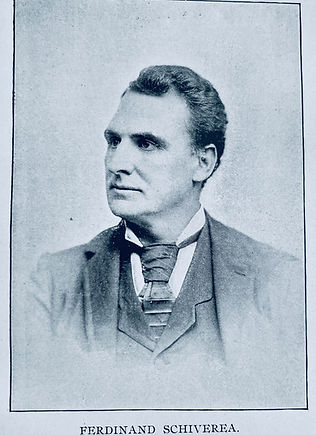
Rev. Ferdinand S. Schiverea
(October 12, 1854 – August 28, 1937)
Born in Brooklyn, New York, Ferdinand began his early life as a performer before a profound spiritual awakening led him to the path of evangelism.
A devoted associate of the renowned preacher Dwight L. Moody, Schiverea spent decades traveling across the United States and Canada, preaching and teaching the Bible, often reaching working-class audiences with his heartfelt and accessible message. His influence was widely recognized, and he was credited with aiding Moody’s evangelistic efforts, including at the 1893 Chicago World’s Fair.
The Rev Schiverea was also an author of religious works, including Grace Magnified, and inspired hymns dedicated in his honor. He died in Jamaica, Queens, at the age of 82 and is buried at Maple Grove Cemetery.

Edith Georgina Annette Dodson
(January 23, 1886 – September 9, 1970)
Born in Bruges, Belgium, Edith came to the United States in 1911, beginning a life that would bridge continents and history at a moment of great global change.
During World War I, she answered the call to service as one of the “Hello Girls,” the pioneering women of the U.S. Army Signal Corps who operated telephone switchboards in France. Fluent, skilled, and courageous, these women worked close to the front lines, ensuring vital communication for American forces at a critical time in the war. Though they swore the Army oath, their service went unrecognized for decades before finally being honored in 1979.
In her later years, Dodson continued a life of quiet diligence, working as a researcher in New York City. She died at the age of 84 and is buried at Maple Grove Cemetery.
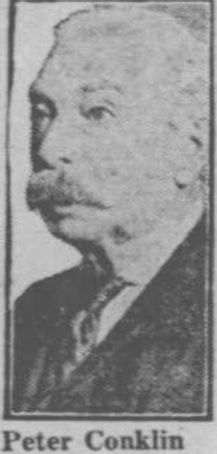
Peter Conklin
(May, 1842 – January 1, 1924)
A celebrated American circus performer whose career spanned more than half a century and helped define the golden age of the American circus. Born in New York City, Conklin was drawn to the circus as a child and joined Clark’s Troupe of Ethiopian Minstrels at a remarkably young age, beginning a life spent under canvas and footlights.
During the Civil War era, Conklin formed the Conklin Brothers Gymnasts and soon became associated with the Barnum & Bailey Circus, where he performed for more than twenty years. Known as a singing clown, his stage persona, “The King’s Jester,” and was distinguished by a deep, resonant voice once described as “a delicate avalanche of thunder,” and by a large diamond pin worn as his trademark.
Conklin toured extensively throughout the United States and Europe, performing before royalty including Queen Victoria and the future King Edward VII. His family was deeply rooted in circus life: one brother was famed as a cannonball performer, another as a lion tamer and circus superintendent. Later in life, Conklin devoted his talents to performances at Coney Island and to benefit appearances, remaining active well into his later years.
He gave his farewell performance in 1915 and died in Manhattan in 1924 at the age of eighty-one. Peter Conklin is buried at Maple Grove Cemetery.

Samuel Howard Voshell
(September 18, 1888 – November 10, 1937)
Born in Boston, Massachusetts, and rose to prominence as one of America’s notable early twentieth-century tennis players, known for his powerful left-handed serve and competitive spirit.
Making his debut at the U.S. Championships in 1910, Voshell steadily built his reputation on the court, achieving national recognition with victories at the National Indoor Championships in 1917 and 1918. His finest Grand Slam performance came in 1918, when he reached the semifinals of the U.S. Championships, defeating rising star Vincent Richards before falling to Robert Lindley Murray.
Beyond the court, Voshell served his country during World War I as a Second Lieutenant in the Air Service, embodying both athletic and patriotic dedication. After his playing career, which concluded in 1930, he remained closely tied to the sport as a promoter, helping usher in the professional era. Notably, he played a role in encouraging Fred Perry to turn professional and co-promoted early professional matches in 1937.
In his professional life, Voshell worked as an insurance broker in Brooklyn, balancing business with his enduring love for tennis.
He died at his home in Kew Gardens, Queens, at the age of 49 after a period of illness. Today, he rests at Maple Grove Cemetery.

Jeanne M. Bourquin
(May 18, 1891 – October 13, 1918)
Born in Doubs, France, Jeanne came to the United States as a young woman, bringing with her a gift for language that would soon place her in service to a world at war.
In 1918, she joined the Signal Corps as one of the “Hello Girls,” the bilingual telephone operators tasked with maintaining critical communications for American forces in France. While in training, first in New York and then in Hartford, Connecticut, she fell ill during the influenza pandemic and died of pneumonia at just 27 years old, before she could complete her journey overseas.
Though her service was cut tragically short, her willingness to serve stands among those of the brave women who answered the call in a time of great need. She is buried at Maple Grove Cemetery.

Sarah E. Ball
(1841 – March 11, 1899)
Born in New York in 1841, Sarah became a respected resident of Woodhaven, Queens, during the great years of its industrial rise. She was the wife of Edward W. Ball, longtime superintendent, and later Second Vice President, of the Lalance & Grosjean Manufacturing Company, the enterprise that helped transform Woodhaven from farmland into a thriving manufacturing village.
Founded in 1850 by French immigrants Charles Lalance and Florian Grosjean, the company grew into a national leader in porcelain enamel cookware and tin stamping. As the factory expanded, so too did the surrounding community with new homes, churches, schools, and shops rising to serve the growing population. The prosperity of Woodhaven was closely intertwined with the success of the plant, whose massive brick clock tower still stands on Atlantic Avenue as a reminder of that industrious age.
Sarah lived at the heart of this transformation, in the vicinity of the factory that shaped the town’s destiny. She died in Woodhaven on March 11, 1899, at the age of 57, and is buried at Maple Grove Cemetery.

Valentine Bangert
(September 29, 1865 – June 6, 1940)
Born in Germany and brought to Jamaica, Queens, as an infant, Valentine grew up to become one of the community’s most influential builders and civic leaders.
Beginning work at just thirteen years old, he mastered the trade of carpentry and went on to construct more homes than any other contractor in Jamaica prior to the First World War, along with several public schools and Jamaica Hospital. His work helped shape the very streets and neighborhoods of a growing borough.
Known affectionately as “The Chief,” Bangert served as head of the Jamaica Volunteer Fire Department from 1902 to 1907, becoming one of its last leaders before the transition to a paid department. Deeply involved in civic life, he was active in numerous organizations and played a key role in local business and community development.
He died in Jamaica at the age of 74 and is buried at Maple Grove Cemetery.

Lawrence Eugene Bangert, Jr.
(February 28, 1900 – May 1968)
Born in Queens, New York, Lawrence grew up in Richmond Hill, the son of prominent civic leader and businessman Lawrence Bangert, Sr. Raised in a community shaped by enterprise and local pride, he was part of a family deeply rooted in the life and development of the neighborhood.
He spent his life in Richmond Hill, residing on 117th Street, and remained connected to the community his family helped build. Though less publicly documented than his father, he carried forward that legacy of stability and local presence during a period of great change in Queens.
Lawrence E. Bangert, Jr. died in May 1968 at the age of 68 and is buried at Maple Grove Cemetery, where his family’s enduring ties to Richmond Hill continue to be remembered.

John Thomas Thorne Birdsall
(February 28, 1849 – January 27, 1928)
Born in Leptondale, Orange County, New York, John was part of a generation whose work helped sustain everyday life in a rapidly changing America. He made his livelihood as an ice dealer, participating in a once-vital industry that brought natural ice from frozen rivers and ponds into homes and businesses before the age of refrigeration.
During the nineteenth century, the ice trade was an essential service. Large blocks of ice were harvested in winter, stored in insulated ice houses, and delivered year-round by horse-drawn wagons to preserve food and cool homes. Birdsall’s work placed him within this vast network that quite literally kept communities running.
He lived through the transformation of this industry, witnessing its decline with the rise of manufactured ice and electric refrigeration in the early twentieth century. By the time of his later years, the trade that had defined his working life had largely disappeared, becoming a memory of an earlier era.
Descended from American Revolution patriot Daniel Gerow, Birdsall was part of a lineage tied to the nation’s earliest history. He died in Long Island City at the age of 78 and is buried at Maple Grove Cemetery.

Frule Eklund
(1838 – September 28, 1890)
A cemetery worker at Maple Grove Cemetery. Described in contemporary records as a Frenchman, he was about 52 years old at the time of his death. Earlier in his life he worked as a hostler for Drs. W. D. and P. M. Wood, caring for their horses, before later becoming a grave digger and general assistant at Maple Grove Cemetery.
According to a report in the Long Island Democrat dated September 30, 1890, Eklund dug a grave in one of the cemetery’s rear plots on Thursday of that week without informing anyone. The open grave was discovered two days later after he was found ill with fever in the barn where he lived on the cemetery grounds.
Eklund died on September 28, 1890. Shortly before his death, he told others that the grave he had dug was intended for himself. Following his wishes, he was buried there the next day.
He is buried at Maple Grove Cemetery, Monumental Park – South Border Section, Lot 4, Grave 11. His story remains one of the more unusual accounts recorded in the cemetery’s early history.

Henrietta Elizabeth Camden Clark Boursin
(February 14, 1848 – March 16, 1929)
Lived a life that carried her across continents and through one of the most dramatic disasters in American history. Born in Perth, Ontario, to English parents, she later settled in Woodhaven, Queens, where in 1898 she married William Everett Clark, vice president of the First National Bank of Ozone Park and a well known community leader.
The couple divided their time between their home on Woodhaven Avenue and another residence in San Francisco. While there on April 18, 1906, Henrietta experienced the catastrophic San Francisco earthquake, witnessing buildings collapse, fires sweep through the city, and thousands flee in panic. Her vivid recollections captured both the terror of the moment and the remarkable kindness people showed one another in the face of disaster.
After William Clark’s death in 1912, Henrietta returned to Woodhaven and later married Henry J. Boursin, the former gold prospector and mining engineer. She spent her final years in the historic Woodhaven home overlooking what were then rolling fields and woodlands. Henrietta died in 1929 and was laid to rest at Maple Grove Cemetery, her life remembered as one marked by travel, resilience, and an eyewitness account of history.

Henry J. Boursin
(May 24, 1864 – October 30, 1937)
Lived a life shaped by adventure and the restless spirit of the American frontier. Born in Illinois, he set out in 1887 as a young man for the rugged wilderness of Alaska during the American Gold Rush, the great age of gold prospecting. There he worked in the famous Treadwell Mines near Juneau, one of the largest gold mining operations in the world. Life in the mines was harsh and dangerous, deep underground where men labored by lantern light in search of gold hidden within the mountain.
After five years in Alaska, Boursin was trusted by the United States Government to direct the federal census in southeastern Alaska, traveling through remote mining camps and settlements scattered across the frontier. His life of exploration continued for another seventeen years as he prospected throughout Washington State and British Columbia, following the hope of new gold discoveries across the mountains of the Pacific Northwest.
Later in life he settled in Ozone Park, Queens, where he became associated with the Cross Bay Theatre Corporation during the early years of motion pictures. Henry J. Boursin died in 1937 at the age of 73 and now rests at Maple Grove Cemetery.

Clara C. Locker Mitchell
(1844 – November 23, 1924)
Born into a family whose story reflected both the ills of slavery and the triumph of freedom. Her father, George Locker, was born enslaved in 1820 in Portlock, Virginia. In 1842, he and his wife Lavinia Mitchell, along with her parents, made a daring escape along the Underground Railroad, following the North Star to freedom in Brooklyn, New York.
Clara was born in 1844, and grew up in a household shaped by resilience, faith, and determination. In 1850, the family moved to Pine Brook, New Jersey, where through hard work and perseverance they achieved a remarkable milestone. They purchased their first piece of land in 1855, transforming their lives from bondage to landownership within a single generation.
As an adult, Clara returned to Brooklyn, where she worked and built a life of her own. She married twice and bore twelve children, though she endured the profound sorrow of losing many of them at a young age.
She spent her later years in Brooklyn and died on November 23, 1924, at the age of 80. She was buried at Maple Grove Cemetery.

Clinton “Will” Percival Bernard
(May 24, 1864 – October 30, 1937)
Often called “Will” Bernard, was a mining engineer, world traveler, and survivor of the RMS Lusitania disaster. He was born in Jamaica, Queens, the son of Percival J. and Fannie Ryder Bernard (sometimes spelled Bernhard).Bernard studied at Yale University’s Sheffield Scientific School, earning a Ph.B. in Mining Engineering in 1909. He later built a career as a mining engineer and led geological expeditions around the world.
On May 7, 1915, Bernard was a first class passenger aboard the RMS Lusitania while traveling to Greenland to lead a geological expedition. When the ship was torpedoed by a German submarine off the coast of Ireland, he jumped into the water and managed to climb onto an overturned boat. During the disaster he also rescued fellow passenger Dorothy Conner, pulling her from the water and keeping her afloat until help arrived.
Bernard later served briefly in World War I, inducted on October 15, 1918, in Manhattan. He trained at the Field Artillery Central Officers’ Training School at Camp Zachary Taylor, Kentucky, and was discharged on November 29, 1918, following demobilization.
Throughout his career he traveled widely, working and exploring across Europe, Africa, Greenland, and North and South America. In 1929 alone he traveled more than 6,000 miles across the Soviet Union. His business headquarters were located at 61 Broadway in New York City, and he maintained residences in Jamaica and Hollis, Queens. He married Pauline Dillman in 1920.
Bernard died on January 30, 1967, at age 78. His cremated remains were interred at Maple Grove Cemetery.

Estelle “Ellen” Hewitt Fowx
(February 1832 – 1901)
Born in Baltimore, Maryland, in February 1832, the daughter of the noted American songwriter, playwright, and poet John Hill Hewitt. Her father became widely known during the Civil War for his patriotic and sentimental songs about the American South, including The Soldier’s Farewell, The Stonewall Quickstep, and Somebody’s Darling. His wrote more than 300 songs along with operettas, cantatas, plays, and poems which earned him the titles “The Bard of the Stars and Bars” and “The Bard of the Confederacy.”
Ellen later married Egbert Guy Fowx, a talented photographer closely connected with some of the most important figures in Civil War photography. Fowx worked as a freelance photographer and was associated with the famed photographer Mathew Brady, selling many of his photographic negatives that Brady later published under his own name. He also served as a mentor to Andrew J. Russell, who would become one of the most celebrated photographers of the Civil War and the American West. In 1863, Russell paid Fowx to teach him the complex wet plate photography process and even used one of Fowx’s cameras to take his earliest photographs.
Through her family and marriage, Ellen’s life was closely linked to the cultural and visual history of the Civil War era—through the music that stirred the nation and the photographs that documented it.
Estelle “Ellen” Hewitt Fowx died in 1901 and was laid to rest at Maple Grove Cemetery in Kew Gardens.

Dr. Abebe Ambatchew
(February 12, 1934 – May 27, 2022)
Born in Addis Ababa, Ethiopia. The eldest of nine children, he received his early education in the Ethiopian capital and graduated in 1958 from the University College of Addis Ababa with a Bachelor of Arts degree. He traveled to the United States where he earned both a Master’s degree and a Ph.D. in Higher Education Administration from The Ohio State University.
Dr. Ambatchew returned to Ethiopia, where he spent a decade serving his country in several important roles. Among these were Associate Registrar of Addis Ababa University, the first Director of the Haile Selassie I Prize Trust, Secretary General of the National Commission for UNESCO, and Secretary General of the National Commission on Education.
In 1972 he began a long and distinguished international career with the United Nations Development Programme (UNDP). Starting as Special Assistant to the Assistant Secretary General and Regional Director for Africa, he later served as Chief of Divisions at UNDP headquarters in New York. From 1983 to 1988 he served as UNDP Resident Representative and United Nations Resident Coordinator in Zimbabwe, representing the organization in major international and intergovernmental forums.
Returning to New York, Dr. Ambatchew concluded his United Nations career as Senior Director of the UNDP Special Unit for Technical Cooperation Among Developing Countries, helping promote cooperation and shared expertise among developing nations around the world.
After retiring from the United Nations, he remained active in nonprofit organizations, writing, and his lifelong passion for photography. He was the author of books reflecting on Ethiopian history and leadership, including works on Emperor Haile Selassie and his own family’s legacy.
Today he rests at Maple Grove Cemetery.

Judge John Jackson Armstrong
(September 6, 1828 – October 18, 1886)
One of the most respected legal figures in nineteenth century Queens County. Born on September 6, 1828, in North Hempstead, he received his early education at the Seminary in Hempstead before pursuing a career in law. He was admitted to the bar in 1849 and soon established himself as a capable and trusted attorney.
In 1859 Armstrong was elected District Attorney of Queens County, a position he held with distinction and to which he was reelected in 1862. His reputation for fairness and careful judgment led to his election as County Judge of Queens County in 1865, a role he would hold for more than two decades. Judge Armstrong served on the bench until his retirement on December 31, 1885.
Throughout his career he was widely admired for his integrity, legal knowledge, and fearless devotion to justice. His service extended beyond the courtroom as well. Armstrong was chosen as a member of the New York State Constitutional Commission, which worked to prepare amendments to the state constitution. He was also active in religious and civic life, serving as President of the Long Island Bible Society.
Upon his retirement, the Queens County Bar Association formally honored him with resolutions praising his “high legal attainments, fairness, and fearlessness in the discharge of his duties.” In recognition of his service, the Bar Association arranged for an oil portrait of Judge Armstrong to be displayed in the Queens County Courthouse, ensuring that his legacy would remain part of the county’s legal history.
Judge Armstrong died on October 18, 1886. He was originally buried in Prospect Cemetery in Jamaica, but on November 15, 1889, his remains were moved to Maple Grove Cemetery.

Dimitrios George “Jimmy” Arniotis
(May 30, 1948 – March 27, 1969)
Known to family and friends as Jimmy. He was born on May 30, 1948, in Greece. Like many immigrant families who came to America seeking opportunity, the Arniotis family built a new life in Queens, New York. They settled in Jamaica.. His father, George P. Arniotis, and other relatives operated local restaurants, including one near Woodhaven Boulevard in Richmond Hill known as The Terminal,.
When Jimmy came of age during the turbulent years of the Vietnam War, he answered his country’s call to service. He joined the United States Army and served as a Specialist Fourth Class with Company C, 1st Battalion, 11th Infantry Regiment, 1st Brigade, 5th Infantry Division.
On March 27, 1969, at only 19 years old, Jimmy was killed in action near Huế, Vietnam. For his bravery and service, SP4 Arniotis was posthumously awarded the Conspicuous Service Cross and the Purple Heart, honors that recognize extraordinary courage and the ultimate sacrifice made in the line of duty.
Jimmy rests at Maple Grove Cemetery. SP4 Dimitrios George “Jimmy” Arniotis

Roswell Smith Arrighi
(June 17, 1880 – November 2, 1955)
Born on June 17, 1880, in Montclair, New Jersey, into a family with a remarkable international story. His father, Rev. Antonio Andrea Arrighi, was born in Florence, Italy, in 1835. As a young boy he served as a drummer boy in Giuseppe Garibaldi’s army during the Siege of Rome in 1849, witnessing firsthand the turbulent struggles that shaped modern Italy.
Antonio later emigrated to the United States in 1855 and devoted his life to religion and missionary work. After studying theology in America, he returned to Italy as a missionary of the Methodist Episcopal Church from 1871 to 1880. In 1875 he achieved a remarkable distinction: he became the first Protestant minister ever ordained in the city of Rome, an event of great symbolic importance in a deeply Catholic country.
Returning to the United States, Rev. Arrighi continued his ministry and founded the first Italian Protestant mission in New York City at Five Points, serving the growing immigrant community there. He later wrote a book about his experiences titled The Story of Antonio, the Galley Slave, reflecting the hardships and struggles he had overcome in life.
Growing up in such a family of faith and service clearly shaped Roswell Arrighi’s own path. Though he did not follow his father into the ministry, he devoted much of his life to helping others. In 1914 he married Ethel G. Doran, and the couple later welcomed twin daughters..
Roswell’s career took him across the country and through a variety of roles dedicated to public service. At one point he worked as a special agent for the New York Edison Company, but his professional life gradually shifted toward education and social service. In the early twentieth century he served as superintendent of a school in Ramapo, New York, and later became a social worker, assisting communities in Oklahoma and Texas.
After the death of his wife Ethel in 1936, Roswell returned to New York. In his later years he was a church organist in New York City.
In his final years he lived in Hawthorne, New York, with his daughter Andrea and her family. Roswell Smith Arrighi died on November 2, 1955, at the age of seventy five.
He rests at Maple Grove Cemetery.

Gregory Petrovich Klimov
(September 26, 1918 – December 10, 2007)
Born Igor Borisovich Kalmykov on September 26, 1918, in Novocherkassk, Russia, lived a life shaped by the political upheavals and ideological struggles of the twentieth century. Educated in the Soviet Union, he graduated from the Novocherkassk Industrial Institute in 1941 before continuing his studies at the Military Diplomatic Academy in Moscow, an institution that trained officers for diplomatic and intelligence roles within the Soviet system.
At the end of the Second World War, Klimov was assigned to Berlin in 1945 as a member of the Soviet Military Administration, the authority responsible for governing the Soviet occupation zone in Germany. The experience exposed him to the inner workings of Soviet political and military power during the early years of the Cold War.
In 1947 he defected to West Germany, leaving the Soviet Union and the system in which he had been raised. During the late 1940s he participated in Western research and intelligence circles examining the nature of the Soviet regime and its ideological structure.
Klimov later became known as a writer and political commentator. Beginning in the early 1950s, he published a series of books reflecting on Soviet society, ideology, and power structures. His first work, “Song of the Victor”, also known as “The Terror Machine”, offered an account of life within the Soviet military and bureaucracy during the Stalinist era. Over the following decades he produced numerous controversial and widely circulated works, including Prince of This World, Case No. 69, My Name is Legion, Protocols of the Soviet Wise Men, Red Kabbalah, God’s People, and Revelation.
These writings, developed over more than fifty years, explored his interpretation of political power, ideology, and the psychology of authority within totalitarian systems.
Klimov spent his later life in the United States, witnessing the dramatic events that marked the twentieth century from the rise of Stalinism to the collapse of the Soviet Union. He died on December 10, 2007, in New York at the age of eighty nine.
Today Gregory Petrovich Klimov rests at Maple Grove Cemetery in Kew Gardens.


Haydn W. Barrows
(October 11, 1921 – September 25, 1943)
Second Lieutenant Haydn W. Barrows was born in New York on October 11, 1921. As a young man during the Second World War, he answered his nation’s call to service and became a pilot in the United States Army Air Forces. He was assigned to the 582nd Bomb Squadron of the 393rd Bomb Group, training to fly the powerful B-17 Flying Fortress, one of the most important heavy bombers of the war.
On September 25, 1943, Lieutenant Barrows was piloting a B-17 during a high-altitude training mission over the Gulf of Mexico. After departing from Galveston, Texas, the aircraft began climbing toward its assigned altitude when both starboard engines suddenly lost power. The bomber stalled and entered a flat spin before crashing on a farm southeast of Columbus, Texas.
All nine airmen aboard the aircraft were killed, including Lieutenant Barrows and his crew.
Though he was only twenty-one years old, Lieutenant Barrows had already taken on the enormous responsibility of commanding one of the Army Air Forces’ most complex aircraft. He now rests at Maple Grove Cemetery.

Dorothy Marjorie Columbine Bedell
(July 8, 1901 – December 22, 1980)
Born in Brooklyn, New York, on July 8, 1901, and lived a life devoted to family and the arts. She married Walter Vivian Bedell in 1923, and together they raised two daughters, Marjorie Shirley and Virginia B. Bedell.
Dorothy was widely recognized for her artistic accomplishments. An accomplished painter, she was listed in the National and International editions of Who’s Who of American Women and was active in the artistic community of Long Island. In 1949 she served as Membership Chair of the Freeport Artists Guild, helping support and promote fellow artists in the region.
After a long and creative life, Dorothy Bedell passed away on December 22, 1980, in Freeport, New York, at the age of seventy-nine. She was remembered not only for her artistic talent but also as a devoted mother and grandmother.
Today she rests at Maple Grove Cemetery in Kew Gardens.


William Sidney Chester
(June 6, 1898 – November 19, 1957)
Born on June 6, 1898, in Manchester, England, and came to New York. Like many newcomers, he found opportunity in the bustling restaurant world of Manhattan.
For more than thirty-two years, Chester managed the Horn & Hardart Automat on Nassau Street, one of the most famous dining establishments in New York City. The Automat was a marvel of early twentieth century, an innovative self-service restaurant where customers placed nickels into coin slots, turned a knob, and opened small glass doors to retrieve freshly prepared meals. Long before the age of fast food, the Automat provided quick, affordable dining for thousands of New Yorkers each day.
Horn & Hardart had introduced the Automat concept to America in the early 1900s, and the restaurants quickly became an iconic part of city life. Office workers, theatergoers, laborers, and tourists all stood side by side at the shining brass machines, enjoying baked beans, pies, sandwiches, and the company’s famously strong coffee.
Chester became a manager of the Automat. His wife, Mildred, also worked in the restaurant.
William Sidney Chester died in Forest Hills, Queens at the age of fifty-nine. Today he rests at Maple Grove Cemetery in Kew Gardens.


Cenotaph at Maple Grove
Colonel William Sterling Cogswell
(December 29, 1840 - July 18, 1935)
Colonel William Sterling Cogswell was born in Jamaica, Queens, and became one of the most influential civic leaders in the community’s history. While a student at Trinity College in Hartford, he left school to enlist in the Union Army at the outbreak of the Civil War, serving as a First Lieutenant in the Fifth Connecticut Volunteers. William was later transferred to the Signal Corps, where he became one of the earliest officers in the United States Army to use signal flags for battlefield communication. During the war he participated in major campaigns including the Battles of Antietam and Gettysburg and later served with the Army of the Cumberland during the Battle of Chattanooga.
Following the war, Cogswell returned to Jamaica and practiced law while becoming deeply involved in civic affairs. In 1875 he joined with several local businessmen to establish Maple Grove Cemetery, selecting the rolling landscape in what is now Kew Gardens and organizing it as a rural cemetery in the tradition of Mount Auburn and Green-Wood. Contemporary newspapers described Maple Grove as “the most beautiful rural cemetery in the neighborhood of New York.”
Cogswell was elected the cemetery’s first president and guided the institution for an extraordinary sixty years, serving from its founding in 1875 until his death in 1935. Under his leadership Maple Grove grew into one of Queens’ most important historic cemeteries, serving generations of families from Jamaica, Richmond Hill, and surrounding communities.
He died in Jamaica and although he helped found Maple Grove Cemetery, Colonel Cogswell was buried at Grace Episcopal Churchyard in Jamaica. A cenotaph at Maple Grove Cemetery honors its founding president and commemorates his lasting contributions to the cemetery and the community.

Thomas Henry Eaton “Tommy” Aal
(October 28, 1931 – November 2, 2008)
Born in New York, Thomas Henry Eaton Aal spent much of his professional life working in the field of defense contracting, specializing in submarine technology. For many years his work was connected with the shipbuilding industry in Newport News, Virginia, an important center for the construction and maintenance of naval vessels.
Known to family and friends as “Tommy,” he was the beloved son of Karl and Martha Aal and the devoted brother of Dorothea Aal Tausinger. Remembered for his kindness and the close relationships he maintained throughout his life, his gravestone bears the simple inscription, “A Man Greatly Beloved.”
Thomas Henry Eaton Aal died in New York on November 2, 2008, at the age of seventy seven, and is buried at Maple Grove Cemetery in Kew Gardens, Queens.

Cenotaph at Maple Grove
John J. McKenney
(1843 – 1887)
Born in Massachusetts and was just eighteen years old when the Civil War began. On July 10, 1861, he enlisted in the Union Army as a private in Company G of the 17th Massachusetts Infantry and later served in Company K of the 2nd Massachusetts Heavy Artillery. During the war he was promoted to Sergeant, and his regiment saw service in Norfolk and Portsmouth, Virginia, and later at New Bern, North Carolina, remaining on duty until the end of the war in 1865.
After returning to civilian life, McKenney worked as a spinner, producing yarn used in the manufacture of cloth. Like many Union veterans, he later joined the Grand Army of the Republic, a fraternal organization of Civil War veterans. He was a member of General Lander Post No. 5 in Lynn, Massachusetts, named in honor of Civil War General Frederick W. Lander.
Although John McKenney is not buried at Maple Grove Cemetery, his name appears on the monument of his wife here. The inscription serves as a cenotaph, a memorial honoring him even though his remains rest elsewhere.

Mary Esther Seaver McKenney
(April 14, 1843–September 14, 1913)
Born on April 14, 1843. She was the wife of Civil War veteran John J. McKenney, who served in the Union Army during the conflict. In later years she was active in the General Lander Relief Corps, an organization affiliated with the Grand Army of the Republic that supported Union veterans and their families.
Mary died on September 14, 1913, in Brooklyn, New York, at the age of seventy. She was buried at Maple Grove Cemetery in Kew Gardens, Queens, in Monumental Park, Section Maple, Plot 388. The monument at her grave also commemorates her husband John, creating a cenotaph in his honor.

Charles Henry Acker
(June 18, 1857 – November 30, 1919)
Born in Jamaica, Queens, Charles Henry Acker was a lifelong resident of the community and a prominent local businessman. He served as head of Acker & Company, one of the oldest tobacco warehouse firms in Manhattan, located on South Street. The business had been operated by his father and grandfather before him, continuing a family enterprise that spanned several generations.
Beyond his business career, Acker was active in civic and fraternal life in Jamaica. He was a longtime member and past master of Jamaica Lodge No. 646, Free and Accepted Masons, a member of the Jamaica Veteran Volunteer Firemen’s Association, and a trustee of the First Methodist Episcopal Church of Jamaica. Known for his involvement in community affairs, he was respected as one of the established figures of Jamaica during the late nineteenth and early twentieth centuries.
Charles Henry Acker died suddenly at his home at Hillside and Union Avenues in Jamaica on November 30, 1919, at the age of sixty two, and was buried at Maple Grove Cemetery in Kew Gardens, Queens.

John T. Allan
(1855 – June 8th, 1923)
Born in Canada, John T. Allan became a respected builder and real estate appraiser in Brooklyn during the late nineteenth and early twentieth centuries. In his earlier years he was known as a successful builder and was credited with constructing a number of homes in the vicinity of Prospect Park, contributing to the development of the growing borough. Later in life he worked as an estate and building appraiser, applying his experience in construction and property valuation.
Allan lived for many years at 325 Carlton Avenue in Brooklyn and was well known in the community for both his professional work and long residence in the borough. On June 8, 1923, while attending a divorce hearing at the Kings County Courthouse, he suddenly collapsed from heart failure in the courtroom and died shortly afterward.
John T. Allan was survived by his wife, Mary Harrison Allan, and their son, John T. Allan Jr. He was laid to rest at Maple Grove Cemetery in Kew Gardens, Queens.

Belle Allen
(1852 – May 18, 1882)
Lived in New York City during the late nineteenth century and, according to contemporary accounts, had been counted among the city’s “Magdalens.” In the language of the time, a Magdalen referred to a woman who had fallen into hardship or the margins of society, often through poverty or exploitation, but who was still seen as capable of repentance, dignity, and renewal. The term drew its meaning from Mary Magdalene of the Bible, long associated with redemption and forgiveness.
In the final stage of her life, suffering from consumption (tuberculosis), Allen found refuge through charitable mission workers connected with the Cremorne Mission in New York. When she died on May 18, 1882, her funeral brought together an unusually diverse gathering of mourners, mission workers, laborers, friends, and others from many walks of life. They reflected the compassion her story inspired.
Her funeral service was held at the mission, and she was laid to rest at Maple Grove Cemetery.

Anthony John Andruszkiewicz
(April 19, 1968 – June 17, 2001)
Served his country in the United States Navy, rising to the rank of Petty Officer First Class (AT1), Aviation Electronics Technician. In this role he worked with the sophisticated electronic systems that allow naval aircraft to navigate, communicate, and operate safely during missions.
During his naval career he served during Operation Desert Storm, part of the international coalition effort during the Gulf War of 1990–1991. Like many aviation electronics technicians, his work would have been critical to maintaining the complex avionics that supported naval aviation operations.
Andruszkiewicz died on June 17, 2001, at the age of 33 in Catania, Sicily, Italy. He was later laid to rest at Maple Grove Cemetery in Kew Gardens, Queens, where his grave bears the inscription:
“Always Loving, Always Loved.”

Elizabeth Johnston Allen
(February 14, 1840 – March 23, 1914)
Born in Ireland in 1840 and immigrated to the United States in 1861, part of the continuing wave of Irish immigration that helped shape the growing city of New York in the nineteenth century.
In 1864 she married John “William” Allen, and the couple established their home in Long Island City, Queens. Elizabeth devoted much of her life to raising their family during a period when the borough was rapidly transforming from small villages into a bustling industrial community.
According to the 1900 census, Elizabeth reported that she had given birth to eight children, three of whom were still living at that time, reflecting both the joys and hardships faced by many immigrant families of the era.
Elizabeth Johnston Allen died on March 23, 1914, at the age of 74. She was buried at Maple Grove Cemetery in Kew Gardens, where she rests alongside her husband and other members of her family

John “William” Allen
(March 25, 1840 – January 3, 1917)
Born in Ireland, John “William” Allen immigrated to New York as a child in 1846 with his family during a time when many Irish families were seeking new opportunities in America. He grew up in Brooklyn and later settled in Long Island City, Queens, where he spent most of his adult life.
Allen worked as a in his early years, transporting goods through the busy streets of New York, and later served as a crewman on the ferry boats that connected the growing communities along the East River. These ferries were an essential part of daily life in the nineteenth century, carrying workers, travelers, and commerce between Brooklyn, Queens, and Manhattan.
He married Elizabeth Johnston in New York in 1864, and together they raised a family while building their life in Queens. Census records show that the couple had several children, though like many families of the era they also experienced the loss of some in childhood.
John “William” Allen died on January 3, 1917, at the age of 76. He was laid to rest at Maple Grove Cemetery in Kew Gardens, Queens, beside his wife.

Robert Max Altenkirch
(September 26, 1858 – May 11, 1916)
Born in Saxony, Germany, Robert Max Altenkirch immigrated to the United States in 1881, arriving in New York at the age of twenty three. He first settled in Southington, Connecticut, where he worked in local businesses and later operated a grocery and saloon along Railroad Avenue before eventually moving to New York.
By the late nineteenth century Altenkirch had established himself in Queens, where he became the proprietor of a hotel and roadhouse along Queens Boulevard near Morningside Park. Area is now called Briarwood) The establishment served travelers and visitors to the growing Jamaica area and was part of the lively roadside hospitality that accompanied the expansion of transportation routes through Queens at the turn of the twentieth century.
He married Elise Braun in the early 1890s and together they raised a family, including three sons. Altenkirch became a naturalized citizen of the United States in 1888 and spent more than three decades building his life and livelihood in America.
Robert Max Altenkirch died on May 11, 1916, at the age of 57. His death came after a period of personal difficulty, and contemporary reports describe it as a tragic loss. He was laid to rest at Maple Grove Cemetery in Kew Gardens, Queens.

Elise Braun Altenkirch Westpfal
(1873 – October 23, 1950)
Born in Germany in 1873 and immigrated to the United States in 1893. Soon after her arrival she married Robert Max Altenkirch, and the couple began their life together first in Connecticut and later in Queens, New York.
Elise helped raise the family’s three sons and also cared for her husband’s son from an earlier marriage. During the early twentieth century the family lived in Jamaica, Queens, where her husband operated a hotel along Queens Boulevard near Morningside Park, an establishment that served visitors and local residents in the rapidly developing community.
After the death of her first husband Robert Max in 1916, Elise later remarried Frederick Westpfal in Brooklyn and eventually settled in Nassau County on Long Island.
Elise Braun Altenkirch Westpfal died on October 23, 1950, at the age of 77. She was buried at Maple Grove Cemetery in Kew Gardens, Queens.
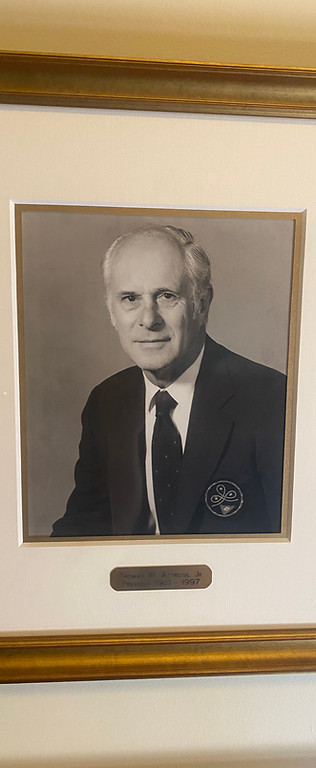
Thomas Wilkinson Attridge Jr.
(September 7, 1923 – August 31, 1997)
Born in Boothbay Harbor, Maine, Thomas Wilkinson Attridge Jr. grew up in Morristown, New Jersey, the son of the Reverend Thomas Wilkinson Attridge of the Church of the Redeemer and Gertrude Curtis Cate. Educated at the Loomis Institute in Windsor, Connecticut, he later attended Bowdoin College in Brunswick, Maine.
During the Second World War, Attridge served as a pilot in the United States Navy, entering service in March 1943 and continuing until October 1945. Following the war he remained in the Naval Reserve, holding the rank of Lieutenant Junior Grade. In 1944, while in service, he married Edith Millicent Clarke in Maine, and together they later raised three daughters: Margaret, Anne, and Katherine.
After the war Attridge began a distinguished career in the field of aeronautics, working for many years at Grumman Aircraft on Long Island. Initially serving as a test pilot, he later rose to leadership roles within the company and by 1972 had become Vice President of Grumman Ecosystems. During the Apollo era he played a role in the development of the Lunar Module (LM-3), the spacecraft prepared for the Apollo 9 and Apollo 10 missions, contributing to one of the most remarkable achievements of the American space program.
Attridge also devoted many years to the stewardship of Maple Grove Cemetery in Kew Gardens, serving as its President from 1981 until his death in 1997. Under his leadership the historic cemetery continued its tradition of careful preservation and service to the surrounding community.
Thomas Wilkinson Attridge Jr. died at the age of 73 in Glen Cove, New York. Following cremation, his ashes were placed in the Presidential Circle at Maple Grove Cemetery, among the leaders who guided the cemetery through its long history.

Raymond Baboushkin
(October 23, 1926 – July 1983)
Born in Montréal, Québec, Raymond Baboushkin was educated at McGill University before serving during the Second World War in the Royal Canadian Navy. After the war he entered the financial world and built a successful career, eventually becoming a vice president at the investment firm Merrill Lynch, Pierce, Fenner and Smith.
Baboushkin later made his home in Queens, New York, and maintained a residence in Springs on Long Island. Beyond his professional life, he was widely known among friends for his cultivated interests. A passionate lover of wine, he developed an extensive vegetable garden and was considered knowledgeable enough on the subject to be consulted by author Nat Korshin for a book on wine. He was also deeply devoted to music, particularly the works of Wolfgang Amadeus Mozart, and was known as a patron and supporter of young musicians.
Raymond died in July 1983 at the age of 56 after an illness. He was buried at Maple Grove Cemetery in Kew Gardens, Queens. In a personal tribute reflecting the passions of his life, a treasured bottle of Lafite-Rothschild wine from 1954 and recordings of Mozart’s 40th and 41st Symphonies were placed with him at his burial.

Anna Balko
(1912 – February 19, 1921)
Born in 1912 in Kassa, Czechoslovakia (now Košice, Slovakia). She was the daughter of Stephen Balko and Anna Buken, and the younger sister of Maria Balko. Like many families of the early twentieth century, the Balkos made the difficult journey across the Atlantic in search of opportunity in the United States.
In December 1920 Anna traveled with her mother and sister from Antwerp, Belgium, aboard the steamship Manchuria, arriving at Ellis Island in New York Harbor on January 10, 1921. Their intended destination was Cleveland, Ohio, where her father had settled and was preparing a home for his family. Upon arrival, however, young Anna developed a fever and was detained for medical observation. She was admitted to the United States Public Health Service Hospital at Ellis Island, where physicians diagnosed her with measles.
Despite medical care, Anna’s condition worsened, and she died at the hospital on February 19, 1921, at the age of nine. Her mother and sister were released shortly afterward and continued their journey to join the family in Ohio.
Anna Balko was laid to rest on February 22, 1921, at Maple Grove Cemetery.

José Vicente Balseca Bahamonde
(August 19, 1933 – September 15, 2019)
Born on August 19, 1933, in Guayaquil, Ecuador, in the well-known neighborhood of Cinco Esquinas. One of five siblings grew up in a vibrant coastal city where soccer quickly became a defining part of his life. It was also there that he met Luz María Campoverde, who would become his lifelong wife and companion.
Balseca began his football career in the 1950s with the youth teams of Club Huracán of the Guayas Sports Federation. Playing as a forward, his skill soon drew attention, and he was invited to train with Club Sport Emelec, one of Ecuador’s most prominent clubs. His talent was immediately evident, and after only a brief appearance he was signed by Emelec. Known affectionately as “El Loco” Balseca, he quickly became one of the club’s most exciting players.
In 1953, Balseca was selected to represent Ecuador’s national team, participating in the South American Championship in Lima, where his performances against Peru and Paraguay earned international recognition. Over the next decade he represented Ecuador in 24 international matches, playing for the national team between 1953 and 1963. He also appeared in international competitions with Barcelona Sporting Club during the 1950s.
At Emelec he was part of a legendary forward line remembered as “Los Cinco Reyes Magos” (The Five Wise Men): Balseca, Bolaños, Raffo, Raymondi, and Ortega. Their attacking play thrilled supporters and became one of the most celebrated eras in the club’s history.
Beyond his accomplishments on the field, Balseca was known as a warm and generous man who valued friendship, music, and family life. He loved Peruvian waltzes, maintained friendships within the artistic community, and enjoyed the traditional coastal Ecuadorian dishes prepared by his wife. To friends and family, he was remembered as a devoted husband, father, grandfather, and great grandfather, as well as a man whose humor and kindness never faded.
José Vicente Balseca Bahamonde died in 2019. Following funeral services in Queens, New York, he was laid to rest at Maple Grove Cemetery.

James Milton Bell, MD
(1921 – March 9, 1997)
A distinguished physician, educator, and public servant whose life was devoted to the care and well being of children and families. A Colonel in the United States Army (Ret.), he was also a respected member of the medical profession, holding the honors of Life Fellow of the American Psychiatric Association (L.F.A.P.A.) and Fellow of the American College of Physicians (F.A.C.P.).
Dr. Bell lived in Canaan and Croton-On-Hudson, New York, and was widely admired for his leadership and compassion. He served as a valued colleague and inspiration to the Berkshire Farm Center & Services for Youth, a historic child welfare organization founded in 1886 in Canaan, New York. The organization began when Catherine and Frederick G. Burnham transformed their farmland into a refuge for vulnerable boys, guided by the belief that a nurturing family environment could change young lives. Over the generations the institution evolved into one of New York State’s largest child welfare agencies, providing services that strengthen children and families and help them live safely and productively in their communities. Dr. Bell’s work supported this mission and touched the lives of many children and families across the state.
Respected by colleagues and deeply appreciated by those he served, Dr. Bell’s influence extended far beyond the institutions where he worked. Friends, associates, and the many families he helped remembered him as a man of integrity, wisdom, and compassion whose dedication improved countless lives.
Dr. James Milton Bell died in March 1997. Funeral services were held at Immaculate Conception Church in New Lebanon, New York, and he was laid to rest at Maple Grove Cemetery.

Philip Adolphus Benson
(December 17, 1881 – October 16, 1946)
Born in Manhattan, New York, on December 17, 1881. Raised in New York City, he was educated in the public schools and began working at a young age as an office boy for the Phoenix Insurance Company. Determined to advance himself, he continued his education at night while working during the day, a commitment that helped launch a long and distinguished career in banking and finance.
Benson eventually became President of the Dime Savings Bank of Brooklyn, one of the borough’s most prominent financial institutions. His reputation as a respected banker and civic leader led to his appointment in 1936 as one of seven financiers and businessmen named to the board of directors of the New York World’s Fair Corporation, which organized the celebrated 1939–1940 New York World’s Fair.
Alongside his banking career, Benson was active in education and public service. He taught accounting and real estate subjects at New York University and collaborated on the textbook Real Estate Principles and Practices, which was used for many years as a standard text in the university’s courses. Deeply involved in civic and charitable work, he served as a board member of the YMCA of Brooklyn and Queens and chaired its Seaman’s Branch. As a fundraiser for the YMCA from 1941 to 1943, he helped raise more money during those years than ever before in the organization’s history.
Benson also served as a director of the Brooklyn Bureau of Charities, Long Island College of Medicine, Brooklyn Home for Consumptives, and the Brooklyn Institute of Arts and Sciences. He was vice president of both the Brooklyn Chamber of Commerce and the Downtown Brooklyn Association, and was active in numerous professional and civic organizations, including the Brooklyn Real Estate Board, Citizens Budget Commission, American Arbitration Association, and the Brooklyn Better Housing Committee. He was also a member of the Flatbush Dutch Reformed Church and was known as an enthusiastic collector of fine art.
In 1912 he married Louise A. Melville, and together they raised four children: Robert, Philip, William, and Evelyn. Their son William tragically died in an airplane accident in 1941.
Philip Adolphus Benson died at the age of 64 in Brooklyn, New York. He was laid to rest at Maple Grove Cemetery.

William Melville Benson
(August 16, 1914 – June 1, 1940)
Born on August 16, 1914, in Sea Cliff, Nassau County, New York, the son of banker and civic leader Philip Adolphus Benson and Louise A. Melville Benson. Raised in a family that valued education and public service, he pursued a distinguished academic path in engineering and aviation.
Benson attended Adelphi Academy before enrolling at the Massachusetts Institute of Technology, where he studied engineering and participated in the advanced ROTC program. He later continued his studies at the Guggenheim Graduate School of Aeronautics at Stanford University, one of the leading centers for aeronautical research in the United States during the early years of aviation development.
Following his education, Benson joined the Douglas Aircraft Company, working in the rapidly advancing field of aircraft engineering. In 1940 he served as a flight engineer on a Douglas DC-5 transport aircraft that was being tested for the United States Navy, part of the nation’s expanding aviation program on the eve of World War II.
On June 1, 1940, shortly after takeoff from Los Angeles Airport, the aircraft suffered a mechanical failure when one of its engines malfunctioned. The plane lost control and crashed, killing all four men aboard: pilot Harry E. Bogen, flight engineer William M. Benson, inspector James Dale Jewart, and crew chief Walton M. Mulvania. Benson was only twenty five years old.
The previous year, on September 20, 1939, he had married Virginia Brooks, and the young couple had made their home in Santa Monica, California.
William Melville Benson was laid to rest at Maple Grove Cemetery.

Frederick Carl Jacob Benthin
(February 11, 1842 – October 21, 1891)
Born on February 11, 1842, in Beenz, Brandenburg, Prussia (now Germany). Trained as a wheelwright, a craftsman skilled in building and repairing wagon wheels and carriages, he emigrated to New York in 1868 at the age of twenty six, joining the wave of German immigrants who helped shape the developing communities of Queens in the nineteenth century.
Benthin settled in the rural farming district of Flushing, Queens, in an area then known as Black Stump Village. The unusual name came from the early practice of marking property boundaries with darkened or charred tree stumps, which were set in the ground along the roads and fields of the Fresh Meadows area. These visible markers helped define the limits between farms long before modern surveying and mapped street grids.
In this agricultural community Benthin established a successful wheelwright shop, which included a blacksmith shop, wagon house, stable, and paint shop. His trade was essential in an era when farmers and merchants depended on horse drawn wagons for transportation and commerce. Benthin’s skill as a craftsman extended to innovation as well, and he held a patent for improvements in wagon brakes, demonstrating the ingenuity often found among nineteenth century mechanics and tradesmen.
He married Caroline Benthin, and together they raised their family in Flushing. Their son, Frederick W. Benthin Jr., later became a plumber in Jamaica, Queens.
Frederick Carl Jacob Benthin died on October 21, 1891, at the age of 49 in Flushing. He was laid to rest at Maple Grove Cemetery in Kew Gardens, where his memorial bears the inscription:
“He’s gone, the precious one, his voice is stilled; his vacant place can never be filled.”

Adolph Bernstein
(June 30, 1837 – July 29, 1904)
A prominent nineteenth century musical director and orchestra leader whose performances were heard across New York and the northeastern United States during the golden age of resort concerts and grand public balls. Born in Baden, Germany, he came to the United States around 1854, joining a musical family whose members were active as instructors and performers.
By the early 1860s Bernstein was working in New York City as a music instructor and orchestra conductor. Over time he established his own ensemble, known as Bernstein’s Orchestra, which became widely respected for its performances at social events, concerts, and public celebrations. His orchestra appeared at major venues and gatherings, including receptions, charity balls, and civic celebrations in cities such as New York, Albany, Brooklyn, Jersey City, New Haven, and Utica.
One of Bernstein’s most enduring associations was with the summer resort community of Saratoga Springs, New York. Beginning in 1860, Bernstein and his orchestra performed regularly at Congress Hall, providing music for concerts and social gatherings that were attended by visitors from across the country. For many years he returned each summer season, and his orchestra became a familiar feature of Saratoga’s celebrated musical life. Contemporary newspapers noted that his orchestra included some of the finest musicians in New York and that the concerts attracted large and appreciative audiences.
In New York City Bernstein lived for many years in Manhattan and continued to direct performances while raising a family with his wife Anna Nack Bernstein. Their children included Leander, Gustavus Otto, George Paul, Annie Carry, and Laura Anna Bernstein. Bernstein was naturalized as a United States citizen in 1875 and remained active as a musician and musical director for several decades.
Adolph Bernstein died at the age of 67 in Foster’s Meadow, Queens, a nineteenth century rural community east of Jamaica. He was buried at Maple Grove Cemetery.

Anna C. Nack Bernstein
(November 24, 1845 – December 30, 1909)
Born in Germany in 1845, the daughter of Adolph Nack. She immigrated to the United States as a young woman and was trained as a music teacher, reflecting the strong musical traditions common among many German immigrant families of the nineteenth century.
By the mid-1860s Anna was living in New York State, where records show her working as a music instructor. In 1865 she appears in Rensselaer, New York, and by 1870 she was teaching music in Hudson, New York, boarding on Warren Street. Her professional work in music likely placed her within the same cultural circles that included musicians and orchestra leaders of the era.
Around 1871 she married Adolph Bernstein, a prominent musical director and orchestra leader whose ensemble performed widely throughout New York and the northeastern United States. The couple made their home in Manhattan, where Bernstein directed concerts and social events while Anna managed their growing household.
Anna and Adolph had several children together, including Leander, Gustavus Otto, George Paul, Annie Carry, and Laura Anna Bernstein. Their home in Manhattan, at addresses including 126 East 12th Street and later 19 Lafayette Place, was situated in neighborhoods that were active centers of New York’s cultural and musical life during the late nineteenth century.
After the death of her husband in 1904, Anna continued to reside in Manhattan, later living at 106 East 19th Street. She died on December 30, 1909, at the age of 64.
Anna C. Nack Bernstein was laid to rest at Maple Grove Cemetery.

Felix Daniel Berthet
(1838 – April 24, 1902)
Born in Metz, France, and came to the United States as a child, growing up in New York during the mid-nineteenth century. During the Civil War, he served as a Sergeant in Company H of the 37th New York Infantry Regiment, and later became a naturalized American citizen in 1867.
In his early years Berthet worked as a teacher, but he later entered business as a manufacturer and sales agent for locks and hardware, representing several companies and developing mechanical devices such as a sliding-door hanger used in commercial buildings. He lived for many years in Astoria, Queens, where he raised his family and remained active in business well into later life.
Berthet first married Jeanette Ewing in 1864, and the couple had several children together. After her death in 1886, he married Emily Courtwright in 1888. Emily would later become notable in her own right as one of the early figures connected with the founding of the Hartsdale Pet Cemetery, the first pet cemetery in the United States.
Felix D. Berthet died in 1902 at the age of sixty-three after a long illness. He was buried in the Berthet family plot at Maple Grove Cemetery.

Otto John Betz
(December 13, 1868 – November 30, 1943)
Born on December 13, 1868, the son of John J. Betz, a well-known figure in the brewing and malt trade. His father was associated with the firm Betz & Nester, founders of a large malt house in Geneva, New York, which grew into one of the most significant operations of its kind in the state during the late nineteenth century.
Continuing the family’s connection to the brewing industry, Otto Betz spent much of his career in the beer trade. Prior to World War I, he served as head of the Betz Brewery in Philadelphia, and later maintained connections with the brewing business in New York, including work associated with the Yuengling Brewery, reflecting the strong German-American brewing traditions that shaped the industry during that era.
In later years Betz settled in Garden City Park, Long Island, where he lived after retiring from active business. A widower at the time of his death, he was survived by his children, including Otto J. Betz Jr., who served in the United States Marine Corps, and daughters Elizabeth and Phyllis.
Otto John Betz died on November 30, 1943, at the age of seventy-four. He was laid to rest at Maple Grove Cemetery in Kew Gardens, Queens, where his grave reflects the legacy of a family long connected to the brewing and commercial life of New York.

Walter S. Beyers
(February 24, 1901 – January 1952)
Born in Cedarhurst, Nassau County, New York. He grew up on Long Island and later lived in Richmond Hill, Queens, where he was part of a large family that included his twin brother Frederick Julius Beyers and several siblings.
Beyers spent much of his adult life at sea, working as a merchant sailor for more than twenty years. During his maritime career he served in a variety of positions aboard commercial vessels and was at one time employed on the SS President Van Buren. By the early 1950s he had become chief electrician aboard the American freighter Pennsylvania, reflecting his experience and technical skill developed during decades of service in the merchant marine.
In January 1952, the freighter Pennsylvania encountered severe storms in the North Pacific Ocean off the coast of Washington State. The vessel was abandoned as it began to sink, leaving its 45-man crew adrift in lifeboats amid heavy seas. Rescue ships and aircraft searched the area for days, but only an overturned lifeboat was eventually sighted and no survivors were found. Walter Beyers and the rest of the crew were lost at sea, ending a long career spent on the world’s oceans.
Because his body was never recovered, a cenotaph was placed in his memory at Maple Grove Cemetery in Kew Gardens, Queens, beside the grave of his brother Howard C. Beyers.

Howard Charles Beyers
(September 2, 1899 – April 4, 1945)
In Cedarhurst, Nassau County, New York, the eldest son of Frederick and Sarah Hartmeyer Beyers. During his childhood the family lived in several places, including the Bronx, Barrington in Yates County, New York, and later Richmond Hill, Queens, where his father worked as a painter.
At the age of eighteen, during the First World War, Beyers enlisted in the United States Navy as a Seaman Second Class on May 11, 1917, in Norfolk, Virginia. He served aboard the USS Hiawatha and later the USS Lake Forest, rising to the rank of Chief Quartermaster. His naval service continued until August 6, 1919, after which he entered the United States Merchant Marine, continuing a life connected to the sea.
Following the war, he returned to civilian life but remained associated with maritime work for a time. By the early 1940s he was living in Tampa, Florida, where he worked for the Western Auto Supply Company.
Howard Charles Beyers died on April 4, 1945, at the age of forty-five. He was buried at Maple Grove Cemetery in Kew Gardens, Queens, in Memorial Park. His grave is located beside the cenotaph honoring his younger brother Walter Sylvester Beyers, a merchant sailor who was lost at sea in 1952 when the freighter Pennsylvania sank in the North Pacific.

George Bidgood
(c. 1841 – September 5, 1886)
A Brooklyn attorney and civic-minded resident who played a role in the early development of Richmond Hill, Queens, during the late nineteenth century. Bidgood became involved in both business and local institutions that helped shape the area.
Professionally, Bidgood practiced law in Brooklyn, and at one time served as attorney for Pierre Lorillard, a member of the prominent Lorillard family whose business and land holdings had a major influence on the development of Queens. He also became involved in the development of Maple Grove Cemetery during its early years, reflecting his growing ties to the Richmond Hill community. Bidgood was also associated with several business ventures, including mining investments such as the First National Gold Mining Company of New York and Colorado and the Quartz Hill Gold Mining Company, reflecting the speculative mining enterprises that attracted investors during the late nineteenth century.
He was also active in the civic and religious life of Richmond Hill. When the Church of the Resurrection was formally organized on April 27, 1874, in the town of Jamaica, Queens, Bidgood served as clerk of the vestry, helping establish what would become an important Episcopal parish in the community.
George Bidgood died suddenly in September 1886 while visiting a lakeside club in Warwick, New York. After becoming ill while crossing the Brooklyn Bridge, he was taken to Warwick where physicians diagnosed a severe case of what was then described as “brain fever.” Despite receiving medical care, he died shortly afterward. Contemporary newspaper accounts reported that he would be buried at Green-Wood Cemetery; however, records show that George Bidgood was ultimately laid to rest at Maple Grove Cemetery in Kew Gardens, Queens.

Joseph “Little Rabbit” Biondo
(April 16, 1897 – June 10, 1966)
Born in Barcellona Pozzo di Gotto, Sicily, Italy, and later immigrated to the United States, settling in New York City during the great wave of Italian immigration at the turn of the twentieth century. He initially lived on Manhattan’s Lower East Side, a neighborhood that was home to many newly arrived immigrants, before later residing in Jackson Heights, Queens. He also maintained a summer home in Long Beach, New York.
During the turbulent decades of the early twentieth century, Biondo became associated with figures involved in organized crime in New York, particularly during the Prohibition era, when illegal alcohol distribution and gambling operations flourished across the city. Contemporary accounts and later historical studies place him among individuals connected with organized crime networks that were active in the city’s bootlegging and labor racketeering activities during that period.
In later years Biondo was also involved in several legitimate business ventures, including interests in shipping, real estate, and automobile sales, reflecting the complex blend of business and underworld influence that characterized parts of New York’s economic life during the mid-twentieth century. He was known by several nicknames, including “Little Rabbit,” “Joe Bandy,” and “Joe the Blonde.”
Biondo remained a known figure in New York circles through the 1940s and 1950s, though in his later years he withdrew from public attention.
Joseph Biondo died of natural causes in New York City on June 10, 1966, at the age of sixty-nine. He was buried at Maple Grove Cemetery in Kew Gardens, Queens.

William Stillman Bishop
(December 30, 1852 – June 13, 1933)
Born in the United States and spent much of his life in New York, where he built a long career in the newspaper industry. As a young man he came to the city and entered the publishing field, first working for the Mail and Express before later joining several prominent New York newspapers.
Over the years Bishop was employed by the New York Recorder, the New York Press, and ultimately the New York Sun, where he served as head of the night proofroom. His work as a proofreader required exceptional attention to detail, helping ensure the accuracy and quality of the newspapers that informed thousands of readers each day during the height of New York’s bustling newspaper era.
Bishop later made his home in Ozone Park, Queens, where he lived with his family. He was the son of William S. Bishop and Caroline Bishop and was the father of several children, leaving behind four sons and two daughters, as well as numerous grandchildren and great-grandchildren.
Through his family lineage, Bishop was also connected to early American history. One of his ancestors, David Maxson (born 1729), served in the Rhode Island state legislature during the early days of the American Revolution and also served as a private in a militia company during the Rhode Island Alarm of 1775, a mobilization of colonial forces following the outbreak of the Revolutionary War. This heritage later allowed one of Bishop’s descendants to join the Sons of the American Revolution.
William Stillman Bishop died at Mary Immaculate Hospital in Jamaica, Queens, from bronchial pneumonia at the age of eighty. At the time of his death, he resided at 95-23 83rd Street in Ozone Park.
He was laid to rest at Maple Grove Cemetery in Kew Gardens, Queens.

Mary Black
(1905 - March 29, 1937)
Among the victims of an early commercial aviation disaster during the formative years of passenger air travel in the United States.
Born in Glasgow, Scotland, she later made her home in New York City. At the time of her death, she was employed as a stenographer in the cashier’s department of Standard Brands Inc., located at 595 Madison Avenue. She resided at the Webster Apartments, 419 West Thirty-fourth Street in Manhattan.
In March 1937, Miss Black was traveling to Chicago to visit her sister, boarding Transcontinental and Western Air Flight 15A, a Douglas DC-2 passenger aircraft operating between Newark, New Jersey, and Pittsburgh, Pennsylvania. On the evening of March 25, 1937, as the plane approached Allegheny County Airport near Pittsburgh, tragedy struck. The aircraft suddenly lost control and plunged to the ground in a steep spiral, crashing into a hillside only a few miles from the airport. All thirteen passengers and crew members aboard the flight lost their lives.
Witnesses reported seeing the aircraft begin a sudden series of spiraling turns before striking the ground nose-first with tremendous force. Investigators later concluded that severe ice accumulation on the aircraft’s wings and control surfaces likely caused the pilots to lose control during their descent through dangerous weather conditions.
The disaster was widely reported in newspapers across the country and occurred during a time when commercial aviation was expanding rapidly but still developing the safety standards and technologies that would later make air travel far safer.
Mary was laid to rest at Maple Grove Cemetery in Kew Gardens.

George William Blake
(November 21, 1880 – December 20, 1963)
Born in Devon, England, and was baptized on December 11 of that year in the Parish of Stoke Damerel. He was the first son of George Blake and Emma Jane Bravin Blake. As a young man he followed a path of travel and opportunity to the United States.
At the age of twenty-two, Blake traveled to Cape Town, South Africa where he worked as a bricklayer, a trade that would remain his lifelong profession. He returned to England, but in 1906 he set out for America, sailing from Southampton aboard the S.S. St. Louis and arriving in New York on May 26.
Blake established himself in Brooklyn, New York, where he worked as a bricklayer in the building trades. His craftsmanship contributed to important civic construction projects, including work on the façade of the Brooklyn Public Library. During World War II he was employed by the Caye Construction Company on Fulton Street in Brooklyn.
On March 27, 1920, Blake married Florence Rosa Sears, a fellow English immigrant, at All Saints Church in Brooklyn. The couple had one son, George William Blake Jr., born January 29, 1921.
George became a naturalized citizen of the United States on December 21, 1917. He was described as five feet six inches tall, with a fair complexion, blue eyes, and brown hair. Active in community and fraternal life, he was a member of the Brooklyn Royal Arch Masons, Orient Chapter No. 138, eventually attaining the 32nd degree and serving as Grand Master. In recognition of his involvement in Masonic ceremonies, he appeared in the October 8, 1956, issue of Life magazine in a photograph captioned “Dedication of Solomon’s Temple.”
George William Blake died at his home in Brooklyn on December 20, 1963, at the age of eighty-three. He was buried at Maple Grove Cemetery in Kew Gardens.

Florence Rosa “Flo” Sears Blake
(September 24, 1880 – October 1, 1968)
Born in London, England. The daughter of William Sears and Hannah Cook eventually joining the great wave of immigrants who crossed the Atlantic in the early twentieth century.
Florence emigrated to the United States in 1912, sailing from Southampton aboard the S.S. St. Paul. She settled in Brooklyn.
On March 27, 1920, she married George William Blake, a fellow English immigrant and bricklayer, at All Saints Church on Ninth Street in Brooklyn. The couple soon welcomed their only child, George William Blake Jr., born January 29, 1921.
Florence maintained a strong connection to her English heritage throughout her life. Although she became an American citizen through her marriage, she remained proudly loyal to her British roots. She was active in the Daughters of St. George, an organization devoted to supporting English immigrants in the United States. Florence and her husband also attended Kings Highway United Methodist Church in Brooklyn.
Family members remembered Florence affectionately as “the little Auntie Flo.” Those who knew her often remarked on her distinctly British manner and formality, which she retained throughout her life.
Florence Rosa Blake died on October 1, 1968, at Community Hospital in Brooklyn, at the age of eighty-eight. She was buried beside her husband at Maple Grove Cemetery.

Robert Peter “Robbie” Bradler Sr.
(April 1, 1913 – January 28, 1977)
Born on in Manhattan, New York, the son of Charlie Bradler and Sadie Fitzpatrick Bradler.
Like many New Yorkers of his generation, Robbie lived through the hardships of the Great Depression. During that difficult period he worked with the Civilian Conservation Corps, one of President Franklin D. Roosevelt’s New Deal programs created to provide employment and public works during the economic crisis.
Throughout his working life he held a number of jobs that reflected the energy and industry of New York City. He worked at Godfrey’s Bakery, and later became a longshoreman, spending much of his career on the docks of Manhattan, particularly Pier 92, where ships were loaded and unloaded along the busy waterfront. During World War II, he was among the workers involved in the dramatic but ultimately unsuccessful effort to raise the famous French ocean liner SS Normandie, which had capsized in New York Harbor in 1942 while being converted into a troopship.
Robbie married Margaret “Margie” O’Connor, and together they shared more than forty years of marriage. Their family included James, Denise, Robert Jr., Thomas, Denis, Peggy, and John..
He was known by relatives and friends as a happy-go-lucky man with a wonderful sense of humor and a contagious laugh. He delighted in spending time with his grandchildren and was remembered for always bringing them small gifts whenever he visited. At the time of his passing, he was the proud grandfather of seven grandchildren.
Robert Peter “Robbie” Bradler Sr. died on January 28, 1977, in Queens, New York, at the age of sixty-three. He was laid to rest at Maple Grove Cemetery.

Margaret Teresa “Margie” O’Connor Bradler
(August 24, 1915 – June 12, 1978)
Born in Manhattan, New York, the eldest child of Denis O’Connor and Viora Carrick O’Connor. She grew up with her younger brother Denis “Buster” O’Connor.
Margie’s early life was marked by hardship. Both of her parents died only a few years apart, each at the young age of thirty-seven, leaving Margie and her brother still in their teenage years. The siblings were taken in by family members, first living with their grandmother Minnie Carrick, and later with their aunt Laura Carrick Morris and uncle Jimmy Morris.
Margie spent her entire life in New York City, where she built a life centered on family, hard work, and a love of music. She was employed for many years at both the Majestic Theatre and Carnegie Hall, two of New York’s most renowned cultural landmarks.
She married Robert Peter “Robbie” Bradler Sr., and together they shared more than forty years of marriage. Their family included James, Denise, Robert Jr., Thomas, Denis, Peggy, and John..
Margie was known for her beautiful singing voice, and music was a cherished part of family gatherings. One of her favorite songs was “Stormy Weather,” which she loved to sing when relatives gathered together. She was proud of her Irish heritage, a pride she passed along to the generations that followed her.
At the time of her passing, she was the proud grandmother of seven grandchildren.
Margaret Teresa “Margie” O’Connor Bradler died on June 12, 1978, in Queens, New York. She was laid to rest beside her beloved husband at Maple Grove Cemetery in Kew Gardens, Queens.

Leonard Stanley Boers
(April 28, 1888 – October 2, 1964)
Born in Brooklyn, New York, one of twelve children of William John Boers, a native of Rotterdam, Holland, and Dora A. Keirmaier Boers, who was born in New York. The 1900 United States Census records the family living at 173 Jefferson Avenue in Brooklyn.
As a young man Leonard entered the confectionery business. By 1917, during the First World War, his draft registration listed him as a District Soda Manager for Loft Candy Inc., headquartered at 400 Broome Street in Manhattan. At that time Loft, Inc. had become one of the largest candy manufacturers and retailers in the United States, operating factories and candy shops throughout New York City and distributing hundreds of candy products across the eastern United States.
Working for Loft placed Boers in the center of one of the most fascinating chapters in American business history. In the late 1930s the company became involved in a corporate struggle that eventually led to the creation of the modern Pepsi-Cola Corporation, when Loft’s leadership acquired and revived the struggling soft drink brand. For a brief period in 1941, Loft and Pepsi were merged into a single company before separating again..
Boers remained in the confectionery trade for many years. By 1925 he was living in Brooklyn with his family while continuing his work in the industry. Later records show that by 1942, during World War II, he was residing at 87-79 116th Street in Richmond Hill, Queens, with his
Leonard Stanley Boers was buried at Maple Grove Cemetery in Kew Gardens.

Albert Henry Bosch
(October 30, 1908 – November 21, 2005)
A distinguished public servant whose career in law and government spanned more than four decades, leaving a lasting imprint on Queens and New York State. Born in Manhattan, New York, Bosch pursued his legal education at St. John’s University School of Law, graduating in 1933. He was admitted to the bar in 1938 and soon established a legal practice in New York City, gaining admission to practice before the United States Treasury Department and the Supreme Court of the United States.
Bosch’s commitment to civic life extended beyond the courtroom. He served as a trustee of the Hamburg Savings Bank and became active in Republican politics at a time when Queens was undergoing rapid postwar growth. In 1953, he was elected to the United States House of Representatives, serving four consecutive terms in the Eighty-third through Eighty-sixth Congresses. During his tenure, he represented his constituents with a focus on local development and public service, earning a reputation as a steady and reliable legislator.
In 1960, Bosch resigned from Congress to continue his service closer to home, accepting appointment as a judge of the Queens County Court. Two years later, he was elevated to the New York State Supreme Court for the Eleventh Judicial District, where he served with distinction until his retirement in 1974. His judicial career reflected the same measured judgment and dedication that had defined his earlier public roles.
Albert Henry Bosch died on November 21, 2005, at the age of ninety-seven. He is buried at Maple Grove Cemetery.


Lorenzo Brieba II
(1917 – 1991)
Lived a life shaped by war, secrecy, and shifting allegiances during the turbulent twentieth century. Of Basque heritage, he was drawn into the political and military upheavals of Europe at a young age.
During the period surrounding the Spanish Civil War, Brieba trained as an aviator and served in military capacities that brought him into contact with major events and figures of the time. He became associated with the forces aligned with Francisco Franco and was connected to aviation operations during that pivotal moment in history. While accounts vary, he is believed to have had links to the effort that helped transport Franco from the Canary Islands to North Africa in 1936. An event that proved decisive in the course of the war.
In the years that followed, Brieba moved within circles that brought him into proximity with major figures of the era, including German and European military leaders, as well as individuals tied to international conflicts during World War II. His wartime service earned him several decorations, including the Iron Cross First and Second Class and the War Merit Cross with Swords.
In the decades of the Cold War, he is believed to have been involved in various international activities connected to anti-communist efforts in Europe, Latin America, and Africa. These roles, often carried out in the shadows, reflected the tense global climate of the mid twentieth century, when allegiances and operations frequently crossed borders and remained largely unrecorded. Later accounts place him in the wider geopolitical struggles of the Cold War, where he is said to have encountered figures such as Che Guevara and Salvador Allende, reflecting the global reach of his activities during a time of ideological conflict.
Despite the extraordinary nature of his earlier years, Brieba eventually settled into a far more modest life in New York. In his later years, he lived in Queens and worked quietly, a stark contrast to the turbulent chapters that had defined much of his past.
Lorenzo Brieba II died in 1991 in Greenwich Village, New York City. He is buried at Maple Grove Cemetery.

Sarah Ann “Boreum” Boerem
(c. 1822 – December 17, 1902)
Lived a life rooted deeply in the soil of Long Island, her story not merely her own, but part of a lineage that reaches back to the earliest days of New York.
Born in Newtown, Long Island, she was the daughter of Abram C. and Sarah Skidmore Rapelye and spent her entire life in the very home where she was born.
She was a direct descendant of Sarah Rapalje (1625–1685), long celebrated as one of the first children of European descent born in the Dutch colony of New Netherland. Through this lineage, Sarah Ann carried within her the living memory of New York’s earliest chapter of Dutch settlers.
Widowed by her husband Augustus Boerem, she became one of the oldest and most respected residents of her community. Known as a faithful Christian and a devoted mother, she raised a family of three daughters and one son, embodying the steady virtues of home, faith, and endurance that defined her generation.
Sarah Ann Boerem passed away at the age of 80. Funeral services were held at the First Reformed Dutch Church in Newtown, a fitting farewell within the same community that had been her entire world. She was laid to rest at Maple Grove Cemetery.

George Brons
(1867 – February 4, 1926)
Born in East New York in 1867. As a young man, George moved to Jamaica, Queens, where he established himself as a butcher, running a wholesale business for many years. Through diligence and perseverance, he later transitioned into real estate.
He was a longtime resident of Queens Village and a respected member of the Jamaica Volunteer Firemen’s Association..
He was the husband of Catherine “Katie” Weiss Brons and the father of four children.
On February 4, 1926, during one of the most severe winter storms to strike Long Island, George Brons met a tragic end. Caught in deep snow and bitter cold while making his way home, he was overcome by the elements just steps from safety.
His funeral was held at the Jamaica Presbyterian Church, and he was laid to rest at Maple Grove Cemetery.

Irving Sumner Bryant
(December 18, 1893 – November 9, 1946)
Born in Portland, Maine. He was the son of Henry S. Bryant and Florence Totten Bryant.
Bryant served his country during World War I as a member of the United States Navy.
Professionally, he worked as a manager of safe deposits at the North River Savings Bank in Manhattan. Beyond his daily work, he was widely known throughout the North Shore of Queens as a musical director and accompanist.
For many years, Irving was an active member of the Orpheus Glee Club of Flushing, where his music enriched performances and brought people together. He participated in musical programs for the Men’s Club of the Flushing Dutch Reformed Church and the Friendship Club of the First Methodist Church.
He also contributed to charitable and cultural events, including performances at the Flushing Hippodrome, where he took part in musical productions that supported philanthropic causes. During World War II, he entertained servicemen as a pianist and accordionist at Fort Totten.
At home, he shared his life with his wife, Gladys E. Bessell Bryant, whom he married on November 1, 1923. Together they made their home in Bayside, Queens.
Irving Bryant passed away suddenly on November 9, 1946, at the age of 52.
He was laid to rest at Maple Grove Cemetery.

Captain William Harrison Bryant
(December 1, 1878 – July 23, 1921)
Carved into his stone beneath the name Bryant is a symbol of science and war, two crossed retorts, the emblem of the United States Army’s Chemical Warfare Service.
Born in Neosho County, Kansas, Bryant. The son of William and Ida K. Bryant, he would eventually make his way east, building a life in New York.
During World War I, he served as a Captain in the Chemical Warfare Service, a branch formally established in 1918 to address the emerging realities of chemical warfare. The crossed retorts on his gravestone reflect this role. Symbols of both scientific knowledge and the grave responsibilities carried by those tasked with defending against, and preparing for, the unseen dangers of gas warfare.
After the war, Bryant returned to civilian life, settling in Brooklyn at 195 Hicks Street. He worked as a sales manager in the felt industry, a profession rooted in the fabric trades.
He was a married man, his wife entrusted as the executor of his estate.
Tragically, his life was cut short on July 23, 1921, when he died at Trinity Hospital in Brooklyn from acute appendicitis at the age of just 42.
Captain William Harrison Bryant was laid to rest at Maple Grove Cemetery.

Robert Diggins Burgess
(July 1865 – 7 November 1921)
Born in East New York, Brooklyn, Robert entered a family whose name was once spoken with admiration in the world of horticulture. His father, Adolphus Gobe Burgess, was a distinguished florist and nurseryman, known for cultivating exquisite dahlias and shaping some of the most admired gardens of 19th-century Long Island. His grandfather, John Slann Burgess, had been an esteemed horticulturalist in England, honored with distinction for his botanical achievements.
Robert’s mother, Eliza Diggens Burgess, died when he was still a young boy. In her memory, his father planted a rare and unusual tree in Brooklyn’s Prospect Park in 1872, the Camperdown Elm, its branches twisting downward like a living elegy. Decades later, that very tree would become the subject of a celebrated poem by Marianne Moore and a symbol of preservation, nearly lost but ultimately saved by those who recognized its fragile grace.
Robert’s own life followed a different path. Rather than tending gardens, he labored in the industrial world of a growing city. A resident of Woodhaven, he worked at the Brooklyn Water Works pumping station, where he served as a fireman, feeding coal into the great engines that powered modern life.
On November 7, 1921, tragedy struck. While tending to his duties high above a coal chute, Robert slipped and fell into the dark mass below. Buried beneath tons of coal, he was not immediately seen. By the time he was discovered, it was too late.
Robert was survived by his wife, Florence May Forbell Burgess, and their children, Robert, Clifford, and Florence Irene. He was laid to rest at Maple Grove Cemetery.

Edward Colie Caswell
(September 12, 1879 – December 30, 1962)
Born in New York. By the early 20th century, Caswell had established himself as an accomplished illustrator, working with some of the most respected publishing houses of his time, including Macmillan, Harcourt Brace, Dodd Mead, and Farrar & Rinehart. His pen brought to life literary works such as Old New York by Edith Wharton and numerous volumes in The Old Cities Series, capturing the character of places with both precision and poetry.
In the 1920s, his artistic journey carried him across Europe to Florence, Amsterdam, and Budapest. His work abroad earned him international recognition, including the prestigious Order of the White Lion from Czechoslovakia for his illustrations in Romantic Czechoslovakia.
But it was in New York, particularly in Greenwich Village, where Caswell found his enduring muse. His illustrations appeared regularly on the cover of The Villager throughout the 1930s and 1940s, preserving a neighborhood in transition, before its transformation into one of Manhattan’s most celebrated districts.
Caswell lived and worked for many years out of the famed Chelsea Hotel, maintaining a studio at 222 West 23rd Street. There, amid that restless creative energy, he continued his work not only as an illustrator, but also as a teacher, lecturer, and writer.
Edward Colie Caswell died at the age of 83. Today, he rests at Maple Grove Cemetery.

Horst Bulss
(1880 – September 25, 1915)
Born in Germany in 1880, a man of the stage whose life unfolded beneath footlights and curtain calls.
He arrived in New York on September 9, 1909, aboard the SS Main, among a company of fellow performers bringing the rich tradition of German theater to a growing audience in America.
In those years, the German-language stage flourished in New York, particularly at the Irving Place Theatre, where Bulss quickly found his footing. Reviews from the time praised the productions in which he appeared as “sterling,” noting a company that balanced humor with humanity. Among these was the comedy Lumpengesindel—“Ordinary People”—a fitting title for a performer whose work reflected the small dramas and quiet struggles of everyday life.
By 1910, Bulss had joined the cast of the lively musical farce Alma, Wo Wohnst Du? (“Alma, Where Do You Live?”), a production that carried him beyond New York, touring as far as Chicago. At his side was fellow performer Hedwig Richard, a frequent collaborator whose talent drew particular acclaim and who, according to census records, became his wife during those years on the road.
After 1912, the record of Bulss’s life grows dim.
On September 25, 1915, at the age of 34, Horst Bulss died in New York City. His cause of death was recorded simply as asphyxia. Whether accident, illness, or something more uncertain, the details remain lost to time.
He was buried at Maple Grove Cemetery.

John A. Camarinos
(January 31, 1898 – August 29, 1967)
Born on January 31, 1898, in Sparta, Greece.
At just seventeen years old, he left his homeland behind, arriving in New York on March 4, 1914, aboard the SS Athina. Like so many who came before him, he stepped into a new world. In those early years, he worked as a bartender in Manhattan.
By perseverance and quiet ambition, John built a life in Astoria, Queens. There, he became the original owner of the Oyster Bay Restaurant, a place where food, conversation, and community met.
John was a founding member of the St. Demetrios Greek Orthodox Church in Astoria, helping to establish a spiritual and cultural anchor for the growing Greek American community. He was also active in civic life, belonging to the Hellenic Masonic Lodge and the Queensborough AHEPA Chapter, organizations devoted to fellowship, heritage, and service.
In 1931, he married Anna Cutroz, and together they built a family rooted in love and tradition. They raised four children, Arthur, Margaret, William, and Constantino.
He passed away at the age of 69, after a brief illness.
Today, he rests at Maple Grove Cemetery.

James Henry Cassidy
(October 28, 1869 – August 23, 1926)
Born on October 28, 1869, in Cleveland, Ohio. From its schools and streets, he emerged with a mind inclined toward law and public service.
After studying at Cleveland Law School, Cassidy was admitted to the bar in 1899 and began his legal career. His abilities soon brought him to Washington, D.C., where he served as clerk to the House Committee on Rivers and Harbors from 1901 to 1909.
In 1909, he stepped into elected office, chosen as a Republican to fill a vacancy in the Sixty-first Congress, following the resignation of Theodore E. Burton. For two years, from April 20, 1909, to March 3, 1911, Cassidy served as a United States Congressman.
His time in Congress, though honorable, was brief. An unsuccessful bid for reelection returned him to private life, where he resumed his legal work and later took on the responsibility of receiver for the Cleveland & Pittsburgh Coal Company.
In 1915, Cassidy moved to New York, joining the world of finance and brokerage during a period of rapid economic transformation. He became president of an express company, navigating the shifting currents of commerce in a modernizing nation.
He spent his later years in Forest Hills Gardens, Queens. There, on August 23, 1926, he passed away at the age of 56.
Today, he rests at Maple Grove Cemetery.

Elizabeth Carroll Clayton
(March 17, 1823 – October 12, 1918)
Began her life upon the sea. She was born during her parents’ voyage to Ireland, the daughter of Hugh Carroll.
In time, she crossed the Atlantic and made her home in America, settling in Brooklyn, where she would live for many decades. She became the wife of Samuel B. Clayton, and together they built a life rooted in family, faith, and quiet perseverance.
Elizabeth was a woman of deep religious devotion and community spirit. For over forty years, she was an active member of the Methodist Church, a steady presence whose faith endured across generations.
Even into her later years, she remained engaged with the world around her. She spent winters in Palm Beach, Florida, and took a keen interest in the great events of her time. During the First World War, she supported the national effort by purchasing Liberty Bonds, standing with a country that had become her own.
She lived to the remarkable age of 95, witnessing nearly a century of transformation. When she passed away she left behind a large and loving family, including children, grandchildren, and great-grandchildren.
Today, she rests at Maple Grove Cemetery.

Elizabeth Mary Clayton Currier
(1859 – March 27, 1932)
Born in the United States, the daughter of Samuel Clayton and Elizabeth Carroll Clayton.
Her story was one of love that endured, even as it was tested by time.
Elizabeth married three times over the course of her life, each chapter shaped by both companionship and sorrow. Her first marriage, to Charles Smith, brought her children and the early foundations of family life. After his passing, she found love again with Thomas William Wilson Lewis, a merchant and coffee dealer in Manhattan. Their marriage, lasting forty years, was one of deep partnership and cut short only by his death in 1914.
A year later, in 1915, Elizabeth entered her third marriage, to a man named Currier whom she knew 40 years earlier. It was a union formed later in life, a testament to her enduring belief in companionship.
She was the mother of daughters Mabel C. Totten, Ethel M. Young, and Bessie C. Crisman, and her life was anchored not only in marriage, but in motherhood, raising children who carried her story forward.
She passed away at the age of 72. Today, she rests at Maple Grove Cemetery.


Gerald Carlton
(September 27, 1844 – November 8, 1928)
Born in County Galway, Ireland.
Like many of his generation, he crossed the Atlantic to America, eventually making his home in New York. By the 1880s, he was living in Brooklyn, moving between Brooklyn and Manhattan over the years, part of a growing literary and journalistic world that thrived in the city’s newspapers and periodicals.
Carlton was a reporter, journalist, and novelist. Though little has been recorded about his personal life, his written work offers a glimpse into a creative mind drawn to drama, romance, and the complexities of human emotion.
He contributed to Frank Leslie’s Monthly in the early 1880s, where his serialized story Leonie, Empress of the Air appeared between 1881 and 1882, followed by Eileen Aroon in 1881. His fiction often explored heightened emotional worlds, and in 1890, his psychological novel Her Mad Love was announced for publication, suggesting a writer interested not only in storytelling, but in the inner workings of the mind.
Other works attributed to him include Jasper Delaney, Adam Ferguson, and Mark Mereton’s Money, as well as a number of shorter novelettes published in popular series such as the Nickel Library during the late 19th century. Though only one of his stories was published by Beadle, his presence in the world of dime and nickel fiction placed him among the many authors who shaped the reading habits of everyday Americans.
Beyond fiction, Carlton also reflected on the craft itself. In 1890, he authored an article on how to write dime novels for the New York Star, later reprinted in The Author, offering insight into the mechanics behind the very stories that captivated his readers.
His life in New York stretched across decades from Brooklyn in 1883, to Manhattan in the late 1880s, and back again to Brooklyn through the early 20th century. And yet, like many writers of his kind, he remained largely uncelebrated in his own time, a quiet craftsman of stories in a crowded literary world.
Gerald Carlton died on November 8, 1928, at the age of 84.
Today, he rests at Maple Grove Cemetery.

Joseph Edmund Collins
(October 22, 1855 – February 23, 1892)
Born on October 22, 1855, in Placentia, Newfoundland. Without a formal education, Collins served briefly in the Newfoundland Constabulary, working in a law office, and teaching school before discovering his true calling in journalism. By 1878, he had become publisher of the Fredericton Star, and soon after, editor of the Chatham North Star. It was here, at last, that he found his voice and more importantly, his purpose.
Collins believed that Canada was more than a political union, it was a nation waiting for a soul. Through literature, he sought to awaken it.
In the early 1880s, he became a guiding force behind a rising generation of writers who would later be known as the Confederation Poets. Among them were Charles G. D. Roberts and Archibald Lampman, young men whose talents Collins recognized, encouraged, and fiercely promoted. He urged them toward greatness, toward a national literature worthy of the new Dominion.
Lampman would later call him “the literary father” of their generation.
Collins carried this mission to Toronto, where he worked for The Globe, and later into print with his 1883 biography of Sir John A. Macdonald, a work that, while imperfect, contained one of the earliest serious examinations of Canada’s emerging literary identity.
But brilliance is not always accompanied by stability. He drifted from position to position, turning to freelance writing, producing articles, essays, and novels that hinted at greater potential never fully realized. By the mid-1880s, his vision for a national literary movement had begun to outpace the country’s readiness to sustain it.
In 1886, he moved to New York City, drawn to its literary energy. There, he became editor of The Epoch, continuing to champion Canadian writers even from abroad. Yet his personal life unraveled. His marriage collapsed, his finances faltered, and he turned increasingly to drink. Friends, among them the poet Bliss Carman, offered support, but his decline could not be reversed.
On February 23, 1892, Joseph Edmund Collins died in New York City at the age of just 36, in St. Vincent’s Hospital.
For many years, he was buried under the name Edmund Collins.
Today, he rests in an unmarked grave at Maple Grove Cemetery.

Henry Cody
(January 8, 1848 – April 4, 1906)
Born in Marylebone, London, England, to Thomas and Harriet Leadbeater Cody.
He immigrated to the United States in August 1872 and settled in New York City, where he spent the remainder of his life. Cody became a naturalized U.S. citizen on December 16, 1903.
According to the 1880 United States Census, he was living in Manhattan with his wife, Lucille, and working as a cigar maker. He later operated a tobacco shop and factory in New York City. Reports indicate that although he had periods of financial stability, his circumstances declined in later years.
Henry Cody died on April 4, 1906, at the age of 58, at 216 West 36th Street in Manhattan. Contemporary newspaper accounts noted that he died in modest surroundings after experiencing financial hardship.
His grave is notable for its inscription identifying him as the brother of the novelist Marie Corelli, one of the most popular authors of the late 19th and early 20th centuries. Corelli, born Mary Mackay, was widely known for works such as A Romance of Two Worlds and The Sorrows of Satan.
The relationship between Henry Cody and Marie Corelli has been the subject of historical discussion. While some contemporary reports and later accounts support the familial connection, it was reportedly denied by Corelli during her lifetime.
Henry Cody’s burial inscription preserves this claimed relationship, making his grave a point of historical interest within the cemetery.

Charles Colné
(1832 – September 19, 1924)
Born in 1832 in Baccarat, in the Lorraine region of France. Though records differ slightly, his birth is most often associated with early March of that year, with other documents suggesting October or early November.
Colné left France and eventually made his way to the United States, where he established a career connected to government service. For approximately twenty-five years, he was employed by the United States Treasury Department in Washington, D.C., a position that placed him within the inner workings of the federal government during a transformative period in American history.
Most notably, Colné served as a messenger to President Abraham Lincoln. While modest in title, such a role required trust and reliability, placing him in direct proximity to one of the most consequential figures of the 19th century during the Civil War era.
Colné also maintained strong ties to his native France. He represented the United States government at the Exposition in Paris and later served as the New York agent for the French Panama Canal Company during its period of operation. His international connections extended further through friendships with prominent French figures, including Count Ferdinand de Lesseps, the diplomat and engineer behind the Suez Canal, and the sculptor Frédéric Auguste Bartholdi, best known for creating the Statue of Liberty.
In his later years, Colné resided at the Chapin Home for the Aged and Infirm in Jamaica, Queens. He passed away at the age of 92.
He was laid to rest at Maple Grove Cemetery in Kew Gardens, Queens, in a plot associated with the Chapin Home.


Harry “Henry Crowell” Foy
(November 1869 – March 5, 1931)
Born Henry Crowell in St. Louis, Missouri, was an American vaudeville performer. He was the son of John B. Crowell and Anna Toomey.
Around 1895, he married Florence Goodwin of Covington, Kentucky. Together, they formed a traveling vaudeville act known as “Foy and Clark,” adopting stage names. Henry became known as Harry Foy and Florence as Florence Clark. The duo toured extensively across the United States for nearly two decades, gaining recognition as an eccentric comedy team. Their performances featured imaginative and humorous sketches such as The Spring of Youth, The Old Curiosity Shop, Under the Sea, and The Man Across the Way. Among Foy’s more unusual stage stunts was the act of eating a live goldfish, a reflection of the era’s appetite for novelty and spectacle.
The couple’s only child, Gloria Foy, was born in New York City on June 14, 1899. She later followed a path into the theater, becoming a Broadway actress during the 1920s.
By approximately 1914, references to Foy and Clark as active performers began to fade, marking the end of their known stage career. In later years, Harry Foy remained connected to the theatrical world, working as a stage doorman in Manhattan.
The circumstances surrounding his death carry a degree of uncertainty. According to his death certificate, Foy was found injured on a sidewalk in Manhattan, possibly the victim of an automobile accident. He sustained fractured ribs, and after lingering for several months, he died of pneumonia on March 5, 1931, at the age of 61. The medical examiner’s report noted that aspects of the incident were subject to investigation, leaving the precise details unresolved.
He was buried at Maple Grove Cemetery in Kew Gardens, Queens. Though his professional name was widely known, official records confirm that “Foy” was a stage name, and his family name remained Crowell.

Joseph B. Chamberlain
(1871 – April 4, 1930)
Born in 1871 in Queens County, New York.
Chamberlain devoted much of his professional life to the care and administration of burial grounds, serving for many years as a director of Mount Olivet Cemetery in Queens. In addition to his role as director, he held the positions of superintendent and general manager, overseeing the daily operations and long-term stewardship of the cemetery.
Later in life, Chamberlain resided in Garden City, Long Island, where he lived at 46 Wellington Road. He died there on April 4, 1930, at the age of 58, following a brief illness.
He was survived by his wife, Elizabeth H. Jackson Chamberlain. Funeral services were conducted by Rev. Edward Niles of the Elmhurst Dutch Reformed Church, reflecting the family’s ties to the local community and church life.
Joseph B. Chamberlain was laid to rest at Maple Grove Cemetery in Kew Gardens.


John Budion
(September 26, 1863 – August 27, 1948)
A master stonecutter and monument maker whose life’s work helped shape the very landscape of remembrance in Kew Gardens and beyond. Born in Germany, he was part of a family deeply rooted in the stonecutting trade, representing the third generation to carry on this skilled and demanding craft.
Budion learned his trade in Europe, where he was trained in the traditional methods of stonecutting. It was an exacting discipline requiring years of apprenticeship. In 1878, at the age of 17, he immigrated to the United States and began working as a stonecutter in Staten Island. Within a few months, he moved to Long Island, where his career would take firm root.
Over more than fifty years in business, Budion became a respected monument manufacturer based in Kew Gardens, Queens. He lived at 83-01 Kew Gardens Road, near the Lefferts Boulevard entrance to Maple Grove Cemetery. His craftsmanship combined traditional hand techniques with the evolving use of machinery, reflecting the transition of the trade from purely manual labor to more modern methods.
Budion understood stonecutting as both a technical skill and an art. He described the process as requiring multiple specialized tools such as chisels, hammers, and later compressed-air devices. All used to shape, smooth, and polish stone into finished monuments. Despite technological advances, he emphasized that true mastery could not be taught in school but only learned through years of hands-on experience. His work included carving inscriptions in multiple languages, including English, French, German, and Yiddish, often working from written texts to produce precise and lasting memorials.
Throughout his career, Budion worked with a variety of materials, noting the shift from marble to granite as the preferred medium due to its durability. He sourced stone from regions such as Barre, Vermont, and Quincy, Massachusetts, adapting his methods to suit the qualities of each type.
Beyond the technical aspects of his trade, Budion’s life reflects the continuity of craftsmanship across generations, his father also a stonecutter, and his own upbringing shaped by the tools and traditions of the workshop. He married Eliese Budion and remained a central figure in his local community for decades.
John Budion died at the age of 84. He was laid to rest in Maple Grove Cemetery, surrounded by the very monuments that defined his life’s work.

Thomas McCann Carmichael
(December 1, 1888 – February 3, 1939)
Born in Glasgow, Scotland, into a working-class family rooted in the maritime world. Growing up in the crowded and often difficult conditions of Glasgow’s south side, he followed a path closely tied to the sea, like his father before him.
During the years surrounding the First World War, Carmichael worked as a ship steward, a role that would define much of his life. He was associated with the David MacBrayne Steamer Company and later served with the Royal Naval Reserve at HMS Tarlair, where he took part in the secret Hawkcraig experiments. This was an unusual and little-known chapter of wartime research.
In this same period, he married Mary Campbell of Argyll, and the couple had two children, Duncan and Elizabeth. By 1922, he had immigrated to New York City, leaving his wife and children in Scotland. From that point forward, he spent much of his life at sea, working as a steward on vessels of the United Fruit Company, part of the famed “Great White Fleet,” traveling to ports throughout the Caribbean and Central America.
When ashore, Carmichael lived in Manhattan, often in boarding houses catering to seafarers. His life reflected that of many transatlantic workers of the era, restless, mobile, and shaped by long separations from family.
His final voyage ended in late January 1939 when his ship docked in New York. Just days later, he suffered a fatal injury. Official records state that Carmichael sustained a fractured skull after a fall outside a Manhattan residence and was taken to Bellevue Hospital, where he died on February 3, 1939, at the age of 50. The death was ruled accidental by Medical Examiner Dr. Milton Helpern.
However, for decades, a different story persisted among his family in Scotland, that he had been murdered on the docks of New York. This belief, passed down through generations, contributed to an enduring air of mystery surrounding his life and death.
Carmichael was buried at Maple Grove Cemetery in Kew Gardens, Queens, in a plot purchased by his brother, who had also emigrated to New York. He shares his grave with his sister, Elizabeth Brown.


Richard A. “Alan Chan” Chen
(April 24, 1956 – December 30, 2021)
Known professionally as Alan Chan, was a New York based entertainer whose career spanned stand-up comedy, music, radio, and television. He became a familiar presence in the city’s performance scene during the late 20th century and beyond.
Chan first emerged in the early 1980s as a stand-up comedian, performing at clubs across New York City. Advertisements from 1983 place him on stage at venues such as the Manhattan Club in Jackson Heights, where he appeared alongside rising comedians of the era. His comedy career developed during a vibrant period in New York nightlife, when stand-up was gaining widespread popularity.
By 1984, Chan had expanded into producing as well as performing. He was involved in organizing comedy events, including “Comedy Day,” a benefit show recognized by then, New York City Mayor Edward Koch, reflecting his growing role behind the scenes in addition to his work on stage.
Chan’s talents extended beyond comedy. He was also a musician and founder of The Alan Chan Band, describing his sound as eclectic and difficult to categorize. His work blended humor, performance, and music, and he remained active in the creative arts for many years.
In later decades, Chan adapted to new formats, including radio and talk programming. He co-created and performed in “Julio and Chan,” a talk-show-style comedy project that combined commentary on culture, politics, and everyday life with humor rooted in New York City experience. The show highlighted his ability to evolve with changing media landscapes while maintaining his comedic voice.
His professional work also included appearances in television and film productions, commercials, and radio broadcasts. He performed in a wide range of roles from comedic characters to hosting and voice work. He was affiliated with professional organizations such as SAG-AFTRA.
Outside of his public career, Chan pursued academic achievement, earning a Master of Science degree in Journalism from Columbia University, reflecting a strong interest in communication and media beyond performance.
Richard A. “Alan Chan” Chen passed away on December 30, 2021, at the age of 65. He was laid to rest at Maple Grove Cemetery in Kew Gardens.

Cenotaph at Maple Grove
Captain Charles R. Chipman
(1857 – 1914)
Born in Maine, likely in Bucksport in Hancock County, he came from a long line of seafaring men, continuing a family tradition that stretched back generations along the New England coast.
By the late 19th and early 20th centuries, Chipman had established himself as a captain of sailing vessels engaged in coastal and international trade. Records show that by 1910 he was living in Queens, New York, working as a sea captain of a sailing vessel, reflecting both his professional standing and his connection to New York’s maritime economy.
Among the ships he commanded was the schooner Elizabeth Gilbert, a freight vessel operating between New York and the West Indies. In August 1914, the schooner departed from Santa Cruz, Cuba, bound for New York with a cargo that included mahogany. Under Chipman’s command, the vessel carried a small crew and entered waters known for sudden and violent storms.
The Elizabeth Gilbert never reached its destination.
Reports at the time suggested that the schooner was caught in a storm, possibly a hurricane, and was lost at sea with all hands. With no wreckage or survivors recovered, the fate of the vessel and its crew remained uncertain, a not uncommon tragedy in the age of sail. News accounts later confirmed that the ship had been “given up as lost,” marking the end of Chipman’s life somewhere in the Caribbean Sea near Cuba.
Despite his death at sea, Captain Chipman is memorialized at Maple Grove Cemetery in Kew Gardens. His wife, Margaret J. Chipman (1862–1920), who survived him was buried in a Chipman family plot. Also in the plot is their young 3 year old son Frederick Bliss Chipman who died in 1904.

Daniel Burton
(1835 – July 26, 1909)
Born in Philadelphia, Pennsylvania, the son of Sigel and Caroline Burton.
During the Civil War, Burton served in the United States Navy as an Officer’s Steward, a role of responsibility that supported naval officers and required discipline, trust, and skill. Records indicate that he enlisted in New York on April 7, 1863, at approximately 28 years of age, and was mustered into service on November 1, 1863. His service spanned the war years, from 1861 to 1864, placing him among the African American sailors who contributed significantly to the Union cause at sea.
Following the war, Burton settled in Queens, New York, where he built his life in the Jamaica community. At the time of his death, he resided at 560 South Street in Jamaica..
Daniel Burton died on July 26, 1909, in Queens County at the age of 74. He was married to Mary A. Burton, who survived him.
He was laid to rest at Maple Grove Cemetery in Kew Gardens, in a family plot that he owned.

Charles Martin Burkhardt
(December 2, 1881 – February 2, 1957)
Born in Brooklyn, New York, to Martin Burkhardt and Elizabeth Duff Burkhardt. He spent much of his life in Queens, particularly in Woodhaven, where he lived for over three decades before later relocating to Oakdale, Long Island.
Burkhardt worked as a machinist for the Dictograph Products Company of Jamaica, Queens, remaining with the firm for more than twenty years. His occupation placed him within an important and innovative field during the early 20th century
The Dictograph Company was best known for developing early electronic listening and communication devices. Its most famous product, the “dictograph,” was an early form of intercom and sound transmission system. These devices were used in offices, factories, and large buildings to allow communication between rooms without the need for direct contact. Over time, the technology also became associated with security and surveillance, as dictographs could be adapted to discreetly monitor conversations, making them an early precursor to modern audio surveillance equipment.
During the early 1900s, such devices were considered cutting-edge. They were used by businesses, law enforcement, and even private investigators, marking the beginning of a new era in electronic communication and observation. As a machinist, Burkhardt would have been involved in the precise manufacturing of the mechanical and electrical components that made these systems possible, contributing to a growing industry that bridged craftsmanship and emerging technology.
Burkhardt married Johanna Meta Langenhenne Burkhardt, and together they raised a large family. He was the father of six children, Charles, William, Harry, Edward, Marie Garafolo, and Eleanor Schaefer, and was later remembered by a wide circle of grandchildren and great-grandchildren.
He died at the age of 75.
Charles Martin Burkhardt was laid to rest at Maple Grove Cemetery in Kew Gardens.


Thomas Burkhard Sr.
(December 9, 1838 – February 5, 1916)
Born on December 9, 1838, in New York, the son of German immigrants Peter Burkhard and Eleonora (Buchele) Burkhard. His father, Peter, was a coppersmith, and Thomas followed him into the trade, continuing a family craft that would span multiple generations.
A lifelong coppersmith, Burkhard was part of New York’s 19th-century industrial workforce, producing copper goods essential to both household use and manufacturing. The trade required years of apprenticeship and skill, involving the shaping and joining of copper into kettles, tanks, and specialized equipment used in industries such as dye production and brewing. Thomas was also a member of the General Society of Mechanics and Tradesmen of the City of New York, reflecting his standing within the city’s community of skilled craftsmen.
By 1870, he was living in Manhattan with his wife Anna and their children: Thomas Jr., Eleanora, and William. In 1900, the family resided at 145 Monroe Street in Brooklyn, where Thomas, then widowed, lived with his adult children and extended family. The household reflected both family continuity and the passing of trade knowledge, with his son Thomas Jr. continuing in the coppersmith business.
Thomas Burkhard Sr. died on February 5, 1916, in Williamsburg, Brooklyn, at the age of 77. His will, filed on April 22, 1916, provides a glimpse into his character and relationships. He left $250 to a loyal employee and $1,000 to a friend of his deceased daughter, with the remainder of his estate entrusted to his son, Thomas Jr., who carried on the family’s work.
In accordance with his wishes, his remains were cremated and his ashes interred at Maple Grove Cemetery.

Thomas Burkhard Jr.
(May 5, 1863 – January 7, 1931)
Born on May 5, 1863, in New York, into a family deeply rooted in the skilled trade of copper smithing. He was the son of Thomas Burkhard Sr. and the grandson of Peter Burkhard, both of whom practiced the same craft, establishing a multi-generational tradition that Thomas Jr. would continue and carry forward.
A lifelong coppersmith, Burkhard was associated with Thomas Burkhard Inc., located at 494 Flushing Avenue in Brooklyn. The family business specialized in the manufacture of copper kettles used in the production of dyes and chemicals—an essential industry in the growing industrial landscape of New York. Copper smithing was a highly skilled trade requiring precision and strength. Craftsmen shaped, hammered, and soldered copper sheets into durable vessels, piping, and industrial equipment. Before the widespread use of stainless steel, copper was prized for its ability to conduct heat evenly and resist corrosion, making it indispensable in both manufacturing and domestic life.
Thomas Jr. not only preserved this tradition but passed it on to the next generation. His son, Stanley Burkhard, followed in his footsteps and also became a coppersmith, continuing the family’s long-standing connection to the trade.
He married Ida M. Grimes, and together they raised three children: Marion, Russell, and Stanley. In later years, Thomas resided in Freeport, Long Island, where he died on January 7, 1931, at the age of 67.
He is buried at Maple Grove Cemetery. His grave is marked by a distinctive granite boulder-shaped monument, reflecting a natural and enduring form. Set into the stone is a metal copper plaque bearing the names of the family members interred within the plot, a fitting and deeply symbolic tribute. The use of copper in the monument quietly honors the family’s lifelong trade, embedding their identity as craftsmen directly into their place of rest.
Thomas Burkhard Jr.
(May 5, 1863 – January 7, 1931)
Born on May 5, 1863, in New York, into a family deeply rooted in the skilled trade of copper smithing. He was the son of Thomas Burkhard Sr. and the grandson of Peter Burkhard, both of whom practiced the same craft, establishing a multi-generational tradition that Thomas Jr. would continue and carry forward.
A lifelong coppersmith, Burkhard was associated with Thomas Burkhard Inc., located at 494 Flushing Avenue in Brooklyn. The family business specialized in the manufacture of copper kettles used in the production of dyes and chemicals—an essential industry in the growing industrial landscape of New York. Copper smithing was a highly skilled trade requiring precision and strength. Craftsmen shaped, hammered, and soldered copper sheets into durable vessels, piping, and industrial equipment. Before the widespread use of stainless steel, copper was prized for its ability to conduct heat evenly and resist corrosion, making it indispensable in both manufacturing and domestic life.
Thomas Jr. not only preserved this tradition but passed it on to the next generation. His son, Stanley Burkhard, followed in his footsteps and also became a coppersmith, continuing the family’s long-standing connection to the trade.
He married Ida M. Grimes, and together they raised three children: Marion, Russell, and Stanley. In later years, Thomas resided in Freeport, Long Island, where he died on January 7, 1931, at the age of 67.
He is buried at Maple Grove Cemetery. His grave is marked by a distinctive granite boulder-shaped monument, reflecting a natural and enduring form. Set into the stone is a metal copper plaque bearing the names of the family members interred within the plot, a fitting and deeply symbolic tribute. The use of copper in the monument quietly honors the family’s lifelong trade, embedding their identity as craftsmen directly into their place of rest.

Ida Anna Thomae Burkmann
(April 1879 – June 26, 1961)
Born in Adorf, Saxony, Germany, the daughter of Frederick August Thomae and Sidonia Naundorf. She immigrated to the United States at the age of twenty, arriving in New York on May 17, 1899, aboard the SS Königin Luise. She joined her brothers, Albin and Emil Thomae, who had already established themselves in America.
On May 4, 1902, Ida married Albert August Burkmann in Manhattan. Albert, like her brothers, was a musical instrument maker, and the couple began their life together in New York City. They had two children: Lillian, born in 1902, and Albert Jr., born in 1910.
In 1905, Ida briefly returned to Germany and came back to New York later that year aboard the SS Friedrich der Grosse. Over the years, the family lived in several locations throughout Queens, including Grandview Avenue, Perry Avenue in Maspeth, and later 41st Street and 57th Street.
Following the death of her husband in the late 1920s, Ida remained in Queens with her son. She became a naturalized citizen of the United States on June 27, 1944, at the age of 64.
Ida Anna Thomae Burkmann died on June 26, 1961, at the age of 82. Funeral services were held in Ridgewood, Queens, and she was laid to rest at Maple Grove Cemetery.

Henry Burton
(1827 – May 24, 1900)
Born in Philadelphia, Pennsylvania, the son of Daniel and Rachel Burton of Virginia. He lived during a period of profound change in American history and spent much of his life working along the waterways that connected cities and commerce in the 19th century.
By the time of his later years, Burton resided at 175 Fleet Street in Brooklyn, New York. He was employed as a steward on a boat, a position of responsibility aboard passenger and commercial vessels. A boat steward oversaw the care and comfort of passengers, managed provisions, and maintained order in living quarters and dining areas. For African American men in the 19th century, such positions, while often service-oriented, were among the more stable and respected forms of employment available, particularly in maritime settings. Riverboats, ferries, and coastal steamships offered opportunities for steady wages, mobility, and a degree of independence not always found in land-based labor at the time.
Despite the dignity of the role, it was still shaped by the racial limitations of the era, with African American stewards typically confined to service positions rather than command roles. Even so, these men were essential to the daily operation of vessels and played a vital part in the movement of people and goods along America’s waterways.
Henry Burton died on May 24, 1900, at the age of 73, from pneumonia. Probate records indicate modest means at the time of his passing, with personal effects valued at less than $100. His son, Edward H. Burton of Queens, is noted in his estate records.
He was laid to rest at Maple Grove Cemetery.

Captain Henry Clay Butler
(March 13, 1847 – April 23, 1920)
Born in Middletown, Connecticut, the son of Samuel Butler and Sabina Squires. He spent his life on the water and became a highly experienced steamship captain, a profession he held for approximately fifty years.
As a teenager during the Civil War, Butler served aboard the United States transport ship Ellen S. Terry, helping move troops and supplies from Northern ports to the South. This work was essential to the Union war effort, as waterways were critical transportation routes that could not easily be disrupted.
Following the war, Butler continued his maritime career. By 1879, he was serving as a captain with the John H. Starin Steamboat Company. For more than twenty five years, he commanded U.S. mail steamers, including the President and the Postmaster, which transported mail from incoming international ships into New York Harbor.
When the United States entered World War I, these mail vessels were taken over by the federal government and repurposed for military service. Despite being around seventy years old, Butler continued his service, taking command of the President, which was renamed the General Sawtelle, and transporting troops within New York Harbor.
In addition to his work at sea, Butler was one of the organizers of the American Brotherhood of Steamship Pilots and served as a former president of Silver Harbor Lodge No. 11. He was also a life member of Worth Lodge No. 210, Free and Accepted Masons.
Over the course of his long career, Butler maintained an exceptional safety record, reportedly never experiencing an accident or loss of life on any vessel under his command.
He died on April 23, 1920, at his residence in Brooklyn, New York, at the age of 73. His funeral services were held at his home, and he was interred at Maple Grove Cemetery.

Rev. Dr. Calvin Otis Butts III
(July 19, 1949 – October 28, 2022)
A prominent pastor, educator, and community leader whose work shaped Harlem and New York City for more than three decades. He was born on July 19, 1949, in Bridgeport, Connecticut, and raised in Queens, New York.
He graduated from Flushing High School in 1967, where he served as senior class president and was a member of the track team. He went on to attend Morehouse College, where he became involved in the civil rights movement, and later pursued theological studies at Drew University and Union Theological Seminary.
Butts began his ministry at the Abyssinian Baptist Church in Harlem in 1972 as a youth minister. In 1989, he became senior pastor of the historic congregation, one of the most influential Black churches in New York City, with roots dating back to 1808. As pastor, he was known for his leadership, public advocacy, and widely broadcast sermons.
Beyond the pulpit, Rev. Butts played a major role in community development. He founded the Abyssinian Development Corporation in 1989, which worked to expand affordable housing, support economic growth, and provide services for underserved populations in Harlem. Under his leadership, the organization developed housing for seniors and moderate income families and helped establish programs for individuals experiencing homelessness.
He was also deeply engaged in public service. Rev. Butts served as president of the Council of Churches of the City of New York and as vice chair of the United Way of New York City. In 1999, he was appointed president of the State University of New York at Old Westbury, a position he held until 2020, where he focused on expanding access to higher education and strengthening academic programs.
During the AIDS crisis, he was an early advocate for awareness and support within the religious community, helping to mobilize faith based efforts to assist those affected. He also served as chairman of the National Affiliate Development Initiative of the National Black Leadership Commission on AIDS.
Rev. Butts died on October 28, 2022, in Harlem, New York, at the age of 73. He is buried at Maple Grove Cemetery in Kew Gardens, Queens.

Herman Brown
(December 12, 1857 – August 30, 1914)
Born in Germany on December 12, 1857, the son of Frank and Hannah Brown. He immigrated to the United States in the late 19th century and spent approximately twenty years building his life in New York.
Brown settled in Queens, where he worked as a paper cutter, a skilled trade within the printing and publishing industry. In 1894, he married Hannah Warner Brown. Together they lived in Richmond Hill, Queens, where they raised their family. Their son, Frank Brown, was born on March 30, 1899. Herman also helped raise Hannah’s two daughters from a previous marriage, Harriet and Jennie Smith.
On August 30, 1914, Brown died at the age of 56 following a tragic incident on Jamaica Avenue. According to contemporary newspaper reports, he became involved in an altercation with employees of a Brooklyn Rapid Transit streetcar. During the encounter, Brown suffered a fatal head injury after striking the pavement.
Accounts of the incident differed. One version suggested that Brown fell during a scuffle with the motorman and conductor. Another, given by his widow, stated that he was struck on the head before falling. The case led to the arrest of the motorman, and an inquest was pending at the time, reflecting uncertainty about the exact circumstances of his death.
Herman Brown died at St. Mary’s Hospital in Jamaica, Queens, shortly after the incident. He was laid to rest at Maple Grove Cemetery.

Julius Brown
(February 1, 1888 – February 11, 1920)
The son of Robert Brown and Lucy Jones. As a young man, he entered the growing field of automobile work, earning his living as a mechanic at a time when motor vehicles were transforming daily life in New York.
Beyond his trade, Brown was part of an important but often overlooked civic institution. He served as a member of the Jamaica Police Reserves, specifically within its “colored platoon.” In the early 20th century, police reserve units functioned as organized volunteer forces, trained in drill, discipline, and emergency response. These men assisted with public safety, parades, wartime readiness, and civil order, particularly during periods of heightened need such as World War I.
The Jamaica Police Reserves were divided along racial lines, reflecting the realities of segregation at the time. Despite this, the colored platoon, of which Brown was an early member, was recognized in local reports for its discipline, public service, and strong participation in drills, parades, and community events. Membership required commitment, training, and a willingness to serve the broader public, often without the recognition afforded to others.
Brown was known within his neighborhood as a well-liked and respected figure. He lived near Church Street in Jamaica, Queens, and was part of a close-knit community.
In February 1920, at just 32 years old, Julius Brown died at his home following a brief but severe illness. Newspaper accounts report that he succumbed to influenza and double pneumonia, illnesses that were still claiming lives in the years following the devastating influenza pandemic of 1918–1919.
He was survived by his wife, Midon Brown, and two sisters. His funeral was conducted by the Reverend Mr. Clarke of the Allen Church, and his fellow members of the Police Reserves were attended.
Julius Brown was laid to rest at Maple Grove Cemetery.

Maria Brown
(c. 1837 – December 22, 1884)
Maria Brown spent much of her working life along the bustling waterfront of New York City. For more than twenty years, she was employed as a cleaning woman aboard ferryboats operating between Manhattan and New Jersey, including the well-known ferry Pavonia.
The Pavonia Ferry was a ferry service on the Hudson River, operating between New York City and Jersey City, New Jersey, United States. It was launched in 1854. The ferry takes its name from Pavonia, the first European settlement on the west bank of the Hudson, first established in 1633 as part of New Netherland and later expanded to the region known as Bergen.
In an era when ferry travel was essential to daily life, Maria became a familiar and well-liked presence among both passengers and crew. Described in contemporary accounts as tall and slender, often wearing a bright bandanna, she moved steadily through the cabins with broom and dustpan in hand. Her work was constant and physical, yet she was remembered for her cheerful spirit, singing to herself as she worked and greeting others with warmth and kindness. Among the deckhands and workers of the ferry lines, she was known affectionately as “Aunt Maria.”
Maria lived alone at 6 York Street in Manhattan and was never married. Her life followed a steady routine, beginning early each morning to meet the ferry as it departed from the Chambers Street slip.
On the morning of December 22, 1884, that routine ended in tragedy. Running late, Maria attempted to board the ferry as it was already pulling away from the dock. As she leapt toward the moving vessel, she lost her footing and fell into the icy waters below. Despite immediate alarm and efforts to locate her, she disappeared beneath the surface and was not seen again.
Her body was not recovered until more than two months later, when it was found in the North River. In March 1885, she was laid to rest at Maple Grove Cemetery.

Martin Michael Branner
(December 28, 1888 – May 19, 1970)
Known to friends as “Mike,” was an American cartoonist best remembered as the creator of the long-running comic strip Winnie Winkle. Born in New York City on December 28, 1888, he was one of nine children in a family headed by Bernard Brenner, a Jewish immigrant lacemaker and local political figure.
Branner’s early career took an unexpected path into the world of vaudeville. As a teenager, he worked booking acts and soon became a performer himself. While working in the theater, he met Edith Fabbrini, a fellow dancer. The two married young and formed a successful dance team billed as “Martin and Fabbrini,” performing for approximately fifteen years in stock theater, musical comedy, and vaudeville circuits, including appearances at the famed Palace Theatre in Manhattan.
Alongside his stage career, Branner nurtured a talent for drawing. His early illustrations appeared in publications such as Variety. Following his service in World War I with the U.S. Army’s Chemical Warfare Service, he left vaudeville and turned fully to cartooning.
Branner began his new career in 1919 with the short-lived strip Looie the Lawyer, followed by Pete and Pinto. His breakthrough came in September 1920 with the debut of Winnie Winkle the Breadwinner.
Winnie Winkle became one of the earliest and most influential comic strips centered on a working woman. Inspired in part by his wife Edith, the character of Winnie was portrayed as independent, self-supporting, and modern. An unusual and forward-looking depiction at the time. The strip resonated strongly with readers and grew into an international success, appearing in more than 125 newspapers across the United States and Europe by 1939, with a combined circulation exceeding eight million.
Branner continued to write and draw Winnie Winkle for decades, shaping the strip’s voice and characters until 1962. The comic itself endured many years beyond, becoming one of the longest-running strips in newspaper history.
He died on May 19, 1970, in New London, Connecticut, at the age of 81 and was laid to rest at Maple Grove Cemetery.

Edith Fabbrini Branner
(March 22, 1892 – January 2, 1966)
A vaudeville performer and the creative inspiration behind one of the most influential comic strip characters of the 20th century, Winnie Winkle. She was raised in a family connected to the performing arts and entered the stage at a young age.
As a teenager, Edith met Martin Michael Branner, a fellow performer. The two married young and formed a vaudeville dance team billed as “Martin and Fabbrini.” For approximately fifteen years, they performed together in stock theater, musical comedy, and vaudeville circuits across the country. Their act brought them to some of the most prominent stages of the era, including the Palace Theatre in New York, where they performed shortly after its opening.
Like many vaudeville performers, the couple faced the uncertainties of life on the road, at times struggling financially despite steady work. During these years, Edith remained an active partner in both performance and creative life, supporting her husband’s growing interest in drawing and illustration.
After World War I, as vaudeville declined, the Branners transitioned into a new chapter. Martin Branner became a newspaper cartoonist, and in 1920 he introduced Winnie Winkle the Breadwinner. Edith served as the direct inspiration for the character. Winnie was portrayed as an independent, working woman navigating modern city life—an image that reflected Edith’s own strength, style, and experience.
For decades, Edith remained closely connected to the development of the strip. Contemporary accounts noted that she advised her husband on women’s fashions and character details, helping to shape Winnie into a relatable and forward-looking figure for readers. At a time when few comic strips centered on women’s lives, her influence helped make Winnie Winkle a groundbreaking success.
The strip grew into an international phenomenon, appearing in over 100 newspapers and reaching millions of readers. Through Winnie, Edith’s influence quietly shaped the portrayal of modern women in popular culture.
Edith Branner died at the age of 73. She was laid to rest at Maple Grove Cemetery, near her husband.

Samuel Bravman
(December 21, 1887 – June 11, 1942)
Born in Kraków, Poland, though his family had connections to Belgium, where he later lived prior to immigrating. As a young man, he spent time in Antwerp. One of the world’s great centers of the diamond trade before coming to the United States in 1911.
Bravman settled in New York, where he built his life and career. By 1930, he was working as a diamond cutter, a highly skilled and specialized profession. Diamond cutting required years of training and precision, as craftsmen transformed rough stones into polished gems through careful shaping, faceting, and polishing. At the time, many cutters were European-trained artisans, particularly from Belgium, and their work formed a crucial link in the international jewelry trade centered in New York City.
Samuel married Clara Martha Olga Bleck, and together they established their home first in Woodhaven and later at 87-18 102nd Street in Richmond Hill, Queens. They raised a family during a period marked by both opportunity and hardship. The couple had at least two children: a daughter, Mildred, who died young in 1928, and a son, Maurice Daniel Bravman, born in 1920.
Maurice would go on to serve in World War II and later raise a family of his own, continuing the Bravman lineage in New York.
Samuel Bravman died on June 11, 1942, at Queens General Hospital at the age of 54. He was laid to rest at Maple Grove Cemetery.

Wilmar Hereward Bradshaw
(April 2, 1889 – March 28, 1975)
Born in Brooklyn, New York, into a family shaped by journalism, letters, and public life. He was the son of William Richard Bradshaw (1854–1888), a respected editor and writer, and Emma D. Bradshaw. His father, a native of County Down, Ireland, emigrated to the United States in 1882 and became a prominent figure in publishing. William R. Bradshaw served as editor of Field and Stream, one of the nation’s leading sporting journals, and also contributed to Lippincott’s Magazine and other publications. He was known for his literary work and editorial leadership before his early death at age 34. He is buried at Flushing Cemetery, not far from where his son would later make his life.
Wilmar became a longtime educator in the New York City public school system, most notably serving as a teacher at Stuyvesant High School, where he spent over four decades shaping the lives of students. In addition to his classroom work, he later coached the school’s track team, contributing to student life beyond academics. His dedication to education was widely recognized, and upon his retirement after 41 years of service, he was honored by the Stuyvesant Alumni Association.
Earlier in life, Bradshaw showed a spirit of adventure. As a young man, he participated in a remarkable canoe journey around Long Island, covering approximately 30 miles per day. In 1915, he also took part in an ambitious cross-country automobile trip to the Panama-Pacific Exposition in San Francisco, traveling more than 8,000 miles. A significant undertaking in the early days of long-distance motor travel.
During World War I, Bradshaw served as a lieutenant in the U.S. Army. His wartime experiences left a lasting impression, and he later spoke about the attitudes and resilience of soldiers, particularly noting the role of humor among English-speaking troops in coping with the realities of war. His service was later recognized among the many New York educators who contributed to the war effort.
Beyond his professional career, Bradshaw was active in civic life in Queens. As a resident of Forest Hills, he participated in local affairs, including advocacy on issues affecting property owners and community development. He was known as a thoughtful and engaged member of his community.
Bradshaw was married to Jane Robinson, and together they raised two daughters, Jeanne and Betty. He remained a resident of Queens for most of his adult life.
Wilmar Hereward Bradshaw died at the age of 85. He was laid to rest at Maple Grove Cemetery.

Thomas Beckman Bryant
(May 4, 1847 – April 27, 1931)
A prominent Brooklyn builder whose work helped shape the residential character of the Stuyvesant Heights section of Bedford-Stuyvesant. A longtime resident of the neighborhood for more than four decades, Bryant played a significant role in its development during a period of rapid growth in the late 19th and early 20th centuries.
Born on May 4, 1847, Bryant later settled in Kings County, New York, where he became well known for constructing homes in Stuyvesant Heights. This area, part of the larger Bedford-Stuyvesant community, traces its origins to early Dutch settlement in the 17th century and experienced significant expansion in the late 1800s. During Bryant’s lifetime, Stuyvesant Heights developed into a neighborhood of distinctive brownstones and row houses built for the city’s growing middle class. His work contributed to the architectural fabric that continues to define the neighborhood today.
In addition to his building career, Bryant remained active in real estate following his retirement in 1927, becoming associated with Realty Associates. He was also deeply involved in his community and church life, maintaining long-standing membership at the James M. E. Church, where he served in various capacities over the years.
Bryant was also credited as the builder of the original Parkway Baths at Brighton Beach, reflecting his contributions beyond residential construction. The Parkway Baths were a notable early 20th-century seaside attraction located in the Brighton Beach neighborhood of Brooklyn, New York, situated near the Brighton Beach Railroad station at Ocean Parkway. The facility served as a popular bathing and entertainment destination, featuring a large, bustling beach scene frequently crowded with visitors in the early 1900s.
He was married for over 50 years to his wife, Clara, and together they had one daughter, Helen W. Bryant, who became a teacher at Girls Commercial High School.
Thomas Beckman Bryant died at the age of 83, following a three-week illness. Funeral services were held at his home on Lewis Avenue in Brooklyn, and he was laid to rest at Maple Grove Cemetery.

George Burslem Browne
(1811 – April 28, 1896)
Born in England in 1811 and later made his life in the United States, where he became a respected figure in both business and civic life. He spent many years working as a coal merchant, a profession that placed him at the center of daily life in 19th-century New York.
During Browne’s working years, coal was the essential fuel that powered the city. It heated homes, fueled cooking stoves, and drove the machinery of a rapidly industrializing metropolis. Coal merchants like Browne operated yards, often located near waterways such as the East River, where coal was received, stored, and distributed. From these yards, coal was delivered to homes and businesses, frequently through sidewalk chutes that fed directly into basement storage bins, traces of which can still be seen on city streets today.
The trade required not only business skill but logistical coordination, as merchants had to manage supply, transportation, and seasonal demand. Winters placed particular pressure on the industry, and reliable coal dealers were vital to keeping the city functioning. Whether supplying large quantities to institutions or smaller amounts to individual households, coal merchants were indispensable figures in urban life.
Browne remained in this line of work until his retirement in 1870, after which he continued to be active in fraternal and civic organizations. He served as a Major in the 8th New York Regiment and was a member of both the Independent Order of Odd Fellows and the Freemasons, reflecting his standing in the community.
He died in Jamaica, Queens, from the effects of a fall at the age of 84. He was laid to rest at Maple Grove Cemetery.